Types of fitness classes: A Complete guide for beginners & regulars
Discover the most popular types of fitness classes, from HIIT & yoga to strength and dance workouts. Learn how to choose the right fitness class for your goals.
Source: Freepik
Why fitness classes are so popular today
Working out solo can be tough. You walk into the gym, see all those machines, maybe scroll through your phone for a workout, and suddenly you’re not sure what you’re even doing there.
This is exactly why fitness classes are taking over gyms and studios everywhere. Instead of going at it alone, people are jumping into group fitness because it’s motivating, structured, and, honestly, a lot more fun.
Fitness classes are everywhere now: from big box gyms to boutique studios popping up on every corner. And there’s a reason people keep signing up. Classes give you built-in motivation (thanks, instructor and friendly classmates!), a set schedule to keep you on track, and a plan that someone else made for you. If you struggle to stay consistent, classes take the guesswork out and add a social boost.
Another huge win? Variety. Fitness classes aren’t just about one type of workout. You can choose high-energy cardio, muscle-building strength sessions, calming yoga flows, or even specialty classes like dance or boxing. No matter your fitness level, total beginner, casual gym-goer, or seasoned regular, there’s something out there for you.
In this guide, we’ll break down all the main types of fitness classes: from sweat-dripping HIIT to strength training, mind-body formats like yoga and Pilates, and even trendy hybrid classes that are popping up in modern studios.
What are fitness classes?
Fitness classes are instructor-led workouts you do in a group setting, usually at a gym, studio, community center, or online. The key idea is simple: you show up, follow along, and the instructor guides the session from start to finish.
Classes can be anything from sweaty cardio sessions (like HIIT or spin) to slower, technique-focused formats (like yoga, Pilates, or mobility). Some classes use equipment like dumbbells, resistance bands, kettlebells, bikes, or reformer machines, while others rely mostly on bodyweight.
Compared to working out on your own, classes bring structure and momentum. You’re not building a workout from scratch or second-guessing your plan mid-session. The instructor sets the pace, gives cues (like posture, breathing, and form), and keeps the energy moving. For many people, that’s the difference between “I’ll go tomorrow” and actually getting it done today.
Fitness classes also differ from personal training in a few important ways:
- Coaching style: A class coach teaches the whole room. A personal trainer focuses on you 1:1.
- Personalization: Classes offer options and modifications, but they’re not fully customized. Personal training is built around your goals, injuries, and progress.
- Cost: Classes are usually more affordable per session. Personal training costs more because it’s private and tailored.
- Attention: In classes, you get guidance, but you share the coach’s attention with others. With a trainer, you get constant feedback.
Most fitness classes follow a predictable flow, which is great for beginners because you always know what’s coming:
- Warm-up (5 to 10 minutes): Light movement to raise your heart rate and prep your joints and muscles.
- Main workout (20 to 40 minutes): The focus block, like intervals, strength circuits, choreography, or skill work.
- Cool-down (5 to 10 minutes): Lower intensity movement, stretching, breathing work, and recovery.
Good instructors also build in progressions and regressions, meaning they’ll offer an easier option and a more challenging option for the same move. That’s what makes classes work for a wide range of people. Beginners can stick to the basics, regulars can push intensity, and advanced participants can level up with heavier weights, faster rounds, or harder variations.
So, who are fitness classes for? Pretty much everyone, as long as you pick the right format and intensity for where you’re at. If you’re new, look for “beginner,” “foundations,” “intro,” or “all levels,” and don’t be shy about telling the instructor it’s your first time.
If you’re returning after a break, start lighter than you think you need, then build up week by week. And if you have an injury, chronic pain, or a medical condition, choose a low-impact class first and check in with a healthcare professional if you’re unsure. Your goal at the start is not to “win” the class. Your goal is to leave feeling capable enough to come back.
Cardio-based fitness classes
Cardio classes are the ones that get your heart rate up and your shirt sweaty. They’re popular because they feel productive fast: you breathe harder, you move more, and you walk out feeling like you did something. Cardio-based classes can improve endurance (so daily life feels easier), support fat loss goals when paired with nutrition and consistency, and boost mood thanks to that post-workout rush.
That said, “cardio class” doesn’t always mean nonstop jumping. Some formats use intervals with rest built in, some focus on rhythm and coordination, and others train power and conditioning. Here are the most common types you’ll see.
.jpg)
Source: Freepik
HIIT (High-Intensity Interval Training)
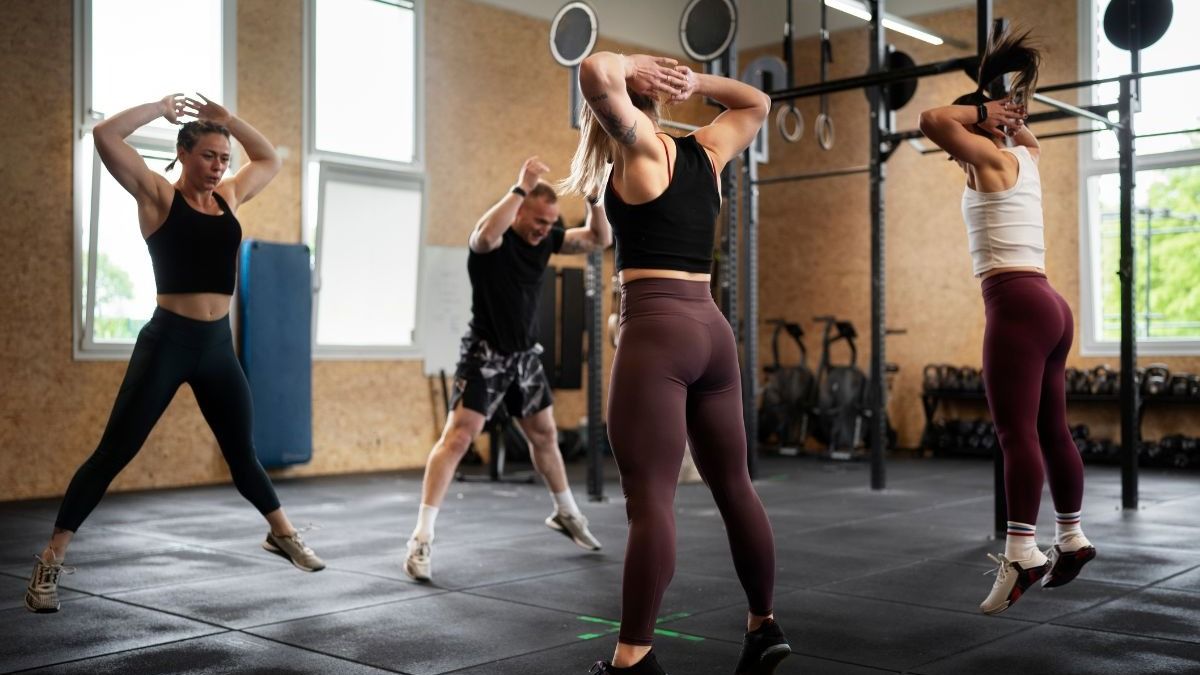
HIIT classes rotate between short bursts of hard effort and short recovery periods. Think 20 to 45 seconds of work, then 10 to 30 seconds to breathe, repeated in rounds. You might do moves like squat jumps, mountain climbers, burpees, kettlebell swings, sprints, or rowing intervals, depending on the studio.
Why people love it: it’s time-efficient and challenging. Because HIIT pushes intensity, it can improve cardiovascular fitness and help you build stamina. Many people also like the “done in 30 minutes” feeling.
Who should try it:
- People who want a high-energy workout in a short time
- Folks who like clear structure and a coach telling them exactly what to do
- Regular exercisers looking to level up conditioning
Beginner tip: start with low-impact options first (step-backs instead of jumps, incline push-ups instead of floor push-ups). In HIIT, form matters more than speed. If your technique breaks down, slow it down. You still get the benefit.
Spin / Indoor Cycling
Spin classes are indoor cycling workouts led by an instructor, usually set to music with cues for speed, resistance, and “hill climbs.” You’re not just pedaling casually. You’ll switch between steady rides, sprints, and heavy climbs using the resistance knob.
Benefits: spin is a strong choice for cardio endurance and lower-body strength, especially for your quads, glutes, and calves. It’s also joint-friendly because there’s no pounding on your knees from jumping or running.
Beginner tips that actually help:
- Set your seat height so your knee stays slightly bent at the bottom of the pedal stroke
- Keep your shoulders relaxed and your grip light, avoid dumping weight into your wrists
- Start with moderate resistance so your legs feel stable, not “spinning out” too fast
- Ignore the scoreboard energy if it stresses you out. Your ride, your pace.
Dance fitness classes
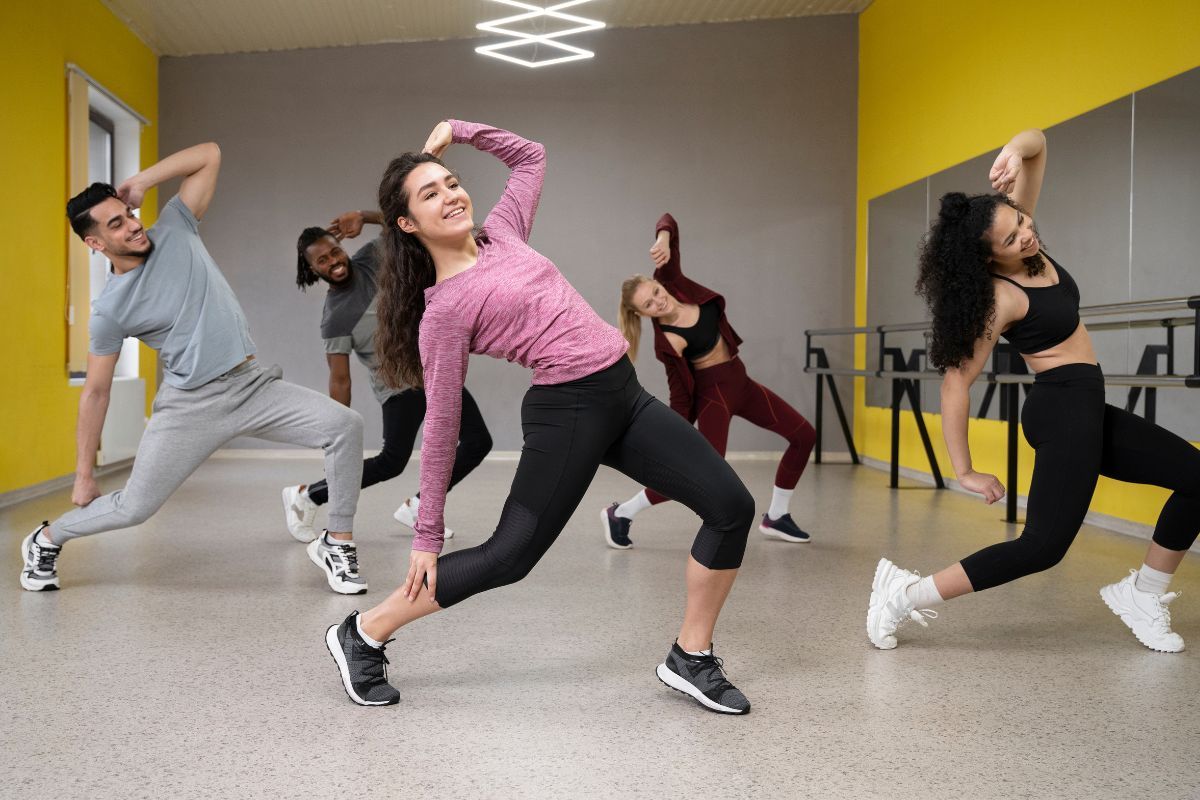
Dance fitness blends cardio with choreography. Some classes follow specific styles like Zumba or hip-hop dance, while others are more “follow-the-beat” cardio dance workouts. You’ll learn simple movement patterns, repeat them, then build intensity through rhythm and continuous motion.
Why it’s beginner-friendly: it doesn’t feel like traditional exercise. You’re focused on the music and the flow, not counting reps. If you miss a step, you jump back in without stopping the whole class.
What you get out of it: a solid calorie burn, improved coordination, and a big mood boost. It’s also a great option for people who hate treadmills but still want cardio.
Quick tip: stand where you can see the instructor clearly. Keep your moves smaller at first, then add more range once you feel confident.
Boxing & Cardio Kickboxing
These are non-contact classes that use boxing and kickboxing combinations for conditioning. You’ll throw punches like jabs, crosses, hooks, and uppercuts, sometimes paired with kicks, footwork drills, core work, and short cardio bursts. Some studios use heavy bags, others keep it all shadowboxing.
Why it works: it’s full-body, fast-paced, and stress-relieving. Punching combos engage your upper body and core, while footwork keeps your heart rate up. You also build coordination and body awareness without needing to “be a fighter.”
Who it’s great for:
- People who want cardio that feels empowering
- Anyone who likes skill-based workouts instead of repetitive laps
- Folks who want a workout that doubles as a mental reset
Form tip: wrap your wrists if the studio recommends it, and keep your fists aligned with your forearms. Power comes from your hips and core, not just your arms.
If you’re not sure where to start in this category, pick the format that sounds most fun. Enjoyment is a real strategy. The class you look forward to is the one you’ll keep showing up for.
Strength & conditioning fitness classes
If cardio classes feel like “sweat and survive,” strength and conditioning classes feel like “build and progress.” These are the sessions that help you get stronger, move better, and feel more capable in everyday life. You’ll usually work through sets, circuits, or timed stations using bodyweight, dumbbells, barbells, kettlebells, resistance bands, or machines, depending on the gym or studio.
Strength-focused classes are also a smart choice if you want visible results over time. Building muscle supports better posture, joint stability, and a higher “work capacity” (basically: you can do more without feeling wrecked). And no, it’s not only for people who want to look “bulky.” Most beginners and regular gym-goers see improved tone, strength, and confidence long before anything feels extreme.
Bodyweight training classes
Bodyweight classes use your own body as resistance. You’ll see moves like squats, lunges, push-ups, planks, glute bridges, and core sequences. Many classes also add simple tools like sliders, mini bands, or light medicine balls, but the foundation stays the same: control your body well.
Why it’s great: bodyweight training teaches you the basics of movement. You learn how to brace your core, keep your knees aligned, and move through ranges of motion safely. It’s also easy to scale. If an exercise feels too hard, you can reduce range, slow tempo, or use an easier variation without “failing” the class.
Who it suits: pretty much everyone, especially beginners who want to build a base before going heavier. If you’ve been inconsistent, bodyweight classes are also a nice reset because they build strength without frying your nervous system.
Quick tip: go slower than you think you need. Slower reps make it easier to keep form, and you’ll feel the right muscles working instead of just rushing through.
Strength training classes
Strength training classes introduce external resistance in a more intentional way. That can mean dumbbell circuits, kettlebell fundamentals, barbell-based classes, or strength sessions using machines. The focus is usually on building muscle, improving strength, and training movement patterns like squats, hinges (deadlift-style), presses, and rows.
What you’ll typically do: controlled sets with rest, or stations that rotate through major muscle groups. A good class won’t be random chaos. It will balance push and pull movements, include lower and upper body work, and cue form often.
Benefits: stronger muscles, better bone density support, improved posture, and more stability around your joints. For many people, consistent strength training also makes cardio feel easier because your body handles effort better.
Beginner tips:
- Pick a weight that lets you keep clean form for the full set, even when you’re tired
- Don’t chase the heaviest dumbbell on day one. Progress is the goal, not ego
- Ask the coach to check your technique, especially for hinges, squats, and presses
Bootcamp-Style classes
Bootcamp classes blend cardio and strength into a fast-paced, high-energy format. Expect circuits, timed intervals, and a “work hard, rest briefly, repeat” rhythm. You might rotate between kettlebell swings, push-ups, jump rope, rowing, sled pushes, and dumbbell work, depending on the gym.
Why people love it: it feels like a complete workout in one session. You get conditioning plus strength, and the group environment can push you to finish when you’d normally stop early.
Who it’s best for: regular exercisers who enjoy intensity, or beginners who like being coached through the whole workout and don’t want to plan anything themselves.
Important reality check: bootcamps can get intense fast. The biggest mistake in bootcamp is trying to match the fittest person in the room. Instead, aim for steady effort and strong form. If the class includes jumping or sprinting and your joints don’t love that, choose the low-impact option. You’ll still get the training effect.
Strength and conditioning classes tend to reward consistency more than perfection. If you show up a few times a week and keep your technique clean, you’ll get stronger in ways you can feel: carrying groceries becomes easier, stairs don’t hit as hard, and your body starts to feel like it’s on your side.
.jpg)
Source: Freepik
Mind-Body fitness classes
Mind-body classes sit in that sweet spot where you’re still working your muscles, but you’re also paying attention to how you move, breathe, and recover. These classes are popular for a reason: they help you build strength and mobility without the “wrecked” feeling some high-intensity workouts can leave behind. They’re also great if stress is affecting your sleep, energy, or motivation, because the pace encourages you to stay present instead of powering through mindlessly.
A lot of beginners assume mind-body classes are “easy.” Not always. You can find gentle versions that feel restorative, and you can also find styles that seriously challenge your core, balance, and endurance. The difference is that the effort often comes from control, alignment, and consistency, not speed.
Yoga
Yoga classes blend movement, strength, flexibility, and breathing. Depending on the style, you might hold poses for longer (more stability and stretch) or flow through sequences (more heat and cardio feel). Most classes include a warm-up, a main sequence, and a cool-down, often finishing with a few minutes of relaxation.
Common styles you’ll see:
- Hatha: Slower pace, more time to learn poses and alignment. Great for beginners who want clear instruction.
- Vinyasa: Flow-based, linking breath with movement. Expect a steady rhythm and more continuous motion.
- Power Yoga: Stronger, faster, and more physically demanding. Less “stretch class,” more “full workout.”
Benefits: improved flexibility, better balance, stronger stabilizer muscles, and a calmer nervous system when the class includes breathwork and slower transitions. Many people also notice fewer aches from sitting all day because yoga opens up tight hips, shoulders, and upper back.
Beginner tip: choose a class labeled “beginner,” “foundations,” or “slow flow” first. And use props without guilt. Blocks and straps aren’t cheating, they’re tools that help you do the pose safely.
Pilates
Pilates is all about controlled strength, especially through your core, glutes, hips, and postural muscles. You’ll move with intention, and you’ll hear cues about alignment, breathing, and keeping your torso stable while your limbs move. If you want to feel “shaky but strong,” Pilates does that.
Mat vs Reformer Pilates:
- Mat Pilates: Uses bodyweight and sometimes small props (bands, rings, light weights). It’s accessible and teaches fundamentals.
- Reformer Pilates: Uses a reformer machine with springs for resistance and support. It can be more challenging (or more joint-friendly) depending on how the springs are set and how the instructor programs the session.
Benefits: stronger core, better posture, improved pelvic stability, and more control through your movement patterns. Pilates is also popular for people who want strength without heavy lifting, and for anyone who wants to improve form for other workouts.
Beginner tip: don’t chase bigger ranges of motion. Start small, keep your spine neutral (unless the exercise cues otherwise), and focus on smooth, controlled reps.
Barre
Barre classes mix ballet-inspired movements with elements of Pilates and strength training. You’ll do a lot of small-range pulses, holds, and high-rep sets, usually targeting glutes, thighs, core, and shoulders. It’s low-impact, but the muscle burn can sneak up on you fast.
Why it feels intense: barre relies on time under tension. That means your muscles stay working for longer without big breaks, even if the movements look tiny. You’ll also train balance and control, which makes it more demanding than it appears.
Benefits: improved posture, stronger lower body and core, better coordination, and a “toned” feeling many people love. It’s also a solid option for people who want a joint-friendly workout that still challenges them.
Beginner tip: take breaks when your form slips. In barre, sloppy reps don’t help. Clean alignment plus consistent effort beats nonstop pulsing with your knees caving in or your shoulders creeping up.
Mind-body classes work best when you treat them as training, not just “a stretch day.” Show up, stay curious, and focus on quality movement. Over time, they don’t just make you more flexible or strong. They make your whole routine feel better because you move with more control and recover faster.
Low-impact & beginner-friendly fitness classes
If you’re new to working out, coming back after a long break, managing joint pain, or simply not in the mood to get slammed by burpees, low-impact classes are your best friend. “Low-impact” doesn’t mean “low effort.” It just means at least one foot stays on the ground most of the time, movements are easier on the joints, and the class prioritizes control over chaos. These formats are great for building consistency because they feel doable, and doable is what gets you to show up again next week.
This category also tends to be more coaching-heavy. You’ll hear more cues, more form corrections, and more reminders to pace yourself. That’s exactly what most people need early on.
Beginner Fitness Classes
Beginner classes are designed for first-timers and casual gym-goers who want guidance without pressure. The pace is slower, the instructor explains movements clearly, and there’s usually more time to set up equipment and ask questions. You’ll often see names like “Intro,” “Fundamentals,” “Level 1,” or “Beginner Strength.”
What to expect: simple movement patterns, lots of reminders about posture and breathing, and a focus on learning the basics safely. You might do light dumbbell work, bodyweight exercises, or low-impact cardio, but the goal is confidence and consistency, not maximum intensity.
How to get the most out of it: show up a few minutes early and tell the instructor it’s your first class. Most coaches will quietly keep an eye on you and offer options without making it a big deal. Also, pick comfort over competition. You’re building a foundation, not proving anything.
Mobility & Stretching Classes
Mobility and stretching classes focus on joint range of motion, flexibility, and movement quality. You’ll usually combine gentle strength work (like controlled hip and shoulder drills) with longer stretches and breathing. Some classes feel like guided recovery. Others feel surprisingly challenging because they ask you to control positions you’re not used to.
Why they matter: better mobility can improve your form in other workouts, reduce that “stiff and creaky” feeling from sitting all day, and help your body recover. Mobility work also supports long-term training because your joints move better, your muscles share the load more evenly, and you’re less likely to compensate in weird ways.
Beginner tip: don’t force a stretch. A good stretch feels like tension, not pain. If you’re shaking or holding your breath, back off a bit and breathe slowly.
Senior & Rehabilitation-Friendly Classes
These classes are built for people who want safe, low-impact movement with extra attention to balance, stability, and functional strength. You’ll often see formats like chair-based strength, gentle aerobics, balance training, or arthritis-friendly mobility. Even if you’re not a senior, these classes can be a great fit if you’re recovering from an injury or rebuilding fitness carefully.
What they focus on:
- Balance and fall prevention: simple drills that strengthen ankles, hips, and core stability
- Functional movement: standing up, stepping, reaching, and rotating safely
- Joint-friendly strength: lighter resistance with controlled tempo
Important note: if you’re dealing with pain, recent surgery, or a medical condition, it’s worth checking with a healthcare professional first. The goal is to train in a way that supports recovery, not accidentally rush it.
Low-impact and beginner-friendly classes are often the smartest starting point because they help you build a routine you can actually sustain. Once your baseline improves, you can always add intensity later. But in the beginning, the real win is showing up consistently, moving well, and leaving the class feeling stronger than when you walked in.
Specialty & trend-based fitness classes
Specialty and trend-based classes are where fitness gets creative. They’re designed to solve a specific problem (like improving daily movement or breaking plateaus) or to blend formats in a way that keeps workouts fresh. If you’ve ever gotten bored doing the same routine for months, this category is usually the fix. You still train hard, but the class feels more “designed” than generic: clearer purpose, different tools, and often a stronger emphasis on skills and movement quality.
These classes are also common in modern boutique studios because they offer something beyond the standard gym floor. You’ll see more variety in programming, more themed sessions, and more hybrid formats that mix training styles in one class.
Functional Training
Functional training focuses on movements you actually use in real life: squatting, hinging, lunging, pushing, pulling, rotating, carrying, and stabilizing. Instead of isolating one muscle, you train patterns that help your whole body move better as a unit. Classes often include kettlebells, dumbbells, sandbags, TRX/suspension trainers, medicine balls, and loaded carries.
Why it’s useful: it builds strength that translates. You’ll feel it when you lift groceries, climb stairs, pick up your kid, or sit at a desk without your back complaining. Functional training also tends to train your core in a practical way, because your torso has to stabilize while your arms and legs work.
What to look for in a good class: a balance of push and pull exercises, intentional progressions (not random “hard for the sake of hard”), and coaches who cue alignment, bracing, and tempo.
Cross-Training Classes
Cross-training classes combine multiple training styles in one program to build a broader fitness base. You might do strength work first, then conditioning, then core, or alternate between different stations. Some cross-training classes borrow elements from weightlifting, power training, endurance, and bodyweight conditioning.
Why people choose it: it prevents boredom and can reduce overuse issues that happen when you repeat the same activity too often. Cross-training is also great if you want to feel “well-rounded” instead of only good at one thing (like running but not lifting, or lifting but not conditioning).
Beginner tip: don’t get distracted by intensity. If the class includes complex moves (like Olympic lift variations), ask for a simpler option. A good coach will scale the movement so you’re training safely while still getting a solid workout.
Hybrid Fitness Classes
Hybrid classes blend two formats that normally live in separate worlds, like yoga + strength, HIIT + mobility, boxing + core, or strength + Pilates-style control. The goal is to deliver a more complete session in one booking, especially for people with busy schedules.
Why they’re growing in popularity: they match how people actually train now. Not everyone wants five separate sessions to cover cardio, strength, and mobility. Hybrid classes give you a bit of everything, and they can help you avoid the common trap of doing only the workouts you enjoy while ignoring the ones you need.
How to pick a good hybrid class: check the structure. Ideally, it has a clear split (for example: 20 minutes strength, 15 minutes conditioning, 10 minutes mobility) instead of feeling like a random mash-up. If it’s your first time, start with a lower-intensity hybrid so you can learn the flow without feeling rushed.
Specialty and trend-based classes can be a game-changer, but the best approach is simple: choose the class that supports your life and your goals right now. If you sit a lot, functional training and mobility-heavy hybrids can feel amazing. If you’re bored, cross-training keeps things interesting. If you want “one class that covers a lot,” hybrids are an easy win.
How to choose the right fitness class for you
With so many options, picking a class can feel like scrolling a menu when you’re already hungry. Everything sounds good, but you don’t want to waste time (or money) on something that doesn’t fit your goals, your body, or your schedule. The good news: you don’t need the “perfect” class. You just need a smart starting point and a way to adjust based on how you feel after a few sessions.
A simple rule that works for most people: choose a class you’ll realistically attend consistently, then build variety from there. Results come from repetition, not from finding the most intense class in the building.
Based on Fitness Goals
If your goal is weight loss:
Go for classes that help you burn calories and build a routine you can stick to. HIIT, spin, dance fitness, and bootcamp can work well because they’re high-energy and keep you moving. But don’t ignore strength classes. Muscle supports your metabolism and helps your body look and feel stronger as you lose fat. A balanced weekly mix (some cardio, some strength) tends to be more sustainable than doing cardio every single day.
If your goal is muscle tone and strength:
Prioritize strength training classes, bodyweight training, functional training, and slower, form-focused formats like Pilates. “Tone” is basically muscle + lower body fat, so you need resistance training to give your muscles something to adapt to. Cardio can still be part of your routine, but strength should be the backbone.
If your goal is flexibility and stress relief:
Yoga, mobility, stretching, and slower mind-body classes are great. Barre and Pilates also help a lot because they build control and posture while improving mobility. If you’re stressed, avoid starting with the most intense class as your main routine. You want a workout that helps you feel better afterward, not more fried.
Based on Experience Level
If you’re a beginner:
Look for classes labeled “beginner,” “foundations,” “intro,” “level 1,” or “all levels.” Start with lower-impact formats like beginner strength, Pilates, yoga (beginner or slow flow), or cycle classes where you can control resistance. The goal is to learn movements and build confidence, not to keep up with the front row.
If you’re intermediate:
You can explore more variety and intensity, but you’ll still benefit from classes that sharpen technique. Bootcamp, HIIT (with smart scaling), functional training, and higher-level strength classes can fit well here. This is also a good stage to rotate class types to avoid plateaus.
If you’re advanced:
Challenge is great, but specificity matters more. Choose classes that match what you’re trying to improve: heavier strength classes for strength gains, higher-level conditioning for endurance, or skill-based training if you want better movement quality. Advanced doesn’t mean “hardest class every time.” It means training with intention.
Based on Schedule & Lifestyle
A class that fits your life beats a “perfect” class you never attend. If mornings are your only free window, pick a format that wakes you up without draining you for the whole day. Many people do well with morning strength, Pilates, or cycling because it boosts energy without feeling chaotic. If you train after work, consider what your body needs: some people love a hard HIIT session to shake off stress, while others do better with yoga, barre, or strength training to decompress.
Also think about time. A 30-minute class you attend three times a week will usually beat a 75-minute class you do once and then avoid for two weeks. Shorter formats (30 to 45 minutes) are often easier to maintain, especially if you’re busy or just building the habit.
Quick self-check after class (super useful):
- Do you feel energized or completely wiped out?
- Can you imagine doing this 2 to 3 times a week?
- Did anything hurt in a sharp or “wrong” way?
- Did you enjoy enough of it to come back?
If the answer is mostly yes (minus normal muscle fatigue), you’re on the right track. Pick your starting class, give it a few sessions, then adjust. That’s how people actually find the “right” fit.
How often should you attend fitness classes?
Most people don’t need a complicated schedule to see results. What they need is a rhythm they can actually keep. For beginners and regulars alike, 2 to 4 classes per week is a sweet spot: enough to build momentum, not so much that your body feels constantly sore or your calendar starts fighting back.
A simple way to think about it:
- 2 classes/week: Great for beginners, busy schedules, or anyone easing back in. You’ll build consistency and improve fitness steadily.
- 3 classes/week: A strong “results without burnout” routine for most people. You get frequent practice while still leaving room for recovery.
- 4 to 5 classes/week: Works well if you’re already conditioned, sleeping decently, and rotating intensities. This is where smart planning matters more.
Rest & recovery considerations
Your body doesn’t get stronger during the class. It gets stronger after, when it recovers. Recovery is when muscles rebuild, energy systems adapt, and soreness settles. If you stack too many hard classes back-to-back, you might feel like you’re “working hard,” but progress can stall because your body never catches up.
Here are signs you might need more recovery:
- Your performance drops even though you’re trying harder
- You feel unusually fatigued, irritable, or low motivation
- Your sleep quality gets worse
- Small aches start showing up in knees, hips, shoulders, or lower back
Rest doesn’t always mean doing nothing. It can mean swapping a high-intensity class for a low-impact session like mobility, stretching, gentle yoga, or an easy walk.
Mixing different class types for balance
One of the best parts about classes is that you can mix styles to build a more complete fitness base. The goal is variety with intention: combine formats that support each other instead of exhausting the same system every time.
A balanced weekly mix often looks like:
- 2 days strength or strength-focused classes (strength training, functional training, Pilates)
- 1 to 2 days cardio (spin, dance, HIIT, boxing)
- 1 day mobility or mind-body (yoga, stretching, mobility, barre)
If you love HIIT or bootcamp, keep them in your week, but don’t make every session max effort. Too many “all-out” workouts can spike fatigue and increase injury risk, especially if your form starts slipping when you’re tired.
A Few Sample Schedules (Easy and Realistic)
Beginner (2 to 3 days/week):
- Day 1: Beginner strength or bodyweight class
- Day 2: Low-impact cardio or spin
- Optional Day 3: Yoga or mobility
Regular gym-goer (3 to 4 days/week):
- Day 1: Strength training class
- Day 2: Cardio (spin, boxing, dance)
- Day 3: Strength or Pilates
- Optional Day 4: Mobility or a lighter cardio session
High-energy lover (4 to 5 days/week):
- 2 days strength
- 1 to 2 days cardio
- 1 day mobility or yoga
- Keep at least one session “lighter” so your body can recover.
If you’re unsure, start with three classes a week for four weeks and see how your body responds. If you feel better, stronger, and more consistent, you’re doing it right. If you’re constantly sore, drained, or dreading the next class, scale back the intensity or swap in a recovery-focused format. Consistency beats overload every time.
Common mistakes people make when joining fitness classes
Starting fitness classes is exciting, but it’s also where a lot of people accidentally sabotage themselves. Not because they’re lazy or “not disciplined,” but because they pick the wrong starting point, push too hard too fast, or treat classes like a short-term fix instead of a routine. The good news: these mistakes are common, easy to spot, and totally fixable.
1) Choosing classes that are too advanced
This is the classic trap: you book the most intense class because you want fast results, then you spend the whole session confused, struggling to keep up, and feeling like you “failed.” That experience can kill motivation quickly.
A better move is to start one level easier than your ego wants. Beginner and foundation classes give you time to learn form, pacing, and basic movement patterns. Once the basics feel familiar, you’ll progress faster and safer. Hard classes aren’t going anywhere. You can earn them.
Quick check: if you can’t maintain good form or you’re constantly lost, the class is too advanced right now, and that’s fine.
2) Being inconsistent (then blaming the class)
Classes work best when you repeat them often enough for your body to adapt. If you go once every two weeks, it’ll always feel hard, and you’ll always feel sore. People often interpret that soreness as a sign they’re “not fit enough,” when it’s usually a sign they’re not attending frequently enough.
Consistency doesn’t need to be intense. Even 2 to 3 classes a week can create real progress. The key is to pick a schedule you can sustain, not a perfect plan you abandon after seven days.
Practical tip: book classes like appointments. If it’s in your calendar, it’s easier to protect.
3) Ignoring recovery and hydration
Classes can feel addictive because the energy is high and the endorphins hit. But if you stack hard sessions without recovery, your performance drops and your risk of injury goes up. Recovery is not a luxury. It’s part of training.
Hydration matters too, especially for sweaty formats like HIIT, spin, and hot yoga. Dehydration can show up as headaches, cramps, dizziness, and unusually high fatigue. It can also make your heart rate spike faster than normal.
Simple baseline:
- Drink water throughout the day, not only during class
- If you sweat a lot, consider adding electrolytes occasionally
- Prioritize sleep, because it’s the most underrated recovery tool
4) Not listening to the body
There’s a difference between “this is challenging” and “this feels wrong.” Many people push through sharp pain, numbness, or joint discomfort because they think that’s what being tough looks like. In reality, ignoring warning signs is how small issues become long breaks from training.
Use this quick filter:
- Normal: muscle burn, heavy breathing, manageable fatigue, mild soreness the next day
- Not normal: sharp pain, pinching in joints, pain that changes your movement, dizziness that doesn’t pass, numbness/tingling
If something feels off, scale the movement, take a break, or ask the instructor for a modification. A good coach wants you to keep training long-term, not limp out of the room.
5) Trying to keep up with everyone else
Group energy can be motivating, but it can also make people rush. You’ll see someone grabbing heavier weights or sprinting harder and think you should match them. That’s how form falls apart and injuries happen, especially in fast-paced classes.
The best mindset is: train at your level, in your lane. Progress is personal. Your goal is to leave class feeling accomplished and capable of returning, not destroyed and dreading the next session.
If you avoid these mistakes, fitness classes become what they’re supposed to be: a supportive structure that helps you build strength, confidence, and consistency over time.
FAQs about types of fitness classes
What type of fitness class is best for beginners?
If you’re new, start with a class that teaches fundamentals and gives you space to learn without rushing. Look for labels like Beginner, Foundations, Intro, or All Levels. Great beginner-friendly options include beginner strength, bodyweight training, mat Pilates, slow flow yoga, mobility/stretching, and spin (because you control resistance and pace).
One underrated tip: pick a class where the instructor can actually coach. Smaller classes or formats that move slower tend to give better form cues, which helps you build confidence faster.
Are fitness classes better than working out alone?
They can be, depending on what you struggle with. If your biggest challenge is motivation, structure, or consistency, classes are often a big upgrade. You show up, follow the plan, and the group energy keeps you moving. Classes also help you learn technique and build a routine without having to design your own workouts.
But solo training has its strengths too, especially if you like flexibility, prefer quieter environments, or follow a specific program. The “better” option is the one you can stick with long-term. For many people, a mix works best: classes for structure and community, solo sessions for flexibility and practice.
Can I combine different fitness class types in a week?
Yes, and it’s usually a smart move. Mixing class types helps you train more completely and reduces the risk of overdoing one style. A balanced week could include:
- 2 strength-focused sessions (strength training, functional training, Pilates)
- 1 to 2 cardio sessions (spin, dance, boxing, HIIT)
- 1 mobility or mind-body session (yoga, stretching, mobility)
If you’re doing intense formats like HIIT or bootcamp, try not to stack them every day. Rotate intensity so your body has time to recover.
How long does it take to see results from fitness classes?
You’ll usually feel changes before you see them. Many people notice better energy, improved mood, and increased stamina in 2 to 4 weeks with consistent attendance. Visible changes like muscle definition or noticeable body composition shifts often take 8 to 12 weeks, depending on your starting point, training frequency, sleep, stress, and nutrition.
The fastest way to slow results down is to be inconsistent. The fastest way to speed results up is to keep a realistic schedule you can maintain.
Are group fitness classes suitable for weight loss?
Yes. Group classes can support weight loss because they help you stay active, burn calories, and stick to a routine. Cardio-heavy formats like spin, dance fitness, boxing, HIIT, and bootcamp can increase energy output, while strength classes help you build muscle, which supports a healthier body composition over time.
One thing to keep in mind: weight loss is strongly influenced by nutrition. Classes can create the training consistency, but food choices usually determine the rate of change. If weight loss is your main goal, pair classes with sustainable eating habits and don’t rely on “punishment workouts” to make up for everything else.
Conclusion: Finding the right fitness class is about consistency
At the end of the day, fitness classes aren’t “one thing.” You’ve got cardio options like HIIT, spin, dance, and boxing if you want energy and sweat. You’ve got strength and conditioning classes for building muscle and feeling stronger in everyday life. You’ve got mind-body formats like yoga, Pilates, and barre for control, mobility, and stress relief. And if you’re easing in, low-impact and beginner-friendly classes help you build a routine without feeling intimidated.
The real secret isn’t choosing the “best” class. It’s choosing the one you’ll actually return to. Try a few styles, pay attention to how your body feels afterward, and notice what makes you want to book the next session. Enjoyment matters. A class you like will beat a “perfect” class you avoid.
Once you’ve found a good fit, keep it simple. Aim for consistency over intensity. Two to four classes a week, done regularly, will take you further than random bursts of motivation followed by long breaks. Your results come from showing up, learning the movements, and letting your body adapt over time.
If you need an extra nudge, lean into the structure classes naturally give you. A set schedule removes decision fatigue. An instructor keeps you on track. A group makes you feel less alone in the effort. You don’t have to be the most athletic person in the room. You just have to be the person who keeps coming back.