Why is Pilates so expensive? Factors behind the cost
Learn why Pilates classes are expensive, what drives the cost, and why the practice is considered a premium fitness choice.
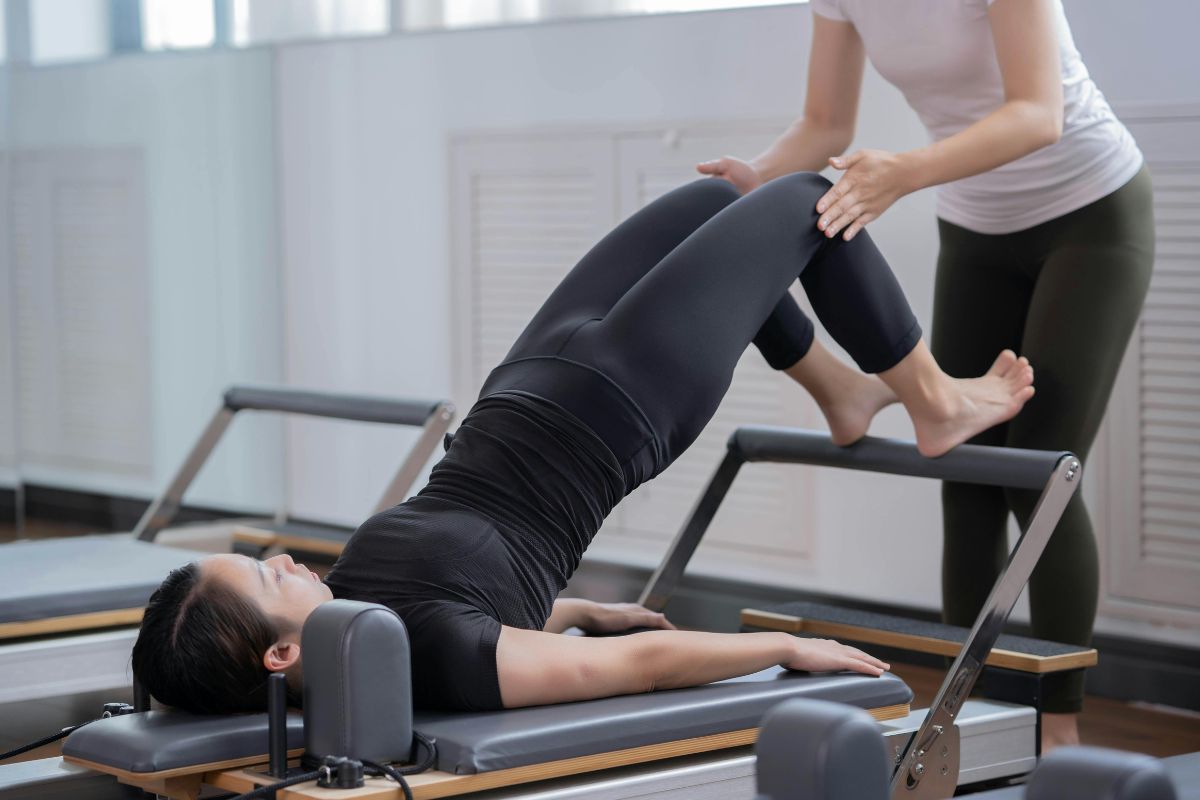
Source: Pexels
You signed up for a Pilates class.
You clicked “Book now.”
Then you saw the price.
And suddenly your brain went: Wait… why is Pilates so expensive?
If this thought has crossed your mind, congratulations. You are officially normal.
Pilates often costs way more than yoga, spin, or your regular gym membership. One reformer class can feel like a splurge, and private sessions can look straight-up intimidating. It is one of the few workouts that makes people pause, open another tab, and start Googling before committing.
But here’s the thing: Pilates is not priced high just to feel fancy.
Behind that price tag are expensive machines, highly trained instructors, small class sizes, and a level of personalization most workouts simply do not offer. Pilates is designed to be precise, controlled, and safe, which means studios cannot run it like a high-volume group class.
In this article, we are breaking down exactly why Pilates costs what it costs, where your money actually goes, and whether it is worth it for your body in the long run. If you have ever wondered if Pilates is overpriced or secretly one of the smartest fitness investments
you can make, you are in the right place.
How much does Pilates usually cost?
Okay, let’s get the awkward part out of the way first: Pilates pricing is all over the place. And yes, it can feel confusing because two studios in the same city can charge wildly different rates for what looks like “the same” class.
But there are a few patterns you’ll see again and again, and once you know them, Pilates
pricing starts to make way more sense.
Typical Pilates prices (so you know what’s normal)
Here’s the general range you’ll see in most markets:
Mat Pilates (group class)
- Usually the most affordable format
- Often priced similar to yoga or barre
- Expect: $15 to $35 per class for drop-ins (sometimes lower with packages)
Reformer Pilates (group class)
- This is where prices usually jump
- The reformer is a machine, not a mat, and classes are smaller
- Expect: $25 to $60 per class for drop-ins
Semi-private sessions (2–4 people)
- You get more attention than a group class, but it’s not as pricey as 1:1
- Expect: $40 to $90 per person per session
Private Pilates (1:1)
- The most personalized option
- You are basically paying for a highly trained coach + a tailored session
- Expect: $80 to $150+ per session (higher in big cities or with highly experienced instructors)
If you’re reading this and thinking, “That’s… a lot,” you’re not wrong. But keep these numbers in mind because they’ll matter when we break down why Pilates is priced this way in the next sections.
Why prices can look so different from studio to studio
Two people can say they “do Pilates,” but they might be doing completely different experiences.
Here are the biggest reasons pricing varies:
- Mat vs reformer: Reformer tends to be more expensive almost everywhere.
- Group size: A 6-person reformer class will usually cost more than a 16-person mat class.
- Instructor experience: A senior instructor with years of training may charge more.
- Studio location and rent: Downtown or high-demand neighborhoods usually mean higher prices.
- Brand positioning: Some studios intentionally price premium and offer a luxury experience.
So if you see one reformer class priced at $28 and another at $55, that does not automatically mean one is “scamming.” It usually means the business model, capacity, and overhead costs are different.
Drop-in vs Packages vs Memberships
Here’s the part people miss: drop-in prices are often the most expensive way to do Pilates. Studios price drop-ins high on purpose because they want you to commit to packages or memberships (which give them more predictable revenue).
Drop-in (pay per class)
- Highest cost per class
- Best for trying a studio or visiting
- Worst for your wallet long-term
Class packs (5, 10, 20 classes)
- Lower cost per class
- Usually expires within a set time (like 1–3 months)
- Great if you go consistently but do not want a monthly commitment
Memberships (monthly)
- Often the best value per class
- Usually includes a set number of classes per month (or unlimited at premium studios)
- Best if Pilates is your main workout
A studio might price it like this (example layout, not exact):
- Drop-in reformer: $45
- 10-pack: $380 (so $38 per class)
- Monthly membership: $220 for 8 classes (so $27.50 per class)
Same class. Same studio. Different pricing strategy.
Pilates costs by city (and why big cities hurt your soul)
Let’s be real: Pilates in a major city is a different financial experience.
In higher-cost cities, pricing tends to rise because:
- Rent is expensive (and Pilates studios need space)
- Instructor wages are higher
- Demand is higher, so prices follow
So you might see:
- Smaller towns/suburbs: reformer group classes closer to the lower end of the range
- Major cities: reformer group classes frequently at the higher end, especially in premium studios
That’s also why online Pilates has exploded. For some people, it’s the only way Pilates becomes financially sustainable.
Pilates vs Yoga vs Gym memberships: Why it feels so pricey
This is where most people get stuck, because Pilates pricing feels “unfair” compared to other fitness options.
Here’s the comparison that usually triggers the question:
- Gym membership: $30–$80/month
- Yoga class: $15–$30/class
- Reformer Pilates: $25–$60/class
- Private Pilates: $80–$150+/session
So it makes sense that Pilates gets labeled as “expensive.” It’s not just slightly more than other workouts. It can be double or triple.
But the reason is not just marketing. Pilates is often delivered more like training or coaching than “a class you blend into.” And that changes the cost structure entirely, especially with equipment and class size (which we’re about to get into).
Quick reality check: What Pilates pricing usually signals
If you want a simple way to interpret Pilates prices, here’s a helpful cheat sheet:
- Lower price often means: larger class size, mat-based, less personalized, basic studio setup
- Mid-range price often means: reformer, smaller class size, solid instruction, well-run studio
- Higher price often means: very small classes, high-touch coaching, premium location, higher instructor expertise, luxury studio experience
Price alone does not guarantee quality, but it usually reflects the business model behind the scenes.
.jpg)
Source: senivpetro on Freepik
Specialized equipment drives the cost
If you have been thinking, “Okay…but it’s still just a workout,” this section is where things start clicking.
Because one of the biggest reasons Pilates is expensive is simple: Pilates is not just a room, a mat, and a playlist. A lot of Pilates, especially reformer Pilates, runs on specialized equipment that costs a lot to buy, maintain, and safely operate.
And unlike other group fitness formats, studios cannot “make it cheaper” by packing 30 people into the room.
The machines are expensive (and studios need more than one)
When people say “Pilates is expensive,” what they usually mean is reformer Pilates. The reformer is that long machine with springs, straps, and a sliding carriage that looks a bit like a fancy torture device, but in a cute way.
Here’s the part most people do not realize:
- A quality reformer can cost thousands of dollars per unit
- Many studios need multiple reformers, not just one
- Studios also invest in other equipment like:
- Cadillac / Trapeze table
- Wunda Chair
- Ladder Barrel
- Spine Corrector / Arc Barrels
- Springboards
- Plus props: rings, balls, straps, blocks, resistance bands
Even if a studio only offers reformer classes, they still need:
- Enough machines for a full class
- Extra accessories and replacement parts
- A layout that allows people to use machines safely
So right away, the business is starting with higher upfront costs than a yoga studio or a bootcamp-style gym.
What this means for pricing
If a studio buys 10 reformers, they are not just buying “equipment.” They are taking on:
- High upfront investment
- Ongoing maintenance costs
- Higher insurance requirements (because machines + moving parts + bodies = more risk)
- More space needs (machines take up room)
That overhead gets built into the cost per class.
Pilates equipment needs maintenance (and it’s not optional)
Pilates machines are not “buy once and forget.” They have moving parts and tension systems that need regular care.
Studios typically have to:
- Replace springs over time
- Check and replace straps, ropes, and pulleys
- Fix worn padding, footbars, and carriage tracks
- Keep machines aligned and functioning safely
- Sanitize equipment constantly (especially in high-traffic studios)
And maintenance is not a nice-to-have. If a machine is slightly off, it can affect:
- The quality of the workout
- Your range of motion
- Your safety, especially if you are new or dealing with an injury
So the studio is paying continuously to keep things safe, smooth, and reliable.
You can’t fit 25 people into a reformer class
This is the pricing difference that hits hardest.
A yoga studio can run a 25-person class and still keep the price relatively low because the math works:
- One instructor
- One room
- Many paying students
Pilates, especially reformer Pilates, does not work like that.
Most reformer classes cap out around:
- 4 to 12 people, depending on studio size and setup
And that cap is not about exclusivity. It’s about reality:
- Each person needs a machine
- Each machine needs space around it
- The instructor needs to see and correct people clearly
- You cannot safely cram machines together like a concert crowd
So studios have fewer “seats” to sell per class. Fewer seats means each seat has to carry more of the operating cost.
Equipment makes Pilates more “training” than “fitness class”
Equipment also changes the experience. Reformer Pilates is often more controlled, more technical, and more customized than many group workouts.
Because the reformer can:
- Adjust resistance using springs
- Support your body while you learn movement patterns
- Challenge stability in a very precise way
- Help with injury-friendly modifications
- Offer progression options without needing heavy weights
That’s why people often leave reformer Pilates feeling like:
- “Wait, that was hard…but also my body feels aligned?”
- “How did my core work that much without me realizing?”
- “Why am I shaking from doing something that looked so calm?”
This “precision training” feel is part of what people are paying for, and equipment is the big reason Pilates can deliver it.
Highly trained instructors are not cheap
If the reformer is the “hardware,” Pilates instructors are the “software.” And no, this is not one of those workouts where the teacher can just stand at the front, call out a sequence, and hope for the best.
A big reason Pilates is expensive is because good Pilates instruction is highly skilled, highly trained, and very hands-on. You’re not just paying for someone to count reps. You’re paying for someone who knows how to read bodies, spot patterns, and coach you safely in real time.
Pilates certification is intense (like… way more intense than people think)
A lot of people assume Pilates instructors get certified the same way a typical group fitness instructor does. But in many cases, Pilates training is closer to professional coaching than “weekend certification energy.”
Pilates instructor education often includes:
- Anatomy and biomechanics (how your joints and muscles actually move)
- Posture and alignment principles
- Injury prevention
- Programming and progression (how to build strength over time)
- Modification skills (how to adjust for different bodies, injuries, or mobility levels)
- Cueing and hands-on correction (how to coach without overwhelming someone)
And depending on the studio and certification system, instructors may train in:
- Mat Pilates
- Reformer
- Cadillac / Trapeze
- Chair
- Barrels
- Plus specialty protocols for rehab, athletes, prenatal/postnatal, and more
That means instructors are not just learning “a class format.” They’re learning a full movement method.
Why this matters for cost
That education takes:
- Time (often months to over a year)
- Mentorship and practice hours
- Exam fees and continuing education
- Real experience teaching and being evaluated
So when you pay more for Pilates, part of what you’re paying for is the instructor’s depth of training and the studio’s ability to hire and retain skilled teachers.
Pilates instructors do more than lead a class
This is the part that makes Pilates feel different, even if you cannot explain it.
In a good Pilates session, an instructor is doing multiple things at once:
- Watching your form from different angles
- Correcting subtle alignment issues
- Adjusting springs (on reformer) so the resistance fits your body
- Offering modifications to keep you safe
- Progressing you so you keep improving
- Preventing you from compensating (aka using the wrong muscles to “cheat”)
It’s basically live movement coaching.
And that kind of teaching is mentally demanding. Pilates instructors are not just moving their bodies. They are observing, analyzing, and cueing constantly.
Instructor-to-student ratio is smaller for a reason
In many fitness classes, the instructor can manage a big room because the goal is general movement: sweat, intensity, energy, vibes.
Pilates is more detail-driven. The smaller class size is not just about equipment. It’s also about instruction quality.
Because Pilates requires:
- More individual attention
- More corrections
- More safety monitoring
- More equipment setup and adjustment
So if a studio wants to deliver the level of coaching that makes Pilates effective, it cannot run classes like a 30-person HIIT session. The instructor needs the bandwidth to actually teach.
And smaller class sizes mean:
- fewer paying spots per class
- which means studios have to charge more per spot
- so they can pay instructors fairly and keep the business running
Why great Pilates instruction is a “premium skill”
Here’s something people do not say out loud, but it’s true:
A Pilates instructor who can teach safely across many body types is rare.
Some clients come in with:
- back pain
- tight hips
- knee issues
- weak core control
- poor posture from desk work
- old injuries
- postpartum recovery needs
- limited mobility
- or simply “I’ve never worked out like this before and I’m lost”
A skilled instructor can handle all of that in one session, without making people feel embarrassed or overwhelmed. That takes practice and serious expertise.
It’s also why Pilates is popular for:
- rehab and injury recovery support
- posture improvement
- building foundational strength
- learning better movement mechanics
And if something has a high barrier to becoming truly good at, it usually costs more.
.jpg)
Source: Freepik
Smaller class sizes mean higher prices
If you take nothing else from this article, take this: Pilates is expensive because it’s not built for volume.
A lot of fitness businesses survive by running big classes. Think spin, HIIT, dance cardio, bootcamps. They can put 25 to 60 people in a room, charge a reasonable price per person, and still make the numbers work.
Pilates does not have that luxury.
Pilates classes are intentionally small (and that’s the whole point)
Most Pilates studios cap their classes at something like:
- 4 to 8 people for reformer in smaller studios
- 8 to 12 people for reformer in larger studios
- 10 to 20+ people for mat classes (more flexible, but still often smaller than yoga)
That might not sound like a big deal until you compare it to other formats where it’s normal to have 25, 35, or even 50 people in one session.
In Pilates, the small class size is not a vibe. It’s a requirement.
Because Pilates is:
- technique-heavy
- alignment-focused
- equipment-based (in reformer)
- more individualized by design
The instructor needs to actually see you and coach you. That is hard to do when there are too many bodies moving at once.
Smaller class size = Different business math
Let’s make this super simple:
A studio has to pay for:
- rent
- utilities
- insurance
- equipment (for reformer studios)
- staff wages (instructors + support staff)
- cleaning and upkeep
- booking and payment systems
- marketing costs (yes, even Pilates studios have to market)
That cost exists whether there are 6 people in the room or 30 people in the room.
So if a Pilates studio can only sell 8 spots in a class, each spot has to contribute more revenue to cover the studio’s operating costs.
That’s one of the main reasons you can see something like:
- 30-person yoga class: $20
- 8-person reformer Pilates class: $40
Not because Pilates is trying to be exclusive, but because Pilates studios literally cannot use the “pack the room” strategy.
Why studios can’t just “add more people” to lower prices
Some workouts let you hide in the back and still be fine. Pilates is not one of them.
Here’s what happens when class size gets too big:
- instructors cannot correct form properly
- people start compensating (using the wrong muscles)
- beginners feel lost
- injuries become more likely
- the quality drops fast
And Pilates depends on quality to work.
This is the part people miss. Pilates is not meant to be chaos. It’s meant to be controlled and precise. That is why it builds strength in a way that can feel deceptively subtle, but hits deep.
If a studio increases class sizes too much, Pilates starts turning into a generic “move your body” workout. At that point, it loses the very thing that makes people pay for it.
Why small classes can actually make Pilates more worth it
Now, here’s the plot twist: smaller classes are also why Pilates can feel like it works faster for some people.
Because you get:
- more feedback
- better form correction
- safer progression
- fewer “wasted reps” from doing it wrong
- a higher chance of building strength in the right muscles
So yes, Pilates can be more expensive per class, but it can also be more efficient in terms of:
- technique improvement
- strength building
- injury prevention
- posture work
And that’s part of why so many people who try Pilates consistently end up thinking, “Okay, I get it now.”
Pilates is more personalized than most workouts
Here’s the part people rarely talk about when they compare Pilates prices to yoga, spin, or a gym membership:
Pilates is not designed to be “one-size-fits-all.”
Even in group classes, Pilates often feels closer to a coaching session than a typical workout. That level of personalization is a huge part of why Pilates costs more, because personalization takes time, attention, and skill.
And honestly, it is also why so many people become Pilates people. Once you experience a workout where the instructor actually sees you, it’s hard to go back.
Pilates teaches your body how to move better
A lot of workouts focus on burning calories or hitting a certain intensity. Pilates has a different goal: it’s trying to build strength and control in a way that improves how you move in daily life.
So instead of “just do the move,” Pilates sessions often include:
- specific cues for alignment
- breath coordination
- controlled tempo
- targeted muscle engagement (especially core and stabilizers)
This makes Pilates feel more thoughtful, and it also means instructors have to pay closer attention to each person.
Small adjustments make a big difference
In Pilates, tiny form changes can totally change the exercise.
For example:
- ribcage position can affect core engagement
- pelvis tilt can change glute activation
- shoulder placement can reduce neck strain
- foot placement can change which muscles take over
That’s why Pilates instructors correct things like:
- posture
- spinal alignment
- shoulder position
- hip stability
- breathing patterns
- range of motion
- compensations (when your body tries to “cheat”)
And because these corrections are individual, the instructor is basically doing mini-check-ins throughout class.
You are paying for that attention.
Why personalization makes Pilates harder to “scale”
Personalization is the opposite of mass production.
The more personalized a service is, the harder it is to make it cheap, because you cannot automate it or turn it into a high-volume product.
Pilates requires:
- instructor attention
- real-time coaching
- individualized adjustments
- safety monitoring
- tailored progressions
So studios cannot reduce costs without risking quality. That is why Pilates tends to stay on the higher end of fitness pricing.
Is Pilates worth the price?
This is the moment of truth. Because even if the costs make sense on paper, you still want to know the real question behind the Google search:
Is Pilates actually worth it, or is it just an expensive workout with good lighting?
The honest answer is: it depends on what you want, how you use it, and what kind of Pilates you are doing. But for a lot of people, Pilates ends up feeling worth the price for one major reason:
It’s one of the few workouts that can improve your body in ways you feel outside the studio.
Let’s break it down in a way that is practical and not hype-y.
When Pilates is most worth it
Pilates tends to feel worth the price if any of these sound like you:
- You want to improve posture and core strength in a way that carries into daily life.
- You sit a lot for work and feel tight, stiff, or “compressed.”
- You have a history of injuries and need a workout that supports your body instead of fighting it.
- You want a method you can stick with long-term without burnout.
- You like structured coaching and want to feel guided rather than guessing at the gym.
- You want strength and tone without heavy lifting being your main approach.
When Pilates might not feel worth it
Pilates might not feel worth it if:
- you want the cheapest way to move your body and build general fitness
- you prefer high-energy, music-driven, fast-paced classes
- you only go once every few weeks and never build consistency
- you do not enjoy slow, technique-focused workouts
- you expect instant visible results without committing to regular sessions
Because Pilates is a method. It rewards consistency. If you go randomly, it can feel like you are paying a premium without getting the full benefit.
How to make Pilates more worth the money
If you want the best return on what you spend, here are practical ways to do it:
1. Start with a few sessions close together
Doing Pilates once a month will not teach your body much. Doing it 1 to 2 times per week for a few weeks helps you learn the fundamentals faster.
2. Pick a studio with strong instruction, not just aesthetics
A gorgeous studio is nice, but what matters most is cueing, corrections, and progression.
3. Use packages or memberships
Drop-in pricing is usually the worst value. If you plan to go consistently, packages lower your per-class cost.
4. Combine Pilates with cheaper workouts
Some people do Pilates once a week and do walking, gym workouts, or home workouts the rest of the week. This keeps costs manageable while still getting the benefits of Pilates coaching.
5. Choose the right format
If reformer is too pricey right now, mat Pilates can still be effective, especially if the instructor is good and class sizes are reasonable.
Pilates vs Yoga vs Gym: Cost comparison
If you have ever looked at Pilates pricing and thought, “For this money, I could get a whole gym membership,” you are not wrong.
This comparison is exactly why Pilates gets called “expensive.” Because Pilates is rarely competing with another $40 class. It’s competing with:
- a $15 yoga drop-in
- a $50/month gym membership
- a $20 group fitness class
- or even a fitness app subscription that costs less than a smoothie
So let’s put them side-by-side in a way that actually makes sense.
Typical cost comparison

These are general ranges, but they reflect what most people experience: Pilates costs more because you are getting more coaching per person, plus higher studio overhead.
Now let’s talk about what you actually get from each option, because price alone does not tell the full story.
Pilates vs Yoga
On the surface, Pilates and yoga can look similar. Both can be low-impact. Both can feel “controlled.” Both can help with strength and mobility.
But the experience is different.
Yoga tends to focus on:
- flexibility and mobility
- breath and nervous system regulation
- holding poses and flowing between them
- general strength through bodyweight positions
Pilates tends to focus on:
- core stability and control
- posture and alignment
- strengthening stabilizer muscles
- precision and muscle engagement
- progression and structure over time
Here’s the big pricing difference:
Yoga classes often run bigger. Pilates classes often stay small because the instructor is correcting details constantly, and reformer classes require a machine for every person.
So if your main goal is stress relief, mobility, and moving your body regularly, yoga can be an amazing value. If your main goal is alignment, core control, and building strength with precision, Pilates often justifies the higher price for many people.
Pilates vs Gym membership
This is the comparison that makes Pilates look the most expensive.
A gym membership is usually priced for access:
- equipment access
- facility access
- sometimes group classes included
But the gym is not the same thing as coaching.
If you do not have a plan at the gym, you may end up:
- wandering
- repeating the same routine forever
- guessing your form
- doing exercises that do not match your goals
- getting bored and quitting
Pilates is priced as a guided service. You show up and someone is actively coaching you through the entire session, with structure built in.
So the real comparison is not:
Pilates class vs gym membership
It’s more like:
Pilates class vs personal training session
or Pilates class vs coached strength program
That’s why Pilates pricing feels more similar to training than general gym access.
Pilates vs Group fitness
If you love high-energy classes, group fitness can be a great option. Spin, HIIT, dance cardio, bootcamps, and barre often give you:
- intensity
- sweat
- vibes
- community
- a bigger “I did something today” feeling
Pilates gives a different kind of payoff:
- form-first movement
- slower, controlled work
- more corrections and adjustments
- muscle targeting that can feel sneaky but intense
Group fitness is often designed to scale. Pilates is not. That’s why group fitness pricing can stay lower.
If you are the kind of person who loves moving fast and being energized by a big room, group fitness is probably the best value for your money. If you want training that improves how you move and supports your body long-term, Pilates is usually the stronger match.
Quick cheat sheet: Which one is “worth it” for your goals?
If you want the most affordable way to stay active, go for:
- gym membership
- walking + strength plan
- mat Pilates online
- yoga
If you want structured, form-focused coaching, go for:
- Pilates (mat with a great instructor)
- reformer Pilates
- small-group training
If you want high energy and sweat, go for:
- spin
- HIIT
- bootcamps
- dance cardio
If you want long-term posture and core benefits, Pilates tends to be the best match.
Conclusion
So, why is Pilates so expensive? Because it’s one of the few workouts that simply cannot run on “cheap and high-volume” math.
You’re paying for:
- specialized equipment (especially reformers)
- smaller class sizes
- highly trained instructors who coach in real time
- higher studio overhead to keep everything safe, clean, and running smoothly
- a more personalized experience than most group fitness formats
And that’s why Pilates can feel pricey compared to yoga or a gym membership. It is not just “a class.” In many ways, it’s closer to guided training.
The best way to think about Pilates is this: it’s expensive when you compare it to general fitness. It often feels worth it when you compare it to the results you get from precision, consistency, and expert coaching.
If you are Pilates-curious but the price is holding you back, you do not have to go all-in immediately. Try a beginner class, look for intro packs, consider mat Pilates, or mix Pilates once a week with cheaper workouts the rest of the week. The goal is to find a rhythm you can actually sustain, because Pilates works best when you do it regularly.
At the end of the day, Pilates is not priced high for no reason. The cost reflects what it takes to deliver a workout that is safe, technical, and personalized, and for many people, that ends up being exactly why they stick with it.
Read more: Does Pilates build muscle? Benefits and science explained
.jpg)