7 low-cost tools that help solo fitness coaches run like a studio
Struggling as a fitness trainer working on your own? Here are the low-cost tools that help solo fitness coaches run their business like a studio.
Most solo fitness coaches don't have a coaching problem. They have a business infrastructure problem.
The calendar is full of sticky notes. Bookings come in through Instagram DMs, WhatsApp, and the occasional text. Payment is a conversation, not a system. Somewhere between the 6am session and the 8pm client check-in, there are invoices that still haven't been followed up on.
It's not one big failure. It's twenty small ones running at the same time. Missed follow-ups, manual reminders, back-and-forth scheduling that eats into the day before a single session has started. And unlike a studio with a front desk person, a solo coach absorbs all of it personally.
This isn't because coaches are disorganised. It's because nobody told them that running a fitness business and being a great coach are two completely different skill sets, and most people only trained for one of them.

Source: Pexels
What happens when nothing changes
A coach gets busy enough that the admin starts slipping. A no-show here, a late payment there. Nothing catastrophic on its own. But over a few months, it compounds quietly.
Clients who weren't followed up with don't rebook. Revenue that should have been collected wasn't. The coach is putting in full hours while somehow earning less than the workload justifies.
Burnout follows a predictable pattern here. It rarely comes from too much coaching. It comes from everything around the coaching: the admin, the chasing, the mental overhead of running a business on improvised systems. At some point the energy required to keep things moving starts costing more than the business returns.
The assumptions that keep coaches stuck
Most coaches who recognise this problem still don't fix it. Not because they don't want to, but because of a few assumptions that get in the way.
The first is cost. Professional tools feel like something for established businesses with actual budgets. The reality is that most of the tools that would solve these problems have free plans that are genuinely functional, not stripped-down demos.
The second is complexity. "I'm not tech-savvy enough" is something a lot of solo coaches say, and it made more sense ten years ago. The tools built for fitness businesses today are designed specifically for people who don't have a technical background.
The third, and probably the most common, is timing. "I'll sort out the systems once I have more clients." But the lack of systems is often exactly what's limiting how many clients they can handle. You don't grow into needing infrastructure. You build it so growth becomes possible.
The fix is simpler than it looks
The gap between a one-person operation and a fully-running studio isn't money or a team. It's the right tool stack.
When booking is automated, clients don't drop off because the process was too complicated. When payments are handled by a system, cash flow stops being a monthly guessing game. When marketing runs in the background, the business stays visible even during busy coaching weeks.
The coaches who build this early tend to grow faster. Not because they're doing more, but because they've stopped doing things that shouldn't require their attention at all.
Here are seven tools worth looking at.
7 low-cost tools for solo fitness trainers
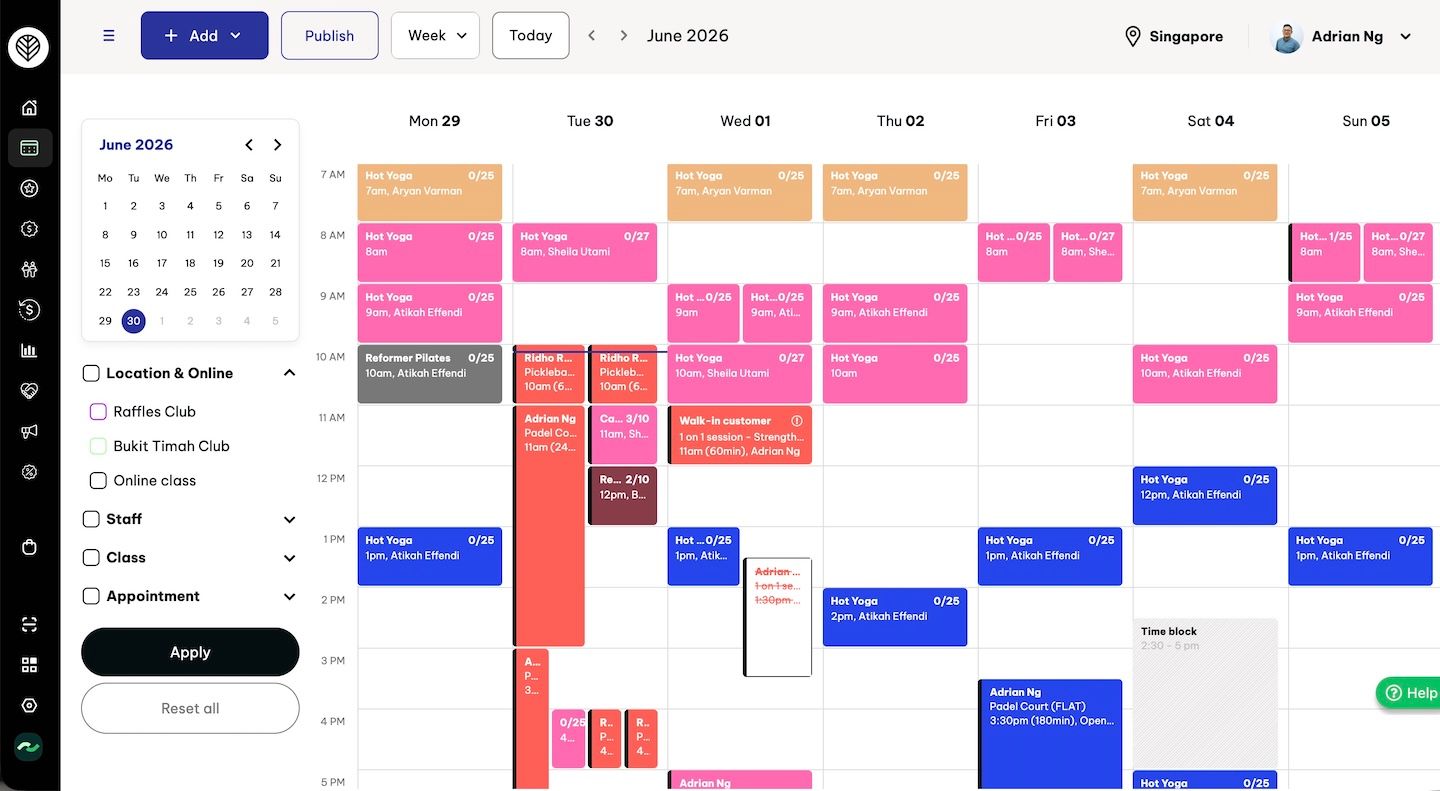
1. Rezerv - All-in-one booking software for fitness trainers
The backbone of a solo fitness business. Covers scheduling, client management, payments, and a bookable website in one platform - no need to stitch together five separate tools.
This fitness software is perfect for managing boutique services like fitness, yoga, and pilates studios, gyms, spas, beauty clinics, and sports facilities.
You get a branded website and app builder, which you can use without knowing any code. It can create a scheduling/booking system and help manage classes.
Using this service, you can set up membership and packages, integrate local payments, loyalty programs, and group or spot booking. The platform is easy to use and has a mobile-responsive web application, alongside Android and iPhone apps.
If you'd like to see whether it's the right fit for your business, you can try Rezerv with a free trial.
.png)
2. Dynadot - Custom domain registration
A professional domain makes everything else look legitimate. Dynadot offers some of the most affordable domain pricing available with a straightforward setup - no technical experience needed. Pair it with your Rezerv booking page, and you instantly have a real business address.
When you do your domain name registration, you would want a platform that is clear about the prices from the get-go.
The buying price is generally low on most domain registrars, but they aren’t transparent about how the prices may increase later. With Dynadot, the initial price is generally the same as renewal prices, so your costs stay steady.
This ICANN-accredited domain registrar offers powerful domain search, domain transfer, aftermarket (buy/sell), and the management tools you need, especially when you are managing multiple domains.
When privacy is enabled, it will protect your personal details. You also get a website builder which includes SEO settings, a custom code editor, e-commerce support, and VPS hosting without any extra cost.
They offer Whois privacy, which is included with the purchase of the domain and is not a premium add-on. They also filter all mails, emails and phone calls for spam, and you only receive non-spam messages.
3. Canva - Visual content & marketing design
Studio-quality graphics for social media, class schedules, and promotional materials. The free tier covers everything most solo coaches need.
If you have a fitness business, you will need visuals for various marketing and promotional content like class flyers, social media posts, business cards, class schedule pages, etc.
Canva has features that aid visual edits, like a brand kit that lets you upload a gym logo and set brand colors and fonts, ensuring consistent branding across all materials.
You will find thousands of fitness templates and premium fitness stock photos, and these pre-designed templates from fitness photos and high-quality images can be used to create visuals for your business.
This software is easy enough to use that you won’t need a designer to create your visuals for you. The application features can be used to create consistent imagery throughout things like social posts, flyers, and signage to keep the brand’s visual identity uniform.
4. Google Workspace - Email & document management
Google Workspace can help your fitness business get a professional email, secure cloud storage for important digital assets, shared documents, scheduling client communications, and basic admin controls.
With a branded email address (yourname@yourdomain.com) and shared docs for client programs and waivers, you can use it for marketing, run class bookings, keep client records, and collaborate with trainers.
The monthly cost for this is low, and the platform is highly credible. Each staff member can get their own business Gmail address on your domain, which gives your business a cohesive and professional look, helping unify client communication.
Since Calendar can integrate with Meet, you can use the appointment features to publish trainer availability, book classes, and even run virtual sessions and events.
For these, your meeting links and guest lists will be organized and available for use whenever you need them. It gives you full control over shared drives and files, making it easy for your staff, and in some cases, you don’t have to run to other applications for the basics of digital operations.
5. Mailchimp / MailerLite - Email marketing
If you want software specifically for email marketing, Mailchimp/MailerLite is the way to go. Automated newsletters, class announcements, and re-engagement sequences, you name it, it can do it. Free plans work well at the solo coach scale.
With this kind of platform, a fitness trainer can collect subscribers, send branded newsletters and promotions, automate member journeys, segment audiences, and measure campaign performance.
Mailchimp comes with a broader feature set and deeper analytics. You get stronger e-commerce and audience-behaviour tools, which are something you will need if you want more advanced automations, sophisticated segmentation, or heavy integration with online stores.
MailerLite, on the other hand, is more budget-friendly. If you have a small to medium studio or are just starting out, you get all the basics without facing the steep costs.
6. Zoom / Google Meet - Virtual session delivery
Ever since COVID-19, there has been hype for online classes. If you truly want to expand your reach as a fitness trainer, you might want to look into Zoom or Google Meet, because it will enable you to run live and recorded online classes, offer premium one-on-one coaching, take hybrid sessions when needed, arrange client meetings, and consultations.
These platforms come with tools for scheduling, recording, participant management, and are open to booking system integrations.
Since both platforms support real-time video sessions with steady service, trainers can take group workout classes, personal training, and even review techniques remotely when needed.
You can record classes locally or on the cloud, and share them with clients either as an on-demand library of training videos to sell or include them in memberships.
If you integrate meeting links into your booking system, your in-studio and remote clients can use the same schedule and access links automatically.
7. Later or Buffer - Social media scheduling
Being present and active on social media is crucial for a personal fitness trainer, because if you want to build your clientele, it will generally come through online promotion.
Using platforms like Later or Buffer for your marketing can be very useful. Later is a visual, Instagram-heavy marketing tool that lets you plan a polished content calendar, preview how posts look on your feed, and help you manage your visual campaigns.
This is great for trainers who post workout reels, branded tips, and transformation photos, but you get all that for a more premium price.
Buffer, on the other hand, is cheaper and works on multiple platforms. Its interface is clean and simple, and you can schedule and queue content for Instagram, Facebook, LinkedIn, or X without extra complexity.
So if you want aesthetic branding, visual consistency, and would want to function like a fitness influencer on the side, choose later. If you will focus heavily on the business itself, choose Buffer since it costs less and works great for small teams.
Conclusion
The right tools don't replace the human side of coaching - they protect it. By automating admin, payments, and marketing, solo coaches free up time for what actually grows the business: client results and relationships.
For a fitness coach, if you are just starting off and you don’t have the budget or the manpower to handle all the aspects of the business, these seven tools can be gold.
They can help ensure your business is up and running, making it easier to handle the operations, so that you can focus more on instruction than worry about things like management, administration, and marketing.
Read next: Top 6 tools every gym needs to manage social media efficiently