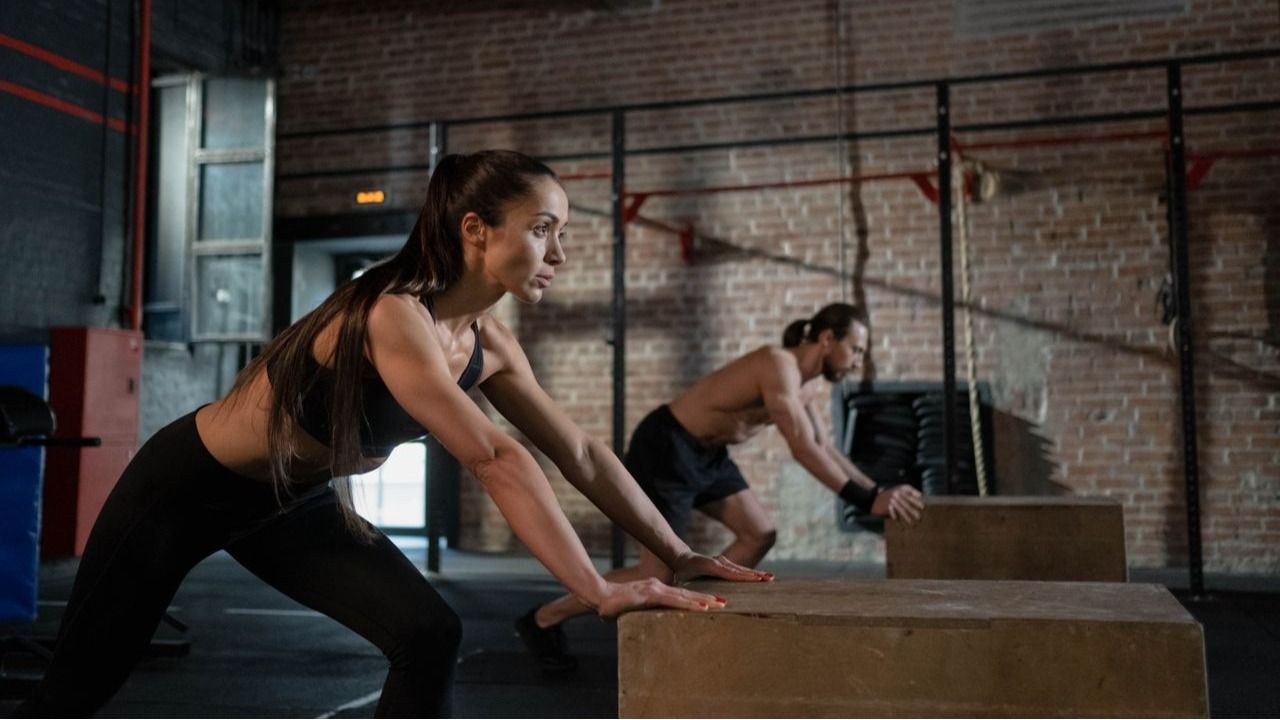
CrossFit open gym vs. Classes: Which is better for beginners?
CrossFit open gym vs. classes: Learn the key differences in coaching, flexibility, and workouts to find the best option for beginners.
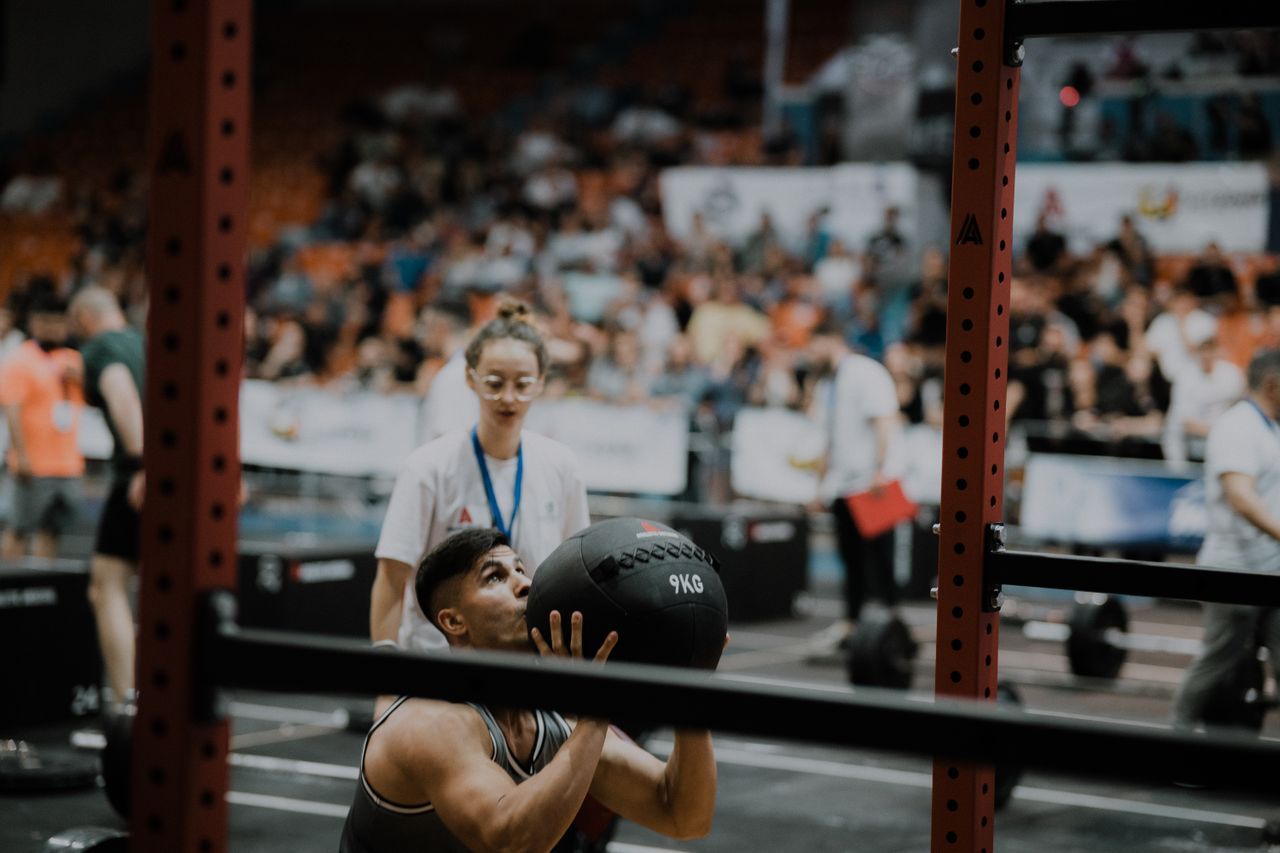
Source: Ardit Mbrati on Pexels
So you've decided to give CrossFit a go. You've found a gym near you (CrossFitters call them "boxes"), opened the timetable, and now you're looking at two options, open gym and classes. One sounds flexible and relaxed. The other sounds structured and a little intense. Which one should you actually book?
Here's the short answer. For most beginners, coached CrossFit classes are the better place to start. A coach teaches you the movements, corrects your form and scales each workout to your level. Open gym works best once you've learnt the basics and want extra time to practise skills or train on your own schedule.
Getting this choice right early on matters. CrossFit uses technical movements like squats, deadlifts, cleans and kipping pull-ups, and the habits you pick up in your first few weeks tend to stick. If you start with good coaching, you build solid technique from day one, lower your risk of tweaking something, and feel more confident each time you walk into the box.
One quick note before we go further: open gym and the CrossFit Open are two separate things. The CrossFit Open is a worldwide competition that runs once a year. Open gym is the training time your box sets aside for members to work out on their own.
In this article, we'll explain how open gym and classes work and compare them side by side. We'll also walk you through the on-ramp programme most boxes use to get new members started. By the end, you'll have a quick self-check to tell when you're ready to train on your own, plus a simple plan for your first open gym session.
What is CrossFit open gym?
Open gym is time set aside on your box's timetable for members to train on their own. You get access to the space and equipment, and you run the session yourself. You pick the movements, the weights and how long you spend on each part.
Most boxes fit open gym around their class schedule, so you'll usually find it in the quieter slots, like mid-morning, early afternoon or weekends. Some boxes offer an hour or two a day. Others leave the floor open for most of the day, as long as no class needs the space.
How does CrossFit open gym work?
You turn up during open gym hours, find a spot on the floor and follow your own plan. Most members use the time for one of these:
- Skill practice: drilling something that keeps tripping them up in class, like double-unders, handstand holds or the squat clean
- Strength work: following a separate squat, deadlift or press programme
- Mobility and recovery: loosening tight hips, shoulders or ankles after a hard week
- Catching up: doing a class workout they missed earlier in the week
The rules change a lot from box to box, so check before your first visit. Here's what usually varies:
- Supervision: Some boxes keep a coach on the floor to answer questions or watch a lift. At others, you're fully on your own.
- Who can use it: Many boxes only open it to members who've finished the on-ramp or already have CrossFit experience.
- Booking and cost: You might be able to walk in whenever you like. Some boxes ask you to book a slot, and others charge a drop-in fee or take a class credit.
Here's what a session might look like. Say you've been going to classes for a couple of months and your front squat still feels shaky at the bottom. You book a 45-minute open gym slot on Friday and spend 10 minutes warming up on the rower. Then you work on front squats for 20 minutes with an empty barbell and light plates, filming a few sets on your phone to check your depth. You finish with some kipping pull-up drills on the rig and a few minutes of hip mobility. At your next class, you ask the coach to take a look at your front squat.
That kind of focused, unhurried practice is what open gym is great for. The catch is that you're your own coach for the hour, so it works best once you know the movements well enough to spot your own mistakes.
What is a CrossFit class?
A CrossFit class is a coach-led group session, usually around an hour long, where everyone follows the same planned workout. The coach explains the workout, teaches the movements, watches everyone's form and adjusts the workout so each person can do it safely.
Classes follow your box's programming, which coaches plan over several weeks so you train a balanced mix of strength, conditioning and gymnastics. All you need to do is book a spot and show up. Most classes have somewhere between 6 and 15 people, depending on the box and the time of day.
What happens during a typical CrossFit class?
Most boxes follow a similar structure. The timings below are a rough guide for a 60-minute class.
1. Whiteboard briefing (about 5 minutes)
The coach walks everyone through the day's workout: the movements, the reps and the goal, such as holding a steady pace or lifting heavy. If you're new or carrying an injury, this is the moment to tell the coach.
2. Group warm-up (10 to 15 minutes)
You start with light cardio like rowing or skipping, then move on to dynamic stretches. After that, you practise lighter versions of the movements coming up later in the class.
3. Skill or strength work (15 to 20 minutes)
This part focuses on one thing. You might work up to a heavy set of back squats or practise a gymnastics skill like toes-to-bar. The coach moves around the room and gives each person tips.
4. Workout of the Day (10 to 20 minutes)
The [Workout of the Day (WOD)] is the main conditioning piece and usually the toughest part of the class. Common formats include AMRAP (as many rounds as possible), EMOM (every minute on the minute) and "for time", where you finish the work as fast as you can.
5. Cool-down (5 to 10 minutes)
You finish with stretching and mobility work. Many boxes also ask you to log your score on the whiteboard or in their app, so you can track your progress.
The coach is what makes a class so useful for beginners. During the class, they'll give you quick cues like "chest up" or "push your knees out", and they'll catch small mistakes before they become habits.
Coaches also scale the workout to your level by changing the weight, the reps or the movement itself. For example, if the workout calls for 15 pull-ups per round and you can't do one yet, your coach might swap them for ring rows. For ring rows, you keep your feet on the floor and pull your chest up towards a pair of hanging rings.
You train the same pulling muscles at a level you can manage. Box jumps might become step-ups, and a loaded barbell might become a lighter bar or a PVC pipe while you learn the technique.
If you want a feel for the workouts you'll come across in class, have a look at our guide to the [best CrossFit workouts](link to: Best CrossFit Workouts: 10 WODs for Strength & Fitness, once live).
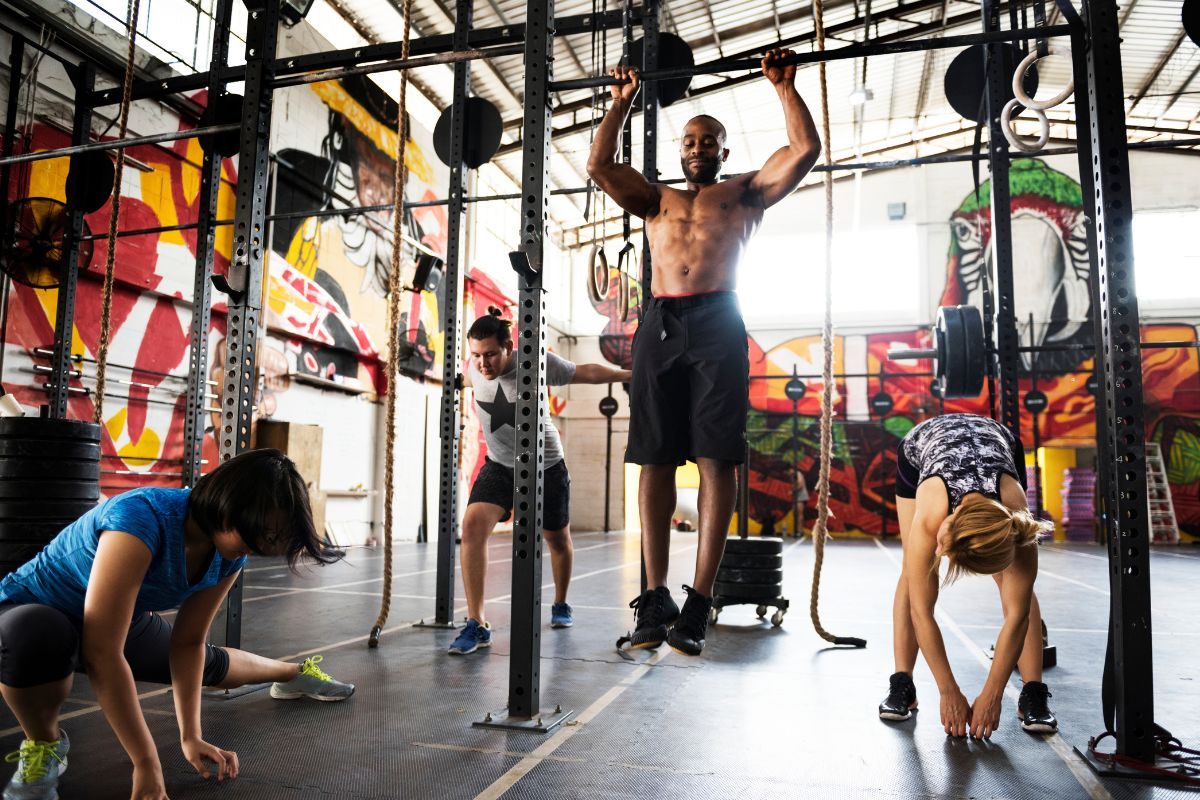
Source: rawpixel.com on magnific
What is a CrossFit on-ramp or foundations programme?
An on-ramp is a short beginner course that most CrossFit boxes run for new members. It teaches you the core movements, the CrossFit lingo and how to scale a workout before you join regular classes. Think of it as your induction into how the box works.
Boxes call it different things. You might see it listed as on-ramp, foundations, fundamentals or simply a beginners course. The idea is the same everywhere.
What you'll learn in an on-ramp
Each box builds its own on-ramp, but most cover these basics:
- The core lifts: air squat, front squat, deadlift, shoulder press and push press
- Gymnastics basics: push-ups, pull-up progressions, sit-ups and simple core work
- An intro to the Olympic lifts: usually the early steps of the clean, using a PVC pipe or an empty barbell
- The vocabulary: WOD, AMRAP, EMOM, Rx (doing the workout exactly as written) and scaling
- How classes run: where everything is kept, how to set up your space and how to log your scores
Most sessions also end with a short workout, so you get a taste of the intensity while the coach can still watch you closely.
How long it takes and what it costs
On-ramps are usually short. Most run for two to a few sessions, spread over one to a few weeks. Some boxes teach them one-to-one, while others use small groups of two to six people. You’ll often book these sessions the same way you’d book a regular class, through the box’s website or booking app.
Prices and formats vary from box to box. In Singapore, CrossFit Enduro requires all new members to complete its Fundamentals course before joining group classes. The course runs over two 1.5-hour sessions and covers nine foundational movements.
Other boxes take a lighter approach. Amplify Fitness offers first-timers a three-class trial pass for S$59, and coaches scale each class to your level from day one. Innervate Fitness has no prerequisites to start, so beginners join the regular classes and the coaches adapt the movements for them. Whichever route your box takes, ask what’s included in the price before you pay, since many beginner packages also include a few weeks of class access.
Why so many boxes make it compulsory
Classes move quickly. A coach with 12 people on the floor can't stop to teach someone a deadlift from scratch while everyone else waits. The on-ramp gives you that one-to-one time upfront, and it lets the coach confirm you can move safely before you join a full class.
It helps you too. Walking into your first regular class already knowing what "3 rounds for time" means, and how to set up a barbell, makes it a lot less intimidating.
So if you're brand new, your real starting point is the on-ramp, then classes. Some boxes skip a formal on-ramp and put beginners straight into classes with extra coaching, so ask what your box does when you get in touch. CrossFit's own guide on what to expect from a CrossFit class is also worth a quick read before your first session.
CrossFit open gym vs. classes: key differences
Open gym and classes happen in the same box, with the same barbells and often the same people. The main change is who runs your session. Here's how the two compare.

Cost. Open gym prices vary quite a bit between boxes. In Singapore, Actualize Fitness charges S$28 for an open gym drop-in and S$38 for a coached class. At CrossFit Unit, open gym passes work out to S$17 per visit when you buy a pack of 10, while a class drop-in costs S$39. On unlimited memberships, open gym is usually included, as it is at CrossFit Urban Edge and CrossFit Mobilus.
Most of these differences come down to how much guidance you get. Classes give you a coach, a plan and a group to train with. Open gym gives you space and time, and you bring the know-how yourself. When you’re just starting out, the coaching in a class is worth far more than the extra freedom.
Pros and cons of each format
Open gym
What’s good about it
Open gym gives you time to focus on one thing. In class, you might get two minutes on double-unders during the warm-up before moving on. At open gym, you can spend 15 minutes on them: a few attempts, a short rest, then another go, until the rhythm finally clicks.
It also fits around awkward schedules. If you work shifts or have kids to pick up, being able to train at 2pm on a Tuesday can be what keeps you consistent. It’s also handy for making up a missed workout or adding a mobility session when your hips feel tight after a heavy week.
Some people also like that it’s quieter, with no clock running and no group to keep pace with.
What to watch out for
Nobody is watching your form. If your knees cave in on a squat or your lower back rounds on a deadlift, you’ll repeat that mistake rep after rep. Do it every week, and it becomes a habit that’s hard to fix.
Beginners also tend to train the movements they enjoy and skip the ones they find hard. After a month, that can mean plenty of bench work and no practice on the movements that needed it most.
There’s also the risk of doing too much. Adding open gym on top of three or four classes a week, without enough rest, is an easy way to end up sore, tired and injured. And around peak times, the floor gets busy, so you may need to share equipment or give up space when a class starts.
If you do start using open gym later, OPEX Fitness has a useful guide on how to structure an open gym session.
CrossFit classes
What’s good about them
A coach adjusts the workout for you on the day. If your shoulder feels off, they’ll swap overhead presses for something that doesn’t aggravate it. If the prescribed weight is too heavy, they’ll help you pick a lighter one before you start.
The programming also covers the planning for you. Coaches spread strength, conditioning and gymnastics across the week, so you build all-round fitness without having to design a programme yourself.
Then there’s accountability. When you’ve booked a 6:30am spot and the coach knows your name, you’re much more likely to show up. Over time, you’ll pick up the equipment, the terminology and the movements one class at a time, with someone there to answer your questions.
What to watch out for
Class times are fixed. If work runs late and you miss the 6pm slot, you’ll have to wait for the next class or skip that day.
Class time is limited, too. The skill block has to suit everyone in the room, so there’s not much time to work on your own weak spots. With 12 people on the floor, the coach’s attention is also split, and you’ll get a few cues per session at most.
The first few classes can feel intimidating, especially when you see everyone’s scores on the whiteboard. Keep in mind that most people in the room are scaling something, and every one of them had a first class too.
Which is better for CrossFit beginners?
For most beginners, classes are the better choice. Start with the on-ramp, move into regular classes, and add open gym later once you've got the basics down.
Your background does make a difference, though. Someone who has lifted weights for five years needs something different from someone who hasn't exercised since PE at school. Use the two lists below to work out where you fit.
Choose CrossFit classes if...
- You've never tried CrossFit. A coach can teach you each movement properly from the start, which is much easier than unlearning a bad habit later.
- Olympic lifts and gymnastics are new to you. The clean, the snatch and the kipping pull-up involve a lot of moving parts. They're very hard to learn from videos alone.
- You want someone to check your form. Even regular gym-goers bring habits from machines and bodybuilding routines that don't suit CrossFit movements.
- You stick with training better when there's a set time and a group. If you've signed up for gym memberships before and drifted away, a booked class and familiar faces can make it much easier to keep going.
Consider open gym if...
- You've finished the on-ramp and go to classes regularly. A few months of steady classes gives you the movement base to train safely on your own.
- You have one specific skill to work on. Open gym is perfect for practising something like double-unders, toes-to-bar or your squat clean.
- Class times don't always fit your week. Open gym helps you stay consistent when work or family plans get in the way.
- Your coach says you're ready. They've watched you move for weeks, so their opinion is the best one to go by.
If you're coming from powerlifting or regular gym training, you might be ready for open gym sooner than most beginners. Your squat and deadlift will carry over well, although the Olympic lifts, gymnastics and conditioning formats will still need coaching. A short on-ramp usually covers those within a few weeks.
The bottom line: if you have little or no CrossFit experience, start with an on-ramp or coached classes. Add open gym once you know the movements and your coach agrees you're ready.
Most boxes let you book an intro class or on-ramp session online, so it's easy to try a session before you sign up for a membership. Before you go, read CrossFit's guide on what to expect at your first CrossFit class so you know what to bring and how the session will run.
What to check before joining a CrossFit gym
CrossFit gyms are independently owned affiliates, so each one sets its own timetable, prices and rules. Two boxes in the same city can handle beginners very differently. Before you sign up, message the box or ask these questions when you visit.
1. Do you run an on-ramp or foundations programme?
Ask how many sessions it includes, whether it's one-to-one or in a small group, and whether the cost is included in your first month or charged separately.
2. Are your coaches certified?
The CrossFit Level 1 Certificate is the entry-level qualification for CrossFit coaches. Many experienced coaches also hold a Level 2 certificate or other strength and gymnastics qualifications.
3. Is a coach on the floor during open gym?
This is especially useful when you're new to open gym, because you can ask quick questions or have someone check a lift.
4. When can new members start using open gym?
Some boxes let you in as soon as you've finished the on-ramp. Others want you to have a few months of classes first.
5. Is open gym included in the membership, or does it cost extra?
Check whether it's covered by an unlimited plan, sold as a drop-in or add-on, or takes a credit from a class pack.
6. How many people come to each class?
Smaller classes mean more coaching for each person. If a class regularly has 20 people and one coach, you'll get far less feedback than in a class of 8.
7. Can I try an intro class before committing?
Many boxes offer a free intro session or a drop-in class. It's the easiest way to check whether you like the coaching style and the people.
8. Can I book classes and open gym slots through an app?
A good booking system makes it much easier to train consistently. You'll want to see the timetable, book or cancel a spot in a few taps, and join a waitlist when a class is full. Many boxes use a gym booking and membership app like Rezerv for this, so ask which one your box uses and how its cancellation policy works.
One more tip, if you can, visit while a class is running. Watch how the coach treats the newer members. Do they come over to adjust someone's form, explain how to scale a movement, and keep track of everyone in the room? Watching a class for 10 minutes will tell you more about the coaching than the box's website will.
Frequently asked questions
What is open gym in CrossFit?
Open gym is time on a box's timetable when members can use the space and equipment to train on their own, without a coach-led class. People use it to practise skills, do strength or mobility work, or make up a missed class workout. Supervision and access rules vary from box to box.
Can you do CrossFit open gym without experience?
At most boxes, you can't. Many limit open gym to members who've finished the on-ramp or already have CrossFit experience. Even where it's allowed, complete beginners should get coaching before trying technical movements like the clean, snatch or kipping pull-up on their own.
What do you do at open gym?
Most members use open gym for one focused goal: drilling a skill like double-unders, practising a lift with light weight, doing mobility work, or catching up on a missed workout.
Is open gym included in a CrossFit membership?
It often is, especially on unlimited plans. Some boxes sell open gym separately as a drop-in or add-on, and others deduct a credit from your class pack for each visit. Ask your box how it handles open gym before you sign up, so you know what you're paying for.
What is an on-ramp class in CrossFit?
An on-ramp is a short beginner course that teaches the core CrossFit movements, the terminology and how to scale workouts before you join regular classes. It usually runs over several sessions, and many boxes require it for new members. Some boxes call it foundations, fundamentals or a beginners course.
How long is a typical CrossFit class?
Most CrossFit classes last about 60 minutes, though some boxes run shorter 45-minute sessions. Open gym sessions can be shorter or longer, depending on the box's timetable.
Do you need to be fit before joining a CrossFit class?
You don't need to be fit to start. Coaches scale every workout by adjusting the weight, reps or movements to suit your current level. Someone on their first day and someone with five years of experience can do the same workout in the same class. You'll build your fitness by turning up regularly.
Can you do the Workout of the Day during open gym?
Some boxes allow it, especially if you missed a class earlier in the week. It depends on the box's rules, whether the equipment is free, and how experienced you are. If you're new, ask your coach first and do a scaled version, since nobody will be there to adjust it for you.
Is open gym the same as the CrossFit Open?
These are two different things. The CrossFit Open is an annual online competition where people around the world complete the same workouts over a few weeks and submit their scores. Open gym is the time your local box sets aside for members to train on their own.