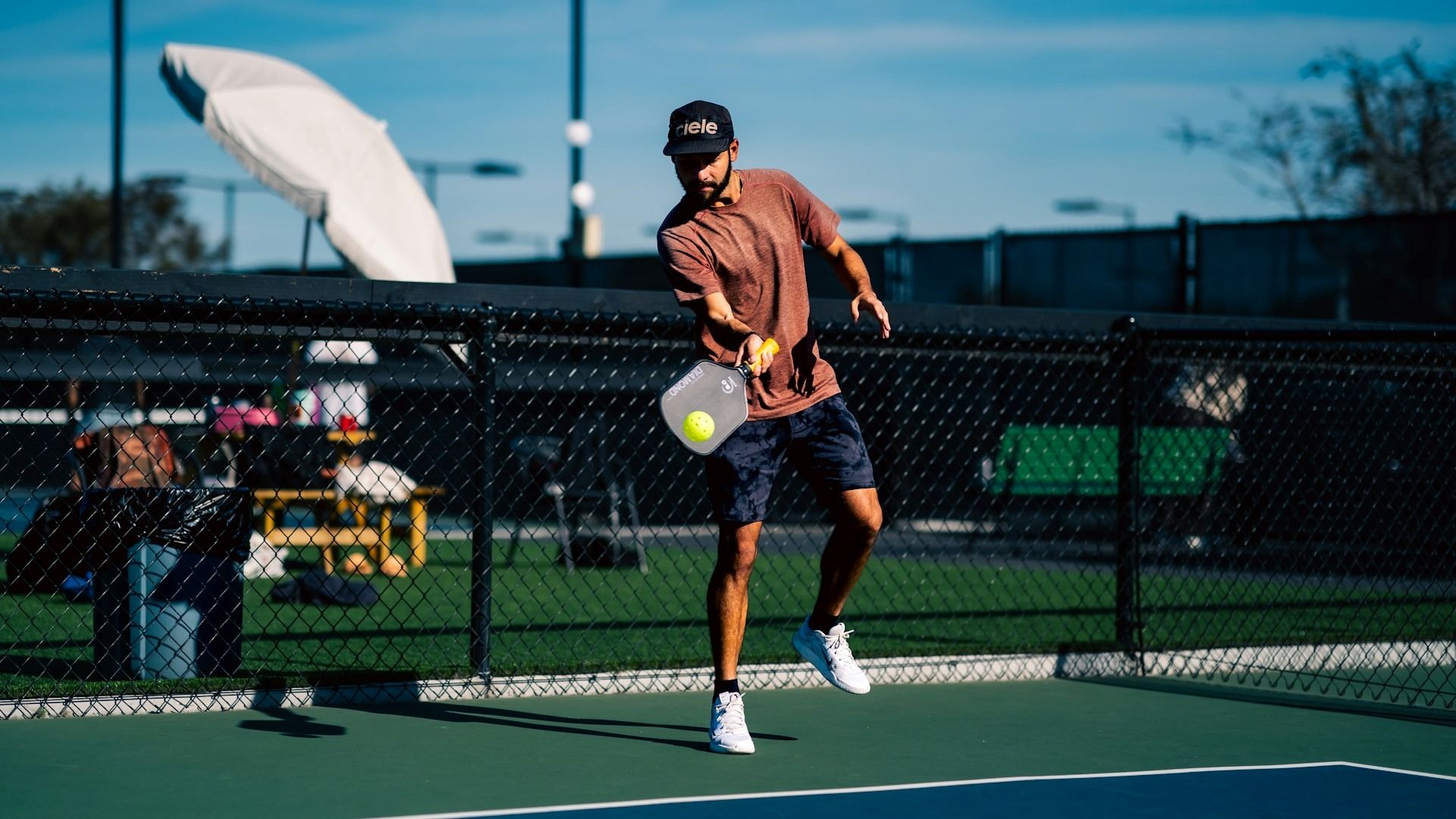
How much do pro pickleball players make?
Discover how much pro pickleball players earn, from tournament winnings to sponsorships and coaching opportunities.
How much do pro pickleball players make? It depends on how far up the rankings they are, how marketable they are, and how many income streams they stack.
The biggest names can earn serious money from sponsorships and league deals, while many touring pros make far less and have to cover hefty travel and training costs out of pocket.
In other words, “pro pickleball income” is rarely one clean salary. For most players, it’s a mix of prize money, team or league contracts, sponsorships, appearance fees, coaching/clinics, and content. One weekend can be a great payout, the next can be a net loss after flights and hotels.
In this guide, you’ll get a realistic breakdown of what pros earn at different levels, how each income stream works, and what “take-home” can look like after expenses.
If you’re curious about the lifestyle side too, this will also help you understand who can truly do pickleball full-time and who is still building toward that.
Last updated: January 2026
.jpg)
Source: Unsplash
Quick answer: How much do pro pickleball players make a year?
If you’re Googling how much do pro pickleball players make, here’s the realistic range: incomes swing from low five figures for many touring pros to seven figures for the biggest stars. The gap is huge because “pro” can mean very different tiers of contracts, sponsorship pull, and on-court results.
1. Superstars (the faces of the sport)
Typical annual earnings: $1M+
Where the money comes from: big sponsorships + major contracts + winning (plus content/appearances)
Real-world context: Anna Leigh Waters was reported as earning $3M+ in 2024 (per her agent). Ben Johns has publicly estimated his annual income at around $2.5M in a CNBC interview.
2. Top contracted pros (high ranking and marketable)
Typical annual earnings: roughly $150K to $500K+
Where the money comes from: guaranteed deals + sponsors + team leagues
Real-world context: During the period where tours competed heavily for talent, multiple reports described guaranteed contracts landing around $250K to $500K for some players.
3. Full-time touring pros outside the top tier
Typical annual earnings: roughly $30K to $150K
Where the money comes from: Smaller sponsors + coaching/clinics + some prize money
Reality check: Prize payouts per event can be modest unless you’re consistently going deep in draws. PPA payout structures show winners earning in the high thousands per event, with much smaller checks earlier in the bracket.
4. Aspiring pros / semi-pro
Typical annual earnings: under ~$30K
Where the money comes from: Lessons, clinics, local sponsors, occasional event cash
Reality check: For a lot of players, it’s more “paid athlete” than “full-time paycheck,” especially after costs.
One extra context point that helps explain the spread: Major League Pickleball has said roughly 130 contracted players across MLP and the PPA Tour earned $30M+ collectively in 2024, but it’s not distributed evenly. Contract structures have also been evolving, including spreading some guarantees over multiple years starting in 2026.
.jpg)
Source: Unsplash
How pro pickleball players get paid (the 5 main income streams)
When people ask how much do pro pickleball players make, they’re usually imagining one paycheck. In reality, most pros earn from a stack of different streams, and the mix looks totally different depending on ranking, popularity, and the tour/league they’re playing.
1. League and team contracts (guaranteed money)
This is the “stability” bucket. A contract can mean guaranteed pay for being part of a league, team, or tour system, regardless of how you finish in a single event.
A helpful context point: the PPA Tour reported that roughly 130 contracted pros across MLP and the PPA Tour earned $30M+ collectively over a season.
2. Appearance fees and stipends (getting paid to show up)
Some events include money allocated specifically for players who appear, plus stipends.
For example, the PPA’s published prize money breakdowns for major event tiers list player appearance fees and player stipends as part of the event total.
3. Prize money (tournament results)
Prize money is the most obvious income stream, but it’s also the most volatile.
Using the PPA’s own published payout tables as an example: winners in doubles can earn in the high thousands per event, while earlier-round finishes are much smaller.
That’s why many players need volume (lots of tournaments) and deep runs to make prize money a meaningful part of annual income.
4. Sponsorships and endorsements (often the real difference-maker)
This is where the biggest income gap shows up.
Top pros can earn major sponsorship dollars because brands are paying for visibility, content, and credibility, not just medals. Forbes reported (via her agent) that Anna Leigh Waters was on track to earn more than $3 million in 2024, driven largely by the commercial side of the sport.
5. Coaching, clinics, camps, and content (the “income stabilizer”)
For a lot of touring pros, this is what keeps the year profitable.
Common examples:
- private lessons and group clinics at clubs
- weekend camps and brand-hosted events
- YouTube, Instagram, affiliates, and paid communities
.jpg)
Source: Unsplash
Prize money explained: what pros can earn at a PPA tournament
When people ask how much do pro pickleball players make, they often assume tournament winnings are the main paycheck. Prize money matters, but the published numbers can be misleading if you do not look at how payouts are structured.
On the PPA Tour’s own “How it Works” page, each major event tier lists a big “total,” but a large portion is labeled as player appearance fees and player stipends.
For example, the PPA lists $1,000,000 in appearance fees and $70,000 in stipends within the total for tiers like a PPA Slam, PPA Cup, and PPA Open.
Here’s what the actual prize payouts can look like at the top end (per event, per division) sourced from the PPA’s published prize money breakdowns:
PPA Slam prize payouts (example)
- Doubles champions: $10,000 (men’s, women’s, mixed)
- Singles champions: $3,700 (men’s and women’s)
- Earlier rounds drop quickly, with the page listing payouts like $1,375 for a doubles quarterfinalist and $688 for a doubles Round of 16.
PPA Cup prize payouts (example)
- Doubles champions: $9,000
- Singles champions: $3,330
PPA Open prize payouts (example)
- Doubles champions: $8,000
- Singles champions: $2,960
What this means in plain English
- If you are consistently winning or reaching finals, prize money can add up.
- If you are finishing in the middle rounds, the checks are much smaller, and travel costs can eat into profits fast.
- The giant event totals you see online often include appearance fees and stipends, which typically benefit certain contracted or eligible players more than everyone in the draw.
.jpg)
Source: Unsplash
League contracts and guaranteed money: The part of income that can be predictable
When someone asks how much do pro pickleball players make, this is the bucket that explains the biggest gap between “top names” and “everyone else.” Guaranteed money can provide stability, but the structure has been changing as pro pickleball matures.
Guaranteed salary redesign (starting in 2026)
In June 2025, Pickleball.com reported the UPA’s proposal for 2026 and beyond, including a shift that splits a player’s final-year (2026) guaranteed amount into equal payments across 2026 to 2028. Their example: a $300,000 guarantee for 2026 becomes $100,000 per year over three years.
The same report also summarized the UPA’s projected earnings pool starting in 2026:
- $11M annually in guaranteed money
- $15M annually in domestic prize money across the PPA Tour and MLP
- $5M annually in international prize money opportunities
- Up to $31M in total player earnings starting in 2026
Why this matters for take-home pay
This type of structure typically means:
- More stability for contracted players (you have a baseline)
- More upside tied to results (prize money becomes a bigger piece of the pie)
Contract “tiers” and eligibility (how access can differ)
That same UPA coverage described different contract categories and signing windows, including Gold Contracts, Standard Contracts, and pathways for New and Futures contracts.
Big-picture context: how much guaranteed money exists in the system
MLP’s own recap of 2024 stated that the roughly 130 players under contract with MLP and the PPA Tour earned more than $30M collectively over a season, which helps explain why more athletes are trying to go pro.
.jpg)
Source: Unsplash
What a realistic year can look like for a non-superstar touring pro
A lot of players hear “pro pickleball” and picture a steady salary. In reality, many touring pros are piecing together income from multiple sources, then paying significant costs to compete.
Below are two illustrative scenarios to show how the math can shake out. (These are examples, not promises. Actual earnings vary a lot by ranking, deals, schedule, and how often you can run clinics.)
Scenario A: Touring pro without a major contract
Income (gross)
- Prize money across the season: $10,800
- Example math: 18 tournaments × $600 average = 18 × 600 = 10,800
- Clinics and lessons: $23,000
- Example math: 20 clinic days × $750 = 20 × 750 = 15,000
- Plus private lessons and local coaching: $8,000
- Small sponsorships/affiliate deals: $10,000
Total gross income: 10,800 + 23,000 + 10,000 = $43,800
Expenses (typical)
- Travel + lodging: $16,200
- Example math: 18 trips × $900 = 18 × 900 = 16,200
- Food + local transport: $4,500
- Example math: 18 trips × $250 = 18 × 250 = 4,500
- Coaching/training support: $6,000
- Physio/recovery: $2,000
- Equipment and stringing/grips/shoes: $1,500
- Misc. (entries, insurance, content costs): $1,000
Total expenses: 16,200 + 4,500 + 6,000 + 2,000 + 1,500 + 1,000 = $32,200
Estimated net (before taxes): 43,800 − 32,200 = $11,600
What this tells you: without a strong sponsor or guaranteed deal, the lifestyle can look more like “barely profitable business” than “athlete salary.”
Scenario B: Touring pro with a solid contract and stronger sponsors
Income (gross)
- Guaranteed money/contract: $60,000
- Sponsorships + endorsements: $40,000
- Prize money: $25,000
- Clinics/lessons: $20,000
- Content/affiliate income: $5,000
Total gross income: 60,000 + 40,000 + 25,000 + 20,000 + 5,000 = $150,000
Expenses
- Travel + lodging: $18,000
- Example math: 20 trips × $900 = 20 × 900 = 18,000
- Food + local transport: $5,000
- Example math: 20 trips × $250 = 20 × 250 = 5,000
- Coaching/training support: $10,000
- Physio/recovery: $4,000
- Equipment: $2,500
- Misc. (entries, insurance, media costs): $2,000
Total expenses: 18,000 + 5,000 + 10,000 + 4,000 + 2,500 + 2,000 = $41,500
Estimated net (before taxes): 150,000 − 41,500 = $108,500
What this tells you: once a player has guaranteed money and real sponsors, pickleball can become a sustainable full-time career.
Source: @anna.leigh.waters Instagram account
Real-world examples: top-earning pro pickleball players
Exact incomes are rarely published in one clean, official list, so the clearest “real-world” numbers usually come from agent statements, player interviews, and reputable sports business reporting. Here are a few of the most-cited top earners.
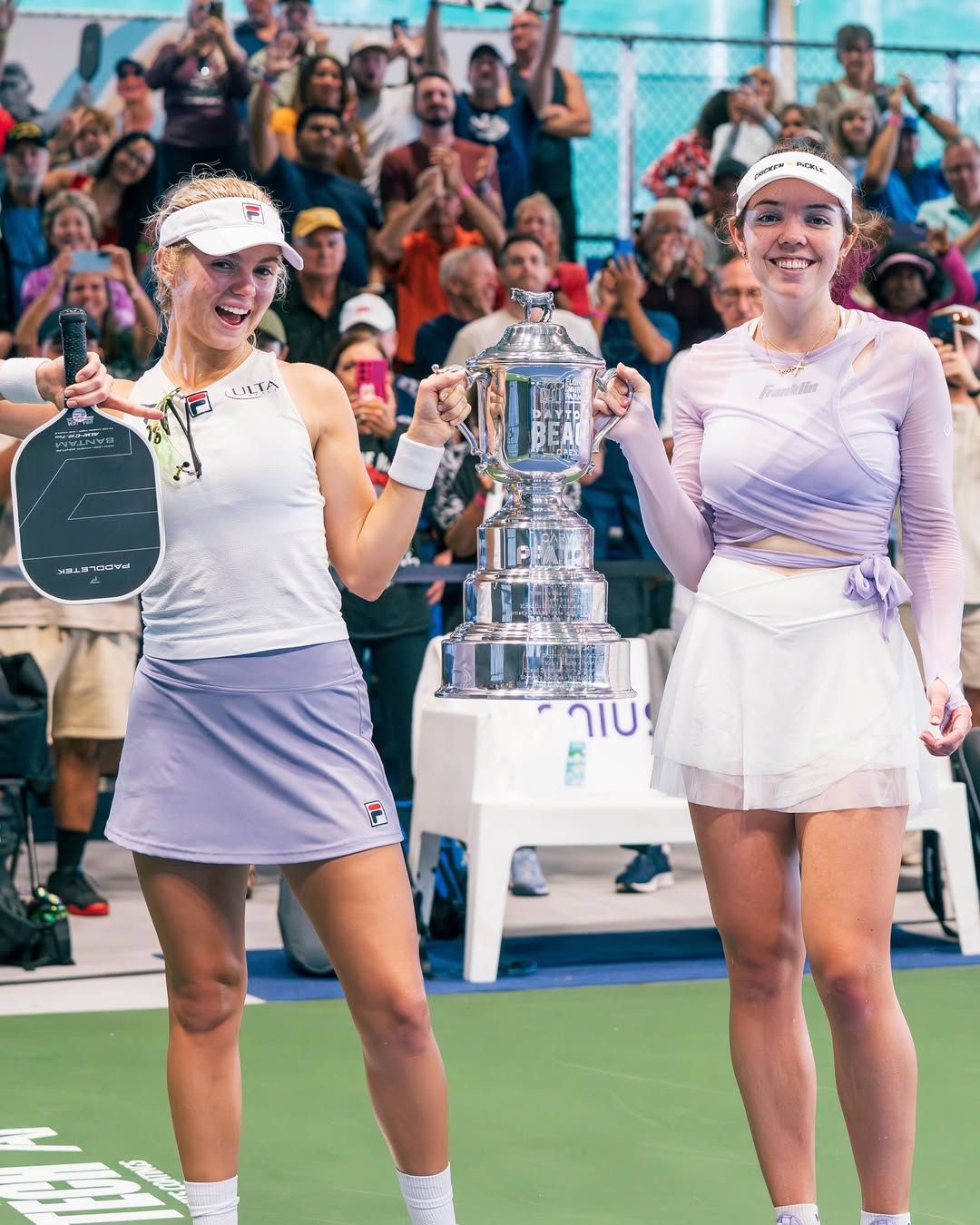
1. Anna Leigh Waters: reported $3M+ in 2024
Forbes reported (via her agent) that Anna Leigh Waters was on track to earn more than $3 million in 2024, putting her at the top of the sport’s earnings conversation.
2. Ben Johns: reported about $2.5M in 2024
Forbes also noted that Ben Johns told CNBC he would make more than $2.5 million in 2024 from salary and other pickleball-related income, and multiple pickleball business outlets repeat that figure as a mix of salary plus endorsement deals.
3. James Ignatowich: self-reported $1M+ in 2024
James Ignatowich has publicly said he expected to make over $1 million in 2024, attributing most of it to salary, plus additional income from coaching/clinics.
4. Gabe Tardio: reported 3-year contract extension, with $800K figure reported by media
Pickleball.com reported Gabe Tardio signed a three-year contract extension with the PPA Tour and MLP through 2027, while Pickleball Magazine reported the deal as a three-year, $800,000 contract (excluding performance incentives).
5. More “big contract” examples (hundreds of thousands)
These next numbers are not official league disclosures. They come from The Dink’s team-by-team salary breakdown for MLP, based on their analysis of roster salary figures.
- Anna Bright: $295,000
- Riley Newman: $275,000
- Catherine Parenteau: $220,000
Important context: these are the top-of-the-top examples. Most pros earn significantly less, and for many players, sponsorships + coaching/clinics are what make a full season financially workable.
Conclusion
So, how much do pro pickleball players make? The true range is huge. A small group of superstars can earn seven figures thanks to major sponsorships and big contracts, while many full-time touring pros are closer to five figures to low six figures, and some are barely breaking even after travel and training costs.
The biggest takeaway is that pro pickleball income is almost never “just prize money.” The players who earn the most usually combine guaranteed contract money + sponsorships + consistent results, then keep things stable with clinics, coaching, appearances, and content.
That’s why two players can both be “pro,” yet have completely different lifestyles financially.
Cheers,
Friska 🐨
Read next: Why is pickleball so popular?