How to start a pickleball business: Complete guide
Learn how to start a pickleball business, from setup and costs to marketing strategies and growth opportunities.
Pickleball isn’t just a sport anymore. It’s a full-blown movement, and one of the fastest-growing business opportunities in the world right now.
From neighborhood parks to indoor clubs, from weekend hobbyists to full-time players, pickleball is showing up everywhere. Cities are struggling to keep up with demand. Courts are packed. Private facilities are opening with long waitlists. And people of all ages are paying for court rentals, lessons, leagues, and gear.
In other words:
If you’ve ever thought about starting a pickleball business, the timing has never been better.
This guide will walk you through everything you need to know to launch a successful pickleball venture, including:
- Choosing the right business model (courts, coaching, clubs, events, rentals)
- Understanding startup costs and planning your budget
- Finding the right location and designing your court layout
- Managing operations, pricing, schedules, and memberships
- Marketing strategies to attract your first wave of players
- And how modern tools like Rezerv help you run everything seamlessly
By the end of this guide, you’ll have a clear roadmap to build a profitable, thriving pickleball business, even if you’re starting completely from scratch.
Why pickleball is a strong business opportunity in 2026
If 2024 and 2025 were the years pickleball blew up, then 2026 is shaping up to be the moment when the sport becomes a serious business wave. Below are the main data-backed reasons why jumping in now makes sense.
1. Demand is still far higher than supply
- In the U.S. alone, there were an estimated 19.8 million pickleball players in 2024, which marks a 45.8% increase compared to the previous year.
- Overall, participation in the U.S. rose about 223.5% over three years.
- Meanwhile, the global market is expanding rapidly: as of 2025, the worldwide pickleball market (including facilities, equipment, services) was valued at USD 3.10 billion, with strong projections for consistent growth.
These numbers show that demand isn’t slowing, and many cities/clubs are under-equipped to meet it. That gap signals clear business opportunity.
2. It’s no longer just “retirees’ sport”, it draws all ages
While pickleball once had a reputation as a pastime for older adults, recent data show many younger players too. The sport is now popular among young adults and working-age demographics, which opens up a much wider client base.
Because it appeals broadly (teens, adults, even families) you’re not limiting your market when you open a pickleball business.
3. Market size and spending potential are rising fast
- According to a 2025-2034 forecast, the global pickleball market is expected to grow at a CAGR (compound annual growth rate) of ~15%, meaning substantial growth year over year.
- The demand isn’t just for playing, there’s growth in equipment, apparel, coaching, court rentals, memberships, and other ancillary services.
For a business owner, that means multiple revenue streams: not just renting courts, but also coaching, memberships, rentals, gear sales, which reduces dependency on a single income source.
4. Global & regional expansion, especially in Asia
The popularity of pickleball is no longer confined to the U.S. For instance:
- A 2025 report from an Asia-focused survey found that among 12 territories, about 1.9 billion people have heard of pickleball, and ~812 million have played at least once, with a sizeable share playing monthly
- This growing awareness and adoption in populous regions like Southeast Asia suggests that new markets, could be early adopters.
If you position yourself now, you might ride the wave before competition becomes fierce.
5. Strong recurring-spend & engagement behaviour
Pickleball isn’t a one-time trial sport for many players. Because the sport is social, accessible, and fun, players tend to return for court rentals, memberships, coaching, tournaments, and gear.
That means from a business standpoint, you’re building a community, and recurring revenue, not just a one-off facility.
6. Low barrier to entry + high scalability potential
You don’t need a massive structure to start. Many successful pickleball businesses began with: a single or few courts, basic equipment, and a simple booking system. Once the demand grows, they scale to multiple courts, memberships, events, and full club-like operations.
Given the data above: rising participation, interest across age groups, and a growing market scaling up becomes both viable and profitable without reinventing the wheel.
7. 2026 is the “Golden Window”
Because the sport is still early in its global boom (especially outside of the U.S.) 2026 represents a period where demand is skyrocketing but competition hasn’t fully saturated the market yet.
Starting now gives you first-mover advantage in many markets. If you wait too long, many of the prime locations, court-space, and eager players may already have joined existing clubs.
.jpg)
Source: Unsplash
Choose your pickleball business model
Before you buy a single paddle or sketch out your dream facility, you need to choose one thing first:
What kind of pickleball business are you actually building?
Pickleball is incredibly flexible as a business, which means there’s no “one-size-fits-all” model. The right one depends on your budget, your space, your city, and your goals.
Here are the most popular (and profitable) business models you can choose from:
1. Outdoor pickleball court business
This is the most affordable way to enter the industry.
You can:
- Build outdoor courts on private land
- Convert unused spaces (parking lots, tennis courts, futsal courts)
- Create a membership or pay-per-hour rental system
✅ Pros:
- Lower startup cost
- Faster setup
- High demand in sunny climates
❌ Cons:
- Weather-dependent
- Less premium compared to indoor courts
This is a great entry-level model if you're testing the market or serving a suburban community.
2. Indoor pickleball club / facility
This is where the real money and premium experiences happen.
Indoor facilities typically offer:
- High-quality, professional courts
- Lighting systems
- Air-conditioning
- Ball machines
- Changing rooms
- Lounges
- Coaching and events
✅ Pros:
- Year-round revenue
- Higher pricing power
- Ability to host tournaments, leagues, and VIP events
❌ Cons:
- Higher startup cost
- Requires larger space
Indoor clubs are booming especially in cities where weather or space is limited.
3. Pickleball coaching academy
You don’t need a huge facility to start a coaching business.
You can operate from public courts, private courts, or partner with existing facilities.
You can offer:
- Beginner classes
- Corporate workshops
- Kids programs
- Senior-friendly sessions
- High-performance training
✅ Pros:
- Very low startup cost
- High profit margin
- Great if you or your team is skilled in coaching
❌ Cons:
- Dependent on coaches’ availability
- Requires strong program planning
Perfect if you want to start small and scale later into a full facility.
4. Pickleball event business (leagues, tournaments & socials)
Pickleball is inherently social, which makes events an easy revenue generator.
You can run:
- Weekly leagues
- Tournaments
- Corporate team-building events
- Social mixers
- Themed competitions
✅ Pros:
- High engagement and loyalty
- Strong recurring revenue
- Amazing for building community
❌ Cons:
- Requires organization
- Needs reliable courts to host
This is one of the best add-on businesses for clubs.
5. Pickleball court rental business
Think Airbnb, but for pickleball courts.
If you have access to private space (home yard, warehouse, rooftop, barn), you can build one or two courts and rent them exclusively.
✅ Pros:
- High ROI
- Low competition in residential areas
- Fully automated using booking software
❌ Cons:
- Limited capacity
- Best for smaller operations
Great for people who want a profitable side business.
6. Hybrid model (the most profitable)
This is the model the fastest-growing clubs use.
A hybrid pickleball business offers a mix of:
- Court rentals
- Coaching
- Classes
- Memberships
- Events & leagues
- Retail sales
- Food & beverage
It’s the most scalable and the most financially resilient.
✅ Pros:
- Multiple revenue streams
- Higher customer lifetime value
- Strong community building
❌ Cons:
- Requires meticulous operations
- Needs integrated systems (like Rezerv) to manage everything smoothly
Which pickleball business model is right for you?
Ask yourself:
- What is your starting budget?
- How much space can you access or afford?
- Do you want a low-cost start or a premium club?
- Do you want to coach, manage courts, or run events?
- Do you want to scale later?
The good news:
Pickleball business models are flexible, you can always start with one and expand into a hybrid model once demand grows.
.jpg)
Source: Unsplash
Conduct market research
Before you build anything, buy anything, or sign anything, you need one thing first: proof that people actually want pickleball where you’re planning to open.
Market research doesn’t have to be boring or complicated, especially for a pickleball business. In fact, it’s one of the easiest markets to validate because the demand is so visible.
Let’s walk through what you need to check.
1. Identify underserved locations
Pickleball is exploding, but many cities still don’t have enough courts to support the number of players.
Signs your area is underserved:
- Courts are fully booked during peak hours
- Players wait in line for their turn
- Public courts are crowded on weekdays, not just weekends
- Players bring portable nets because lines are full
- Local Facebook groups constantly ask, “Any court available?”
- No dedicated indoor pickleball facility exists yet
If you see any of these, congratulations, you're looking at an opportunity.
2. Analyze local demand
Your goal here is to answer the big question:
Are there enough players near you to run a profitable business?
You can check demand by:
- Searching Google Maps for “pickleball near me”
- Browsing Meetup groups
- Checking local sports community pages
- Watching TikTok/Instagram geotags
- Visiting public courts at different times
- Talking to local players and coaches
- Monitoring court reservation apps (if available)
If the courts are busy, you’ve already gathered strong evidence of demand.
3. Understand your target customer
Pickleball attracts a surprising mix of people, from kids to retirees. But your business will work best when you know exactly who you want to serve.
Some examples:
- Young adults who want fun group activities
- Working professionals looking for fitness classes
- Parents searching for safe sports for their kids
- Seniors who want low-impact sports
- Corporates looking for team-building activities
- Beginners who need guided programs
- Competitive players who want coaching and tournaments
Once you know your core audience, you can shape your pricing, programs, and marketing to fit them perfectly.
4. Competitor analysis checklist
You don’t need to spy on anyone, just gather enough insights to see what’s missing in your area.
Look for:
- How many courts they have
- Their operating hours
- Pricing (rentals, classes, memberships)
- Types of programs offered
- Court availability
- Quality of lighting, flooring, and amenities
- Payment and booking systems
- Customer complaints in reviews
- Customer praise in reviews
- How long it takes to get a slot
Your goal is to find the gaps.
If competitors have full bookings, outdated systems, poor amenities, or no programs, that’s where you win.
5. Identify niche opportunities
Pickleball is growing fast across all demographics, which means niche offerings often thrive.
Some niche ideas you might discover:
- Women-only pickleball nights
- Kids beginner programs
- Senior-friendly morning classes
- Competitive leagues
- Corporate team-building packages
- Ultra-premium indoor courts
- Climate-controlled training facilities
- Pickleball cafés or social clubs
- Courts designed for content creators (yes, this exists)
Niches = less competition, higher pricing power.
6. Validate your business idea with real data
Validation is not complicated. You can do it with simple, free methods like:
- Posting in community groups
- Talking to players at public courts
- Asking local corporates about team-building interest
- Doing a quick online survey
- Running a small paid ad to gauge interest
- Testing a class or mini-event
- Checking how fast people respond to a court-rental offer
If people are excited, you’re onto something real.
.jpg)
Source: Unsplash
Pick the right location
Your location can make or break your pickleball business.
You can have the best courts, the best coaches, and the best branding… but if your spot is inconvenient or too cramped, players simply won’t come back.
The good news?
Pickleball is flexible. You can build courts in places most people wouldn’t expect, warehouses, rooftops, empty parking lots, industrial units, community halls, and even converted tennis courts.
Here’s what you need to consider before choosing your perfect pickleball home.
1. Indoor vs outdoor, which one is right for you?
Outdoor courts work best when:
- Your city has warm or stable weather
- You want a lower startup cost
- You’re targeting suburban or residential communities
- You have access to affordable land
Indoor courts are ideal when:
- You want year-round revenue
- You want to charge premium pricing
- You want consistent court conditions
- You’re in a city with unpredictable weather
- You want to offer leagues, events, or corporate bookings
If your budget allows, indoor courts win for revenue, reliability, and customer experience.
2. Space requirements
Pickleball courts don’t need as much space as tennis, which is why the sport is spreading so fast.
Here’s what you need:
- Minimum playing area (recommended): 30 ft x 60 ft per court
- Ideal competitive space: 34 ft x 64 ft per court
- Additional buffer: Walkways, viewing areas, seating
- Indoor ceiling height: At least 18–20 ft clearance
If you’re building multiple courts, leave room for aisles and safe movement between courts.
3. Accessibility is everything
Players love convenience. Make sure your location is:
- Easy to find
- Close to residential areas or workplaces
- Accessible via public transport (if in a city)
- Has sufficient parking
- Safe to visit at night
If your customer has to “think twice” before driving there, the location works against you.
4. Noise considerations (super important!)
Pickleball is fun… but it can be noisy.
The “pop-pop-pop” sound can bother nearby residents if not handled properly.
Avoid locations near:
- Quiet residential areas
- Schools during exam periods
- Hospitals
- Strict noise zones
Or consider these solutions:
- Acoustic panels
- Sound barriers
- Proper padding and wall treatment
- Sound-dampening nets and paddles (for specific programs)
Indoor facilities naturally reduce noise issues and are easier to control.
5. Renovation vs new build
You can choose one of two paths:
Option A: Renovate an existing space
Examples:
- Old warehouses
- Futsal or tennis courts
- Vacant commercial units
- Parking lots
Pros:
- Cheaper
- Faster
- Less paperwork
Option B: Build from scratch
Pros:
- Full layout control
- Best for large multi-court facilities
- Long-term asset value
Choose based on budget, vision, and timeline.
6. Amenities to consider
Players love comfort. The better your amenities, the longer they stay — and the more they spend.
Popular add-ons include:
- Reception or check-in area
- Locker rooms
- Water refill station
- Viewing lounge
- Charging stations
- Small F&B corner (smoothies, snacks, coffee)
- Pro shop for paddles and accessories
Even simple amenities can make your club feel premium.
7. Zoning, permits, and legal checks
Before signing anything, check:
- If your space is approved for sports/recreational use
- Noise regulations
- Parking requirements
- Business permits needed
- Safety standards
- Fire exit requirements
A quick meeting with your local zoning authority can save months of headaches.
8. Choose a location you can scale
If you plan to expand later, think ahead:
- Can you add more courts in the future?
- Is there space for events or coaching?
- Can you add F&B or retail later?
Pickleball businesses grow fast.
A location that lets you expand is a location that protects your long-term revenue.
.jpg)
Source: Unsplash
Plan your budget & startup costs (in USD)
Let’s talk money, because every great pickleball business starts with a realistic, well-planned budget.
You don’t need millions to get started.
Your startup cost depends heavily on your business model, your location, and how premium you want your courts to be.
Below is a clear breakdown to help you estimate your investment before you commit.
1. The big question: Indoor or outdoor?
Your biggest cost will always be the court itself.
Outdoor courts (most affordable)
Outdoor pickleball courts are the lowest-cost option because you’re working with open space and minimal structural requirements.
Typical outdoor startup costs:
- Converting an existing surface: Low to mid-range
- Building brand-new courts: Higher, but still cheaper than indoor
Indoor courts (premium but higher investment)
Indoor facilities give you control over lighting, weather, and play quality, which means you can charge more. But the setup is more expensive because you’re building inside a structure.
Typical indoor startup costs:
- Renovating warehouse/industrial space: Mid to high range
- Designing a brand-new indoor space: Highest cost
2. Estimated startup cost breakdown
Here’s a general overview of what you’ll be paying for (your actual cost will vary by country).
Court construction / conversion
Outdoor court conversion (tennis → pickleball):
USD 8,000 – 20,000 per court
Building outdoor courts from scratch:
USD 20,000 – 45,000 per court
Indoor court conversion (warehouse/futsal space):
USD 30,000 – 80,000 per court
Full indoor facility build-out (premium flooring, lighting, AC):
USD 80,000 – 150,000+ per court
Equipment
- Nets, paddles, balls, ball carts: USD 1,000 – 3,000
- Scoreboards/tournament gear: USD 500 – 2,000
Facility setup
- Lighting: USD 5,000 – 15,000 per court
- Soundproofing (if indoor): USD 3,000 – 20,000
- Court dividers/barriers: USD 1,000 – 5,000
- Seating/viewing area: USD 500 – 5,000
Amenities
- Reception desk: USD 300 – 3,000
- Locker area or storage: USD 1,000 – 5,000
- Small café/refreshment corner: USD 1,000 – 10,000
- Retail section: USD 500 – 3,000
Technology
Booking software:
Rezerv = USD 15–150 per month
Website & branding
USD 300 – 3,000 depending on your approach
Smart-lock access system (optional)
USD 500 – 4,000
Staffing costs (depending on model)
Coaches, front desk, cleaners, part-time staff
For small facilities:
USD 800 – 3,000 per month
For larger clubs:
USD 3,000 – 10,000+ per month
3. Sample budget estimates by business size
Small setup (1–2 Courts)
Perfect for beginners, boutique clubs, or residential-area facilities.
Estimated budget: USD 20,000 – 80,000
Medium setup (3–6 Courts)
Best for urban areas and competitive clubs.
Estimated budget: USD 90,000 – 300,000
Large club (6+ Courts, Premium Amenities)
For full-scale pickleball centers aiming for tournaments and memberships.
Estimated budget: USD 300,000 – 1 million+
4. Operational expenses (monthly)
Once you’re open, expect ongoing costs like:
- Rent or mortgage
- Utility bills (especially for indoor AC)
- Staff salaries
- Cleaning & maintenance
- Software subscriptions (like Rezerv)
- Marketing budget
- Equipment replacement
- Insurance
Most small to mid-sized facilities spend between:
USD 1,500 – 10,000 per month, depending on size and country.
5. How long until you break even?
This depends on:
- Court rental prices
- Membership revenue
- Coaching programs
- Events & tournaments
- Additional services (F&B, retail, etc.)
But many pickleball businesses report breaking even within:
6–18 months (faster for outdoor setups, longer for premium indoor clubs).
If your courts are fully booked during peak hours and you offer multiple revenue streams, breaking even can happen even sooner.
.jpg)
Source: Unsplash
Hire & train your team
You can have beautiful courts, premium lighting, and the best booking system in the world, but if your team isn’t trained well, your pickleball business won’t run smoothly.
A great team is the heart of a great facility.
They’re the people who welcome players, run classes, keep the courts clean, manage bookings, and make the whole experience feel seamless.
Here’s what you need to know when building your dream pickleball team.
1. Coaches & instructors (your MVPs)
Pickleball coaches can make or break your programs.
Look for coaches who are:
- Approachable and friendly
- Skilled in teaching beginners
- Comfortable with group classes
- Able to run clinics, drills, and workshops
- Good with kids, seniors, and corporate groups
- Certified (depending on country)
Your coaches don’t need to be ex-athletes, but they do need to know how to teach effectively and keep people coming back.
Pro tip:
Offer clear progression pathways (Beginner → Intermediate → Skills Clinics → Competitive Play). This keeps players loyal and ensures recurring revenue.
2. Front desk & customer service team
These are the faces your players see first when they walk in.
They should be:
- Warm and welcoming
- Organized and detail-oriented
- Able to manage bookings and payments
- Patient with beginners and curious walk-ins
- Good at solving small problems on the spot
3. Operations & maintenance staff
Not glamorous, but absolutely essential.
They’re responsible for:
- Court inspections
- Light and equipment checks
- Cleaning routines
- Air-conditioning or ventilation checks
- Setting up or rearranging courts
- Keeping the facility safe and presentable
A clean, well-maintained facility is what gets you 5-star reviews.
4. Marketing & social media team
If you want to grow fast, you’ll need someone who can:
- Shoot social media content
- Manage Instagram/TikTok posts
- Build campaigns
- Handle partnerships and collaborations
- Promote classes, leagues, and events
- Collect customer stories and testimonials
This can be a part-time hire, freelancer, or agency, but it pays off quickly.
5. The ideal team structure based on business size
Small setup (1–2 courts):
- 1–2 part-time coaches
- 1 part-time front desk (or owner handles it)
- 1 cleaner or maintenance person (shared or outsourced)
Medium setup (3–6 courts):
- 3–6 coaches
- 1–2 full-time front desk
- 1 operations supervisor
- 1 cleaner/maintenance
- 1 part-time marketer
Large indoor club (6+ courts):
- Coaching director + full coaching team
- Front desk team (2–4 people)
- Operations manager + staff
- Cleaning team
- Marketing team
- Event coordinator
- Retail manager (optional, if selling gear)
6. Training your team for excellence
Training is where ordinary clubs turn into exceptional clubs.
Your training should cover:
- Customer service standards
- Safety protocols
- Booking & payment procedures
- Court setup and teardown
- Handling difficult situations
- Teaching guidelines for coaches
- “Facility culture”, how you want members to feel
Give your team scripts, guidelines, and practice sessions.
Consistency is everything.
7. Create a positive, fun culture
Pickleball is a social sport, make your workplace social too.
Encourage:
- Friendly interactions
- Community building
- Teamwork
- Monthly team games
- Recognition for good work
Happy staff → Happy players → Loyal customers.
.jpg)
Source: Unsplash
Set your pricing strategy
Pricing your pickleball business isn’t just about “charging what everyone else charges.”
It’s about finding the sweet spot where your business is profitable, competitive, and irresistible to players.
A smart pricing strategy helps you:
- Fill your courts
- Earn consistent, predictable revenue
- Maximize peak hours
- Increase customer lifetime value
- Grow sustainably
Below are practical ways to price each part of your pickleball business, with real math examples you can use immediately.
1. Court rental pricing
Court rentals are your foundation.
Here’s a simple formula to calculate the minimum you should charge:
Court rental pricing formula
(Monthly Operating Cost ÷ Total Available Court Hours per Month) + Desired Profit Margin = Minimum Hourly Rate
Let’s break it down.
Example:
You operate 3 indoor courts, open 12 hours/day, and your monthly costs are:
- Rent + utilities: $6,000
- Staff wages: $4,000
- Maintenance + cleaning: $1,000
- Software: $100
- Miscellaneous: $400
Total monthly cost = $11,500
Your available hours per month:
- 12 hours/day × 30 days = 360 hours per court
- 360 hours × 3 courts = 1,080 total hours
Now calculate your base cost per hour:
$11,500 ÷ 1,080 = $10.64 cost per hour
If you want a 50% profit margin:
$10.64 × 1.5 = $15.96 → $16/hour (minimum)
Most indoor clubs would then price:
- $18–$25/hour off-peak
- $25–$35/hour peak
Premium clubs can go higher.
2. Class & group program pricing
Group classes help you multiply revenue without multiplying court costs.
Example:
A 1-hour group class with 8 students.
If you charge:
$20 per student → $160 revenue per hour
Subtract costs:
- Coach fee: $30/hour
- Court cost: $10.64 (from earlier example)
Profit for the class = $160 – $40.64 = $119.36
That’s 11x more profitable than just renting the court.
3. Private coaching rates
Private lessons are premium, and the math shows why.
Example:
Charge $60/hour for a private lesson.
Costs:
- Coach: $30
- Court cost: $10.64
Profit = $60 – $40.64 = $19.36/hour
Now compare this to semi-private lessons:
Semi-private example:
2 students × $40 each = $80 revenue
Costs unchanged:
- Coach: $30
- Court: $10.64
Profit = $80 – $40.64 = $39.36
Double the profit, this is why semi-private lessons are gold.
4. Membership packages
Memberships work because most players don’t use all the hours they pay for.
Example:
Unlimited monthly membership at $120/month.
If the average member plays 8 hours/month, their effective price per session is:
$120 ÷ 8 = $15/hour
But your actual operating cost is around $10.64/hour.
Profit per member = $4.36/hour × 8 hours = $34.88/month
Multiply that by 100 members = $3,488/month recurring revenue
(before classes, events, retail, etc.)
This is why memberships stabilize your cashflow.
5. Event & tournament fees
Events bring big groups in at once.
Example: Weekend tournament
- Entry fee per player: $25
- Players: 80
- Total revenue = $2,000
Costs:
- Staff (referees, setup): $300
- Prizes: $200
- Misc: $100
Profit = $2,000 – $600 = $1,400 profit for one event
Now imagine doing this twice a month.
6. Equipment rentals & retail sales
These are small but high-margin.
Example: Paddle sales
Retail Price: $90
Wholesale Cost: $45
Profit = $45 (50% margin)
Sell 30 paddles/month = $1,350 extra profit
Example: Paddle Rentals
Rental fee: $3/session
If 20 players rent per day = $60/day → $1,800/month
Easy recurring income.
7. Bundles & packages
Bundles make customers spend more, and feel good about it.
Example: 10-hour court package
Normal rate: $25/hour
Discounted bundle: $220 ($22/hour)
Total revenue = $220
Your base court cost = $10.64/hour × 10 = $106.40
Profit = $220 – $106.40 = $113.60
Bundles also lock players into your facility, reducing churn.
8. How to adjust pricing based on performance
Every 3 months, check:
- Court occupancy rates
- Class attendance
- Coach utilization
- Membership churn
Quick math rule:
If your courts are booked over 70% peak hours, you can raise prices.
If they’re below 40% off-peak, consider promos or bundles.
.jpg)
Source: Unsplash
Marketing your pickleball business
You can build the most beautiful courts in the city… but if nobody knows you exist, they won’t show up.
Marketing is what turns empty courts into fully booked schedules, sold-out classes, buzzing leagues, and a vibrant community everyone wants to join.
The good news?
Pickleball is one of the easiest sports to market because:
- It’s social
- It’s visual
- It’s fun
- It appeals to every age group
Here’s how to market your pickleball business like a pro, even if you’re starting with zero followers.
1. Local SEO: Get found on Google Maps first (seriously.)
Before you even touch Instagram or TikTok, fix this:
Create and optimize a Google Business Profile
- Add your location
- Add your operating hours
- Add “Book Now” link
- Upload real photos of your courts
- Add key categories like “Pickleball court”, “Sports club”, “Indoor sports facility”
- Enable messaging
- Encourage reviews from early players
Why this matters:
When people search “pickleball near me,” your business needs to appear at the top.
This alone can fill 30–60% of your bookings.
2. Be active on social media (IG + TikTok work best)
Pickleball content performs really well because it’s fun, fast-paced, and beginner-friendly.
Content ideas that go viral:
- Beginner tips
- Trick shots
- Funny moments
- Coach demos
- Progress videos
- Tournament highlights
- “Day in the life of a pickleball club”
- Before-and-after facility transformation
Post consistently 3–5 times a week is ideal.
3. Create pre-launch hype (before you even open)
The goal: build anticipation.
Try these:
- Share renovation progress
- Tease court color and design
- Introduce your coaches
- Countdowns
- “Soft launch” invite for the first 50 followers
- Early bird discounts
People love being the first to try something new.
4. Collaborate with local communities
Pickleball grows through community, not ads.
Partner with:
- Schools
- Gyms
- Yoga studios
- CrossFit boxes
- Condo associations
- Senior communities
- Corporates
- Local influencers
These groups bring players to you, and most of them become long-term customers.
5. Host events to build buzz
Events build culture and get players emotionally attached to your facility.
Ideas:
- Opening day tournament
- Free beginner workshop
- Kids’ holiday camp
- Senior morning pickleball
- Women-only pickleball nights
- Theme nights (retro, glow-in-the-dark, team colors)
- Corporate team-building events
Events = content + community + revenue.
6. Set up referral & loyalty programs
Word-of-mouth is powerful in pickleball.
Ideas:
- “Bring a friend, get a free session”
- “5 referrals = 1 free court hour”
- Loyalty points for every booking
- VIP rewards for members
Make it fun and easy to share.
7. Use email, SMS & WhatsApp marketing
This is where Rezerv gives you a HUGE advantage.
You can automate:
- Class reminders
- New program announcements
- Membership offers
- Tournament invites
- Birthday promos
- Win-back campaigns for inactive players
Automated communication = full courts without manual effort.
8. Run paid ads (only when you have a clear offer)
Paid ads work best when you’re promoting:
- Grand opening
- Beginner classes
- Memberships
- Events
- Corporate packages
Target people within 3–5 km of your facility.
Keep the CTA simple: Book, Join, Try, Play.
9. Build your community online and offline
Pickleball grows fast because it’s social.
Community-building ideas:
- Create a WhatsApp/Telegram group
- Make a Discord for members
- Feature player stories on IG
- Share weekly match highlights
- Start a monthly members newsletter
- Organize meetups and mixers
People don’t just join clubs, they join communities.
10. Track what’s working (and drop what’s not)
Every month, check:
- Court occupancy
- Which posts get the most engagement
- Ad performance
- Which classes fill fastest
- Membership retention
- Referral numbers
Double down on what works.
Fix or remove what doesn’t.
Marketing is data-driven, not guesswork.
.jpg)
Source: Unsplash
15 Program & service ideas to boost revenue
Here’s the secret behind every profitable pickleball business:
You don’t make the most money from court rentals… you make it from programs, services, and experiences.
Courts bring people in.
Programs keep them coming back.
And added services multiply your revenue without needing extra courts.
Here are the best (and most profitable) program ideas you can add — whether you’re running a simple two-court setup or a full indoor facility.
1. Beginner-friendly programs (high demand!)
Beginner classes are always the fastest to fill up, because pickleball is incredibly beginner-friendly.
Offer things like:
- Pickleball 101 (intro class)
- Learn-to-Play in 1 hour
- Starter Pack: 4 beginners classes
- Beginner Bootcamp weekends
Why it works:
Everyone wants to try pickleball, but not everyone knows how. Beginners also turn into long-term members.
2. Kids & youth programs
Parents LOVE pickleball for kids, it’s safe, social, and develops coordination.
Ideas include:
- Weekend kids classes
- After-school programs
- School holiday camps
- Junior tournaments
- Parent–child pickleball sessions
Kids programs also open the door to family memberships.
3. Senior-friendly classes
Pickleball is huge with older adults because it’s low-impact and easy to learn.
Offer:
- Morning sessions for seniors
- Balance + mobility-friendly classes
- Slow-paced games
- “Walking Pickleball” variations
- Social tea-time sessions
This demographic is loyal and books regularly.
4. Skill-based clinics
These attract intermediate and competitive players looking to improve.
Examples:
- Serve & Return Masterclass
- Doubles Strategy Clinics
- Footwork & Agility for Pickleball
- Advanced Drills
- Shot Consistency Workshops
Skill clinics = premium prices.
5. Leagues & weekly competitions
Leagues create long-term retention because players commit to showing up weekly.
Popular formats:
- Mixed doubles
- Women’s league
- Men’s league
- Rating-based ladders
- Corporate league nights
Players love structured competition, and they stay for months.
6. Tournaments (high revenue!)
Tournaments are fun, hype-driving, and profitable.
You can run:
- Monthly tournaments
- Holiday-themed events
- Junior tournaments
- Amateur-only events
- Sponsored tournaments
- Cash prize competitions
Tournaments also generate content AND attract new players.
7. Corporate team-building events
One of the most lucrative services you can offer.
Companies will pay premium rates for:
- Private court rentals
- Fun guided sessions
- Coaching
- Team tournaments
- Refreshments
- Social corporate leagues
Corporate bookings = big blocks of revenue at once.
8. Paddle & equipment rentals
This is passive income, and incredibly useful for beginners.
Offer:
- Paddle rentals
- Demo paddles
- Ball rentals
- Rental bundles for groups
People trying pickleball for the first time almost always rent equipment.
9. Pro shop retail corner
You don’t need a big shop, just a small wall or display rack.
Sell:
- Paddles
- Balls
- Grips
- Bags
- Apparel
- Club merchandise
Pickleball players LOVE gear.
Retail can easily add 10–20% extra monthly revenue.
10. Court + café concept (if you have space)
Food and drinks make your facility a social destination.
You can offer:
- Smoothies
- Coffee
- Protein shakes
- Healthy snacks
- Simple light meals
People play, then hang out.
That means longer stays and bigger spend per customer.
11. Monthly memberships & class packs
Memberships stabilize your cashflow.
Options include:
- Unlimited play membership
- Off-peak membership
- Class-pack bundles (5, 10, 20 classes)
- Family memberships
- Junior memberships
Recurring revenue makes your business predictable.
12. Ball machine rentals
Yes, pickleball has ball machines now.
Charge hourly or add it as a premium add-on for:
- Solo practice
- Advanced players
- Clinics
Ball machine rentals are high-margin because once you buy the machine, it's pure profit.
13. Private court bookings for parties
Think:
- Birthdays
- Bachelor/bachelorette parties
- Family gatherings
- Community celebrations
Bundle it with:
- A coach
- A mini tournament
- Snacks & drinks
- Photo corner
This is fun AND profitable.
14. Content creator sessions (new & trending!)
More people are filming pickleball content in 2024–2026.
You can offer:
- Content-friendly court rentals
- Lighting setups for filming
- Creator passes
- “Film your match” packages
This niche is growing fast, especially among young players.
15. Premium services (for upscale facilities)
If you want to position your business as premium, add:
- Locker + shower amenities
- Lounge area
- Coach mentorship programs
- Performance tracking
- Video analysis sessions
- Athletic therapy or massage recovery
Premium services = premium pricing.
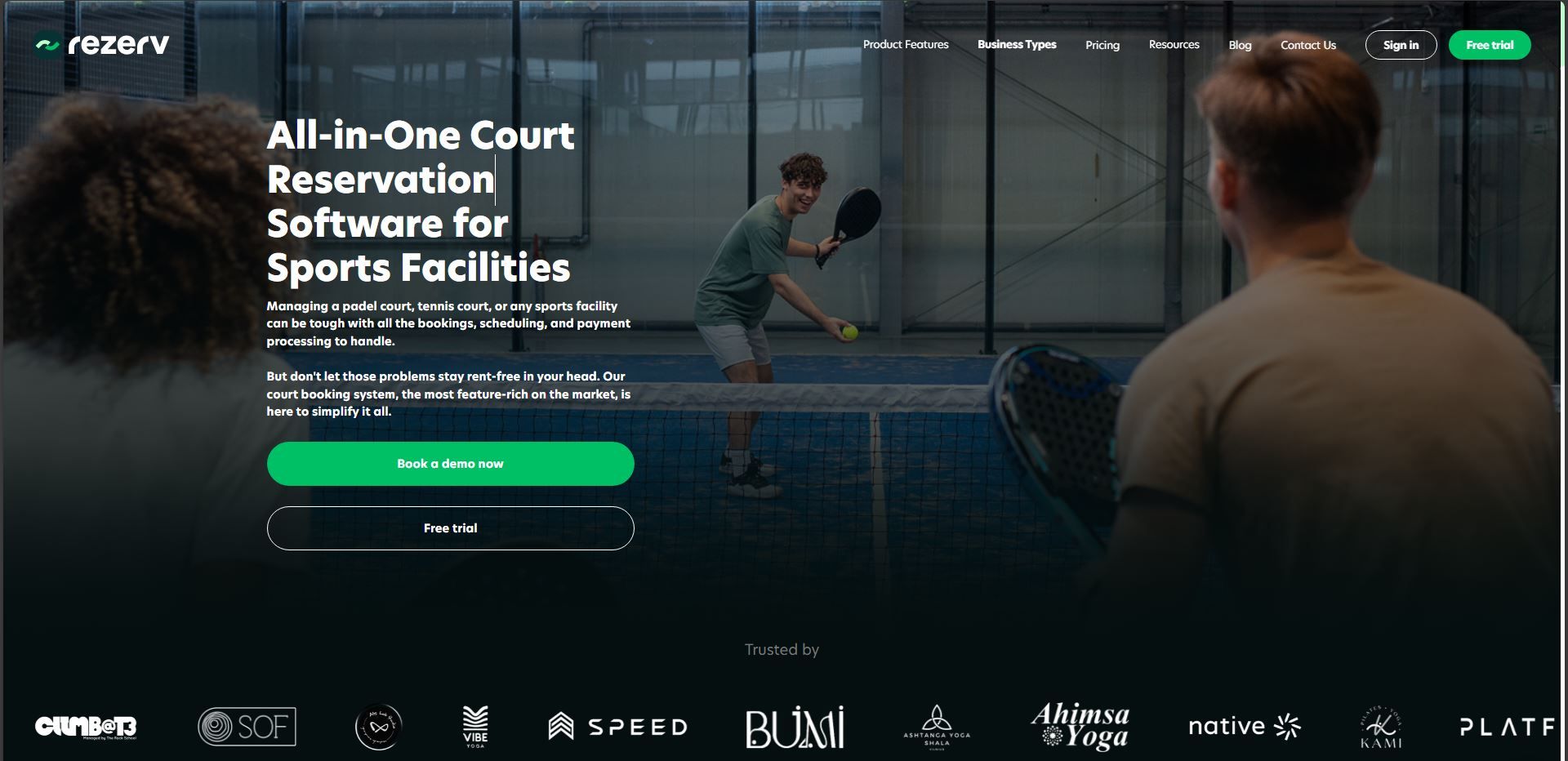
How Rezerv supports new pickleball businesses with management tools
Here’s the truth most new pickleball entrepreneurs eventually realize:
Running a pickleball business is more than building great courts.
You need to manage bookings, payments, schedules, memberships, marketing, staff, and daily operations, all at once.
Trying to manage everything manually (or with WhatsApp, Google Sheets, and bank transfers) gets messy. Fast.
That’s why you need Rezerv.
Rezerv is designed to make running a pickleball business smoother, simpler, and way less stressful, especially for new owners.
Here’s how Rezerv powers modern pickleball clubs from Day One.
1. Online court booking system (no more WhatsApp chaos)
Players can book courts anytime, without contacting you manually.
Rezerv lets you:
- Set up bookable courts (indoor or outdoor)
- Control availability for peak/off-peak hours
- Add special pricing or holiday pricing
- Automatically block out maintenance times
- Prevent double-bookings (finally!)
- Let players book and pay instantly
This keeps your courts full, and your admin work minimal.
2. Accept payments seamlessly (local + global methods)
Pickleball players want simple payments.
Rezerv supports:
- Credit/debit cards
- Apple Pay
- Google Pay
- PayNow (SG)
- DuitNow (MY)
- QR payments (QRIS, QRPH etc.)
- E-wallets like GrabPay, Touch 'n Go, GCash (depending on region)
And yes: No transaction fees from Rezerv. You keep what you earn.
3. Multi-court scheduling tools (perfect for large or growing clubs)
Managing multiple courts manually can get chaotic fast.
Rezerv’s scheduling tools let you:
- See all courts in one clear view
- Track which courts are booked or available
- Assign courts automatically
- Add classes, clinics, leagues, and tournaments
- Manage overlapping time slots easily
This is especially useful for clubs with:
- 3–6 courts
- Back-to-back sessions
- Coaching programs
- Tournaments
Smooth scheduling = smooth operations.
4. Custom-branded website builder (no coding needed)
If you want your pickleball business to look professional fast, this is huge.
Rezerv includes a built-in website builder so you can:
- Create a full booking website in hours
- Upload your branding and colours
- Showcase your courts, coaches, and programs
- Accept payments directly through your website
- Add SEO-friendly pages for Google search
This is a big competitive advantage because…
Most pickleball booking software doesn’t offer a website builder at all.
Rezerv does.
5. Membership & package management (recurring revenue made easy)
Whether you offer:
- Unlimited memberships
- Off-peak memberships
- Class packs
- Court bundle packs
- Corporate packages
Rezerv automates:
- Purchase
- Usage tracking
- Expiry reminders
- Renewal prompts
- Booking eligibility
No manual checking. No awkward “but I thought I had one more session” conversations.
6. Automated marketing tools (keep your courts full)
This is where Rezerv really shines.
Send:
- Email campaigns
- WhatsApp reminders
- SMS updates
- Promo blasts
- Win-back campaigns for inactive players
Automatically, based on player behavior.
7. Attendance tracking & real-time reports
You can’t grow a pickleball business without good data.
Rezerv gives you real insights like:
- Peak hours
- Court occupancy
- Most popular classes
- Coach utilization
- Top revenue streams
- Membership retention
- Monthly financial reports
Data = smarter decisions = faster growth.
8. Smart-lock integration for unmanned facilities
(If you’re planning a 24/7 or low-staff model)
Rezerv integrates with smart locks like Igloo Home, so:
- Players can enter with unique PINs
- Access is time-limited
- You reduce staffing costs
- You can run a semi-automated facility
Perfect for 24/7 pickleball clubs or single-court rentals.
9. Lower staffing costs (one of the biggest advantages for new clubs)
Because Rezerv automates:
- Bookings
- Payments
- Schedules
- Waivers
- Notifications
- Access control
You don’t need a big team.
Some clubs run with:
- 1–2 coaches
- 1 part-time front desk
- 1 operations staff
Less admin → More profit → Simpler operations.
10. Why pickleball entrepreneurs choose Rezerv over others
Because Rezerv gives you:
- An all-in-one system
- A booking website
- Local payment integrations
- Automated marketing
- Multi-court management
- Smart-lock access
- No coding
- No hidden fees
- No transaction fees
Most pickleball software only offers bookings. Rezerv helps you run your entire business.
11. Dynamic peak & off-peak pricing (set it once, let Rezerv do the rest)
Peak hours? Charge premium pricing.
Off-peak hours? Offer discounted rates to fill courts.
Rezerv lets you:
- Define peak hours (evening, weekends, holidays)
- Set off-peak hours (weekday mornings/afternoons)
- Add special pricing for holidays or events
- Apply different rates for members vs non-members
- Automatically show the correct price at checkout
Once set, the system handles everything, no manual adjustments, no mistakes.
This boosts utilization, increases revenue, and makes pricing strategy effortless.
12. Staff scheduling & management (no more manual rostering)
Managing staff manually is a headache.
Rezerv simplifies everything by allowing you to:
- Assign coaches to classes, clinics, and programs
- Set staff working hours
- Track coach utilization rates
- Avoid overlapping schedules
- Monitor attendance and performance
- Add substitute coaches when someone is sick
- Give staff access to their schedules via their own login
This keeps your operations clean and removes miscommunication, especially when you have multiple coaches teaching on multiple courts.
Staff scheduling becomes automatic, organized, and stress-free.
Cheers,
Friska 🐨
.jpg)
