How to stay mentally strong: 12 habits that build resilience
Learn how to stay mentally strong with practical habits for managing stress, building resilience, staying active, and creating a healthier daily routine.
.jpg)
Source: magnific
Staying mentally strong doesn’t mean feeling confident, calm, or motivated every day. Everyone has moments when stress builds up, plans fall apart, negative thoughts take over, or simply getting through the day feels harder than usual.
Mental strength is more about how you respond during those moments and how well you can recover afterward. The good news is that mental strength isn’t something you either have or don’t have. You can build it over time through everyday habits.
Learning to focus on what you can control, taking care of your body, managing difficult thoughts, getting enough rest, maintaining supportive relationships, and asking for help when you need it can all strengthen your ability to cope with stress and setbacks.
Your physical habits matter too. Regular movement, including walking, strength training, cardio, yoga, or Pilates, can support your mental well-being while giving you a healthy way to manage stress. You don’t need an intense workout routine to benefit. What matters more is finding activities you enjoy enough to keep doing consistently.
In this article, we’ll look at 12 practical habits that can help you stay mentally strong, along with simple ways to incorporate movement, mindfulness, rest, and supportive routines into everyday life. The goal isn’t to become unaffected by difficult situations. It’s to build the skills and habits that help you handle them, recover, and keep moving forward.
What does it mean to be mentally strong?
Being mentally strong means being able to respond to stress, uncertainty, setbacks, and difficult emotions in a healthy and flexible way. It doesn’t mean that problems stop affecting you. You may still feel anxious before an important decision, disappointed when something goes wrong, or overwhelmed during a particularly demanding week.
The difference is in what happens next. Mental strength helps you recognise what you’re feeling, decide what deserves your attention, and choose a useful response instead of reacting automatically. Sometimes that means solving a problem. Other times, it means accepting that you cannot change the situation right now and focusing your energy elsewhere.
That flexibility is important. There isn’t one perfect way to handle every stressful situation. A strategy that helps you through a difficult day at work might be completely different from what you need after a major personal setback.
Mental strength vs. suppressing your emotions
Mental strength is sometimes mistaken for being able to hide emotions. You might think that staying strong means holding back tears, ignoring frustration, avoiding conversations about your feelings, or acting as though something doesn’t bother you. In reality, hiding an emotion doesn’t necessarily make that emotion disappear.
Research on emotional suppression has found that people can reduce the outward expression of an emotion without eliminating the emotional experience itself. Some studies have also linked frequent emotional suppression with greater stress responses and poorer psychological well-being.
A healthier approach is to recognise what you’re experiencing and decide what to do with it. For example, imagine receiving harsh criticism at work. Suppressing your emotions might look like telling yourself, I shouldn't be upset about this, while pretending everything is fine.
Emotional regulation looks different. You might acknowledge that the criticism hurt, give yourself time to calm down, consider which parts of the feedback are useful, and decide how you want to respond.
You’re still experiencing the emotion. You simply aren’t allowing that first emotional reaction to make every decision for you. That is an important part of mental strength: feeling something without automatically being controlled by it.
Mental strength vs. always staying positive
Mental strength also doesn't require you to find a positive side to every situation. Optimism can be useful. It can help you remember that difficult situations can improve and encourage you to keep working toward a solution. But healthy optimism still leaves room for frustration, sadness, disappointment, and fear.
Problems can arise when positivity becomes a way of avoiding uncomfortable emotions. This is sometimes called toxic positivity, where difficult feelings are dismissed with responses such as "just stay positive" or "look on the bright side." Cleveland Clinic explains that positive reframing can be helpful, but forcing positivity can invalidate emotions that still need to be acknowledged.
Suppose you've failed an exam, lost an opportunity, or had an important plan fall apart. Mental strength doesn't require you to immediately convince yourself that everything is great.
A more realistic response might be:
"I'm disappointed, and this isn't what I wanted. But I can figure out what to do next."
That approach makes room for the difficult emotion while keeping you focused on moving forward.
Why mental strength is a skill you can build
You don't have to be naturally calm, confident, or optimistic to become mentally stronger.
Resilience develops through the way you respond to experiences over time. According to the American Psychological Association, many of the skills and resources associated with resilience can be developed and practised.
Think of mental strength as a collection of skills rather than one personality trait. You can practise regulating your emotions. You can become better at recognising unhelpful thought patterns. You can learn to set boundaries, solve problems more calmly, maintain supportive relationships, and recover after setbacks.
Getting enough sleep may make it easier to regulate your emotions the next day. Going for a walk can give you space to clear your head. Completing one small task when you're overwhelmed can restore a sense of control. Talking honestly with someone you trust can help you process something you've been carrying alone.
None of these habits will make stress disappear. What they can do is give you more tools for handling it. And that is ultimately what becoming mentally stronger is about: building enough emotional, behavioural, and practical tools that when life becomes difficult, you have more than one way to respond.
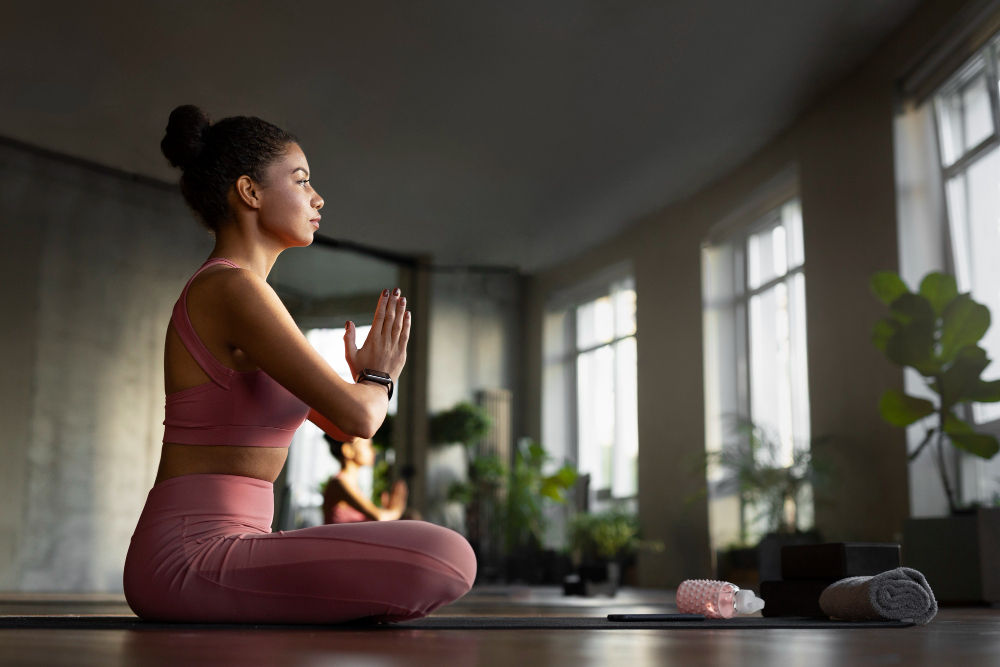
Source: magnific
How to stay mentally strong
Mental strength grows through repeated choices, especially during ordinary days. You build it when you manage stress instead of immediately reacting to it, continue taking care of yourself when motivation is low, and adjust when life does not go according to plan.
You also don't need to work on everything at once. The American Psychological Association points to connection, wellness, healthy thinking, and meaning as important areas for building resilience.
The following habits can help you strengthen those skills in everyday life.
1. Focus on what you can control
Stress often grows when your attention stays fixed on things you cannot change: someone else's reaction, a decision that has already been made, an uncertain outcome, or something that might happen weeks from now.
When you notice yourself getting stuck there, separate the situation into two categories: what you can influence and what you cannot. You might not control the result of a job interview, for example, but you can prepare carefully, arrive on time, research the company, and decide how you will follow up.
You cannot control traffic, but you can leave earlier. You cannot change something you said yesterday, but you can apologise or handle the next conversation differently.
This doesn't remove uncertainty. It gives your mind somewhere useful to direct its energy.
Try asking yourself, "What is one thing I can do about this today?" A specific next action is often easier to handle than repeatedly thinking about the entire problem.
2. Learn to manage negative thoughts
Negative thoughts are normal. The goal isn't to eliminate every pessimistic or anxious thought that enters your mind. Instead, learn to notice when your thinking becomes inaccurate or unnecessarily extreme.
For example, one mistake at work can quickly turn into I'm terrible at my job. One awkward conversation becomes they must hate me. A difficult week turns into nothing ever works out for me. When that happens, challenge the thought rather than automatically accepting it as a fact.
Ask yourself what evidence supports it. Then look for evidence that doesn't. You can also consider what you would say to a friend who was thinking the same thing. A more balanced thought might be, I made a mistake, but one mistake doesn't define my ability. I can fix what I can and learn from it.
3. Let yourself feel difficult emotions
Trying to push away sadness, anger, disappointment, or anxiety can sometimes make those feelings harder to process. Give yourself permission to acknowledge what is happening.
You can say, I'm anxious about this meeting, I'm disappointed that this didn't work out, or I'm angry about how I was treated. Naming the emotion helps create a little distance between what you're feeling and what you decide to do next.
You don't have to act on every feeling. Being angry doesn't mean you need to send the message you're thinking about. Feeling anxious doesn't automatically mean something bad is going to happen. Feeling discouraged doesn't mean you should abandon your goal.
Allow the emotion to exist, then give yourself enough time to choose your response.
4. Build a consistent daily routine
Your brain already handles plenty of decisions throughout the day. A basic routine can remove some of that mental load. You don't need to schedule every hour. Start with a few reliable anchors, such as waking up around the same time, eating regular meals, having a predictable work routine, exercising on certain days, and winding down before bed.
These habits become particularly useful when life feels chaotic. Instead of relying completely on motivation, you have familiar actions to return to. On difficult days, simplify the routine rather than abandoning it completely. A full workout might become a 15-minute walk. Cooking a complicated dinner might become preparing something easy but nourishing.
Consistency doesn't require perfection. It means maintaining enough structure to support yourself when your energy is limited.
5. Move your body regularly
Exercise can benefit your mental health as well as your physical health. You don't need to train intensely every day to benefit from movement. Take a walk. Lift weights. Swim. Cycle. Try yoga or Pilates. Put on music and move around your living room for ten minutes.
Think less about finding the "best" exercise and more about finding one you can realistically repeat. A simple routine you maintain for months is likely to be more useful than an ambitious programme you abandon after a week.
Movement can also give your mind a temporary break from whatever you're worrying about, which can make problems feel easier to approach afterward.
6. Make time for rest and recovery
Mental strength isn't measured by how much exhaustion you can tolerate. Your ability to handle stress is affected by your physical state. If you're constantly tired, overstimulated, or running from one responsibility to another, smaller problems can start feeling much larger.
Recovery can take different forms. You might need sleep, quiet time, an evening without work, a slower weekend, or simply twenty minutes without notifications demanding your attention.
Sleep deserves particular attention. NIMH includes regular sleep among the self-care practices that may support people experiencing mild stress or low mood. Rest also doesn't have to be earned by reaching complete exhaustion first. Building it into your routine can help prevent you from getting there.
7. Practice mindfulness and breathing
When your mind is racing, mindfulness can help bring your attention back to what is happening right now. You don't need an elaborate meditation routine. Sit somewhere comfortable and focus on your breathing for a few minutes. Notice the feeling of each inhale and exhale. When your attention wanders, gently return it to your breath.
You can practise the same skill while walking, stretching, drinking coffee, or taking a shower. Pay attention to what you can see, hear, smell, and physically feel. The goal isn't to empty your mind completely. That's rarely realistic.
You're practising the ability to notice a thought without automatically following it. NIMH includes meditation and breathing exercises among strategies that may help support mental well-being.
8. Set small, achievable goals
Large goals can be motivating when you have plenty of energy. During stressful periods, they can also become intimidating. Break them down. Instead of thinking, I need to fix my entire career, decide to update one section of your résumé today. Instead of deciding you need to become fit, start with two workouts this week.
Instead of thinking about everything that needs to be cleaned, start with one room.
Small goals create visible progress. They also give you opportunities to prove to yourself that you can take action even when you don't feel completely ready.
Once the first step becomes manageable, take the next one.
9. Spend time with people who support you
Resilience isn't something you always have to build alone. Supportive relationships can give you perspective, practical help, encouragement, and a safe place to talk when something feels overwhelming. Research has consistently linked positive social support with greater resilience to stress and better psychological well-being.
Support doesn't always require a deep conversation either. Having lunch with a friend, exercising with someone, calling a family member, attending a group class, or simply spending time around people you feel comfortable with can help you feel less isolated.
Quality matters more than having a huge social circle.
A handful of relationships where you can be honest and feel respected can be incredibly valuable.
10. Learn from setbacks instead of defining yourself by them
A setback describes something that happened. It doesn't have to become a description of who you are. You might fail an exam, lose a client, end a relationship, miss an opportunity, or abandon a goal you were excited about. Once the initial disappointment settles, look at the experience with curiosity.
What actually went wrong?
What was outside your control?
What would you do differently next time?
What did you handle better than you expected?
This kind of reflection turns an unpleasant experience into information you can use.
You don't need to find a profound life lesson in every difficult situation. Sometimes the lesson is simple: prepare earlier, communicate more clearly, ask for help sooner, or don't make the same decision again.
11. Reduce habits that drain your mental energy
Building resilience sometimes means doing less of the things that leave you mentally exhausted. Pay attention to what repeatedly drains you. It could be scrolling through social media late at night, constantly checking work messages, comparing yourself with strangers online, saying yes to every request, spending time around people who make you feel worse, or using alcohol and other substances to avoid uncomfortable emotions.
You don't necessarily need to remove everything immediately. Start by creating boundaries.
Turn off unnecessary notifications. Give yourself a time limit for social media. Keep your phone away from your bed. Protect some time during the week when you're unavailable for work.
APA's resilience guidance also recommends avoiding unhealthy coping outlets and focusing instead on habits that give your body and mind resources to manage stress.
Mental energy is limited. Be intentional about where you spend it.
12. Ask for help when you need it
Being mentally strong doesn't mean solving every problem by yourself. Sometimes talking to a friend is enough. Sometimes you need practical help from a colleague, partner, family member, coach, doctor, or mental health professional.
Pay attention when emotional difficulties begin affecting everyday life. For example, NIMH recommends seeking professional help when severe or distressing symptoms last for two weeks or longer, particularly when they interfere with sleep, concentration, appetite, enjoyment, or your ability to complete normal activities. You don't have to wait until you're completely overwhelmed.
Asking for help can be part of resilience itself. It means recognising that your current tools aren't enough for the situation and choosing to add more. Ultimately, mental strength isn't about becoming impossible to upset. It's about developing healthier ways to think, respond, recover, and keep going. The more often you practise these habits, the more familiar they become when you genuinely need them.
How exercise can help build mental resilience
Exercise won't remove the difficult situations in your life, but it can make your mind and body better equipped to handle them. Physical activity gives you a productive outlet for stress, creates structure in your day, and gives you something concrete to focus on when your thoughts feel scattered. Over time, sticking with an exercise routine can also reinforce useful skills such as patience, consistency, and learning to tolerate temporary discomfort.
The mental health benefits of movement are well established. The World Health Organization notes that regular physical activity can improve mental health, quality of life, and overall well-being.
You don't need to exercise at an advanced level to experience these benefits. Walking, strength training, cardio, yoga, Pilates, and even short movement breaks can all have a place in a routine that supports mental resilience.
Why movement matters for mental well-being
Exercise affects both your body and your brain. Even a single session of moderate-to vigorous physical activity can reduce short-term feelings of anxiety, while regular activity can support better sleep and lower the risk of depression, according to the CDC. There is also a practical benefit that is easy to overlook.
Movement gives your attention somewhere else to go. If you've spent an hour worrying about a problem, taking a 20-minute walk can interrupt that mental loop. You may still have the same problem when you return, but you've created some distance from it.
Exercise can also provide a sense of accomplishment during periods when other parts of life feel unpredictable. Finishing a workout, taking your usual walk, or simply showing up to a class gives you one small thing you followed through on.
Those small experiences can help reinforce a sense of agency: I can still take care of myself even when today is difficult.
Walking, strength training and cardio
You don't need one specific type of exercise to support your mental health. Walking is one of the easiest places to start. It requires little preparation, can be adjusted to your fitness level, and gives you a chance to step away from screens and other sources of stimulation.
Even a short walk during lunch or after work can become a useful transition between different parts of your day. Strength training offers a different experience. Exercises such as squats, rows, presses, or resistance-band movements require you to focus on technique, breathing, and the movement you're performing. That concentration can temporarily pull your attention away from whatever has been occupying your mind.
Progress is also easy to see.
Maybe you can perform another repetition, use slightly more resistance, or complete an exercise that once felt difficult. These improvements can provide a tangible reminder that progress often happens gradually.
Cardiovascular exercise such as running, cycling, swimming, or dancing can also support mental and physical health. The important part is choosing an intensity that matches your current fitness level rather than treating every session as a test.
The WHO recommends that adults aim for 150 to 300 minutes of moderate-intensity aerobic activity each week, or an equivalent amount of vigorous activity, alongside muscle-strengthening activities. At the same time, its guidance emphasises that some physical activity is better than none.
If you're currently doing very little, starting with ten or fifteen minutes is completely reasonable.
Yoga for stress management and mindfulness
Yoga combines physical movement with breathing, concentration, and body awareness, which makes it particularly interesting as part of a stress-management routine.
During a yoga session, you're repeatedly encouraged to notice your breathing, pay attention to physical sensations, and return your focus to the present movement. That gives you an opportunity to practise mindfulness while being physically active.
A slower class focused on breathing and basic movements may be exactly what you need after a stressful week. Someone else might prefer a more active flow that gives them a physical challenge.
The best approach is the one that allows you to pay attention to your body without turning the session into another source of pressure.
Pilates for mind-body awareness and consistency
Pilates requires concentration. Instead of rushing through repetitions, you're usually paying attention to alignment, breathing, stability, and controlled movement. That combination can make a Pilates session feel mentally engaging as well as physically challenging.
This kind of focused movement can be useful when your mind feels busy. For an hour, your attention shifts toward questions such as: Where is my pelvis? Am I controlling this movement? Am I breathing?
Research into the psychological effects of Pilates is still developing. A 2026 systematic review and meta-analysis involving 32 studies found encouraging results for areas such as quality of life and self-esteem, while the evidence for broader mental health outcomes, including anxiety and depression, remained less consistent.
That distinction matters. Pilates can be a valuable part of a healthy routine, but it shouldn't be presented as a treatment for a mental health condition on its own. Its everyday value may be simpler: Pilates gives you structured time to move, concentrate, breathe, and become more aware of how your body feels.
Finding an exercise routine you can actually maintain
The most impressive workout plan won't help much if you dislike it enough to quit after two weeks. When choosing exercise, consider what realistically fits your schedule, budget, fitness level, and personality.
If you enjoy being around other people, a weekly yoga, Pilates, or fitness class might give you both exercise and social connection. If you need quiet after a busy workday, walking alone or training at the gym may suit you better. If long workouts feel overwhelming, try shorter sessions several times a week.
You can also mix different activities. For example, your week might include two strength sessions, one Pilates class, and a few walks. Another person might prefer swimming twice a week and doing yoga at home on Sunday.
There isn't one routine that makes someone mentally resilient. What matters is creating one you can return to regularly, including during stressful periods when motivation isn't particularly high. Start small enough that exercise feels like something supporting your life rather than another obligation you constantly fail to complete.
Over time, that consistency can become part of your resilience. You learn that even when work becomes stressful, plans change, or your mood isn't great, there are still a few familiar things you can do to take care of yourself.
How yoga and Pilates can become part of a mental wellness routine
Yoga and Pilates can fit naturally into a mental wellness routine because both ask you to slow down, pay attention to your body, and concentrate on what you're doing in the moment.
They also give you something that many wellness habits struggle to provide: structure. Booking a Tuesday evening Pilates class or doing yoga every Sunday morning turns movement into a regular part of your week instead of something you only do when you feel motivated.
Neither practice should be treated as a replacement for professional mental health care when you need it. Instead, think of them as tools that can support movement, stress management, body awareness, and a more consistent self-care routine.
Yoga for slowing down and being present
A yoga class naturally brings your attention back to the present. You have to notice your breathing, adjust your position, maintain balance, and pay attention to how your body responds to each pose. If your mind starts wandering toward tomorrow's deadline or yesterday's argument, the next movement gives you something immediate to focus on again.
That process shares some similarities with mindfulness practice. You're learning to notice where your attention has gone and gently bring it back rather than trying to force every thought out of your head.
Yoga may also support stress management. The National Center for Complementary and Integrative Health reports that research suggests yoga may help people manage stress and improve aspects of mental and emotional well-being and sleep. However, findings vary between studies, so yoga is better viewed as a supportive wellness practice than as a standalone treatment for a mental health condition.
You don't need to start with a demanding 60-minute class. Ten minutes of gentle stretching and breathing in the morning can be enough to establish the habit. As it becomes more familiar, you can experiment with longer classes or different styles of yoga.
Pilates for focus, control and body awareness
Pilates tends to demand your attention in a different way. A small movement can require you to think about your breathing, posture, core stability, alignment, and control at the same time. That level of concentration can make it difficult to spend the entire class replaying whatever was stressing you out earlier.
It also encourages body awareness. Over time, you may become better at noticing when you're holding tension in your shoulders, rushing your breathing, or moving without much control.
Research into Pilates and mental well-being is promising but still developing. A 2026 systematic review and meta-analysis of 32 studies found potential benefits for psychological outcomes such as quality of life and self-esteem, although results varied considerably between studies and outcomes.
That means you don't need to expect Pilates to transform your mental health. Its value can be much more practical. It gives you scheduled time to move, focus on one task, learn new physical skills, and step away from everyday distractions.
Group classes and social connection
Yoga and Pilates don't have to be solitary activities. Joining a regular class can add another element that supports well-being: social connection. You might start recognising the same people every Wednesday evening. You chat with someone before class, learn an instructor's teaching style, or simply enjoy being around other people for an hour without needing to talk about work or responsibilities.
You don't need to become close friends with everyone in your class to benefit from having a regular community around an activity you enjoy. For someone who works from home or spends much of the week alone, even that predictable bit of social contact can make the routine feel more rewarding.
Group classes can also create gentle accountability. It's easier to skip a workout that exists only as a vague idea in your head. A class you've already booked for 6 p.m. feels much more concrete.
Creating a routine instead of relying on motivation
Motivation changes constantly. Some weeks you'll genuinely look forward to exercising. Other weeks you'll be tired, busy, distracted, or simply not interested. That's why a sustainable wellness routine shouldn't depend entirely on waking up and feeling motivated.
Instead, decide when movement normally happens. Maybe Tuesday and Thursday are Pilates days. You do a short yoga session before work on Monday. Saturday morning is reserved for a longer class. Once those activities have a regular place in your schedule, you spend less time negotiating with yourself about when to exercise.
You can also make the routine easier to follow by removing small obstacles. Book classes ahead of time, keep your workout clothes ready, choose a studio close to home or work, and select class times that realistically fit your schedule.
Most importantly, leave room for imperfect weeks. If you miss a class, you haven't failed at maintaining your routine. Go to the next one. If you don't have time for an hour of yoga, do ten minutes. If you're tired, choose a gentler session.
Mental resilience is built partly through this ability to adjust without giving up completely. Your routine doesn't have to look perfect. It simply needs to be flexible enough that you can keep returning to it.
A simple 7-day mental strength routine
You don't need to overhaul your life to start building mental resilience. For the next seven days, try focusing on one small habit at a time. This routine combines movement, mindfulness, reflection, social connection, and intentional breaks from technology. These habits support several areas associated with resilience and mental well-being, including healthy thinking, relationships, physical wellness, and a sense of control.
Keep the expectations realistic. If you miss a day, continue with the next one. The purpose of this week is to experiment with habits you may want to carry into your normal routine.
Day 1: Take a walk
Start with something simple: go for a walk. Aim for around 20 to 30 minutes if that feels comfortable. You can walk through your neighbourhood, around a park, on a treadmill, or anywhere that allows you to move without making the activity complicated.
Try spending at least part of the walk without scrolling through your phone. Pay attention to your surroundings, your breathing, and how your body feels as you move. Physical activity can have immediate benefits, including reduced feelings of anxiety and improved sleep quality.
The CDC also emphasises that some physical activity is better than none, so a shorter walk still counts.Before moving on with your day, notice how you feel compared with when you started. You don't need to feel dramatically happier. Maybe you simply feel less restless or more focused.
Day 2: Practice 5 minutes of mindfulness
Set aside five minutes somewhere relatively quiet. Sit comfortably and focus on your breathing. Notice each inhale and exhale without trying to change them too much. Your mind will probably wander. When it does, notice the thought and return your attention to your breath.
That wandering isn't a sign that you're doing mindfulness incorrectly. Bringing your attention back is part of the practice. You can also use physical sensations as your anchor. Notice where your feet touch the floor, how your back feels against the chair, or what you can hear around you.
Five minutes may seem small, but that's intentional. You're creating a practice that feels easy enough to repeat.
Day 3: Write down what you can control
Take a problem that has been occupying your mind and write it down.
Then make two categories:
Within my control: actions, decisions, boundaries, preparation, and responses.
Outside my control: other people's decisions, events that have already happened, uncertain outcomes, and circumstances you cannot currently change.
Now choose one action from the first category.
If you're worried about work, that might mean finishing one important task. If you're anxious about money, it could mean reviewing this month's expenses. If you're worried about an upcoming conversation, you could write down what you want to say.
The APA recommends taking realistic steps toward problems and breaking overwhelming challenges into manageable pieces as part of building resilience.
Day 4: Try a yoga or Pilates class
Use the fourth day to try a form of movement that requires more deliberate attention.
You could join a beginner yoga or Pilates class, follow a short guided session at home, or return to a class you've already done before. During the session, pay attention to your breathing, posture, balance, and movement rather than judging how well you're performing.
If you're new to either activity, choose a beginner-friendly session. You don't need to be flexible to start yoga, and you don't need excellent core strength before trying Pilates. Those abilities can develop through practice. The mental goal for today is simple: spend some time doing something that keeps your attention connected to your body instead of your usual stream of thoughts.
Day 5: Disconnect from your phone
Choose one period today when your phone stays away. Start with 30 minutes if a longer break feels unrealistic. Put it in another room, turn off unnecessary notifications, or use Do Not Disturb mode.
Then do something else with that time. Make dinner. Read. Take a shower. Go outside. Stretch. Clean something. Listen to music. Have coffee without scrolling. You may notice the urge to check your phone several times. That's useful information. It shows how automatically reaching for a device can become part of your routine.
Try creating some distance from screens before bedtime too. NIMH recommends making sleep a priority and notes that reducing exposure to blue light from phones and computers before bed may make it easier to fall asleep. You don't need a complete digital detox. Creating a few periods when your attention isn't constantly being interrupted is enough.
Day 6: Spend time with someone you trust
Today, make time for genuine connection. Call a friend you haven't spoken to recently. Have dinner with your family. Meet someone for coffee. Go for a walk with your partner. Send a message to someone you've been meaning to check on. You don't have to discuss your deepest problems. A normal conversation can be valuable too.
Strong social connections are closely tied to resilience. The APA identifies supportive relationships as one of the major resources people can draw on when dealing with adversity and encourages maintaining connections with trustworthy, compassionate people.
If you've been having a difficult week, consider being slightly more honest when someone asks how you're doing. You don't have to share everything. Give yourself the opportunity to receive support instead of automatically saying, I'm fine.
Day 7: Reflect on the week and plan the next one
Finish the week by looking back rather than immediately adding another goal.
Take ten minutes and ask yourself a few questions:
Which habit made me feel better afterward?
Which one was hardest to start?
When did I feel most stressed this week?
What helped me deal with it?
What would I like to continue next week?
Your answers don't need to be profound. You might simply discover that walking after work clears your head, putting your phone away helps you sleep earlier, or having a scheduled Pilates class makes exercise much easier to maintain.
Choose one or two habits from the week to continue. Put them somewhere specific in your schedule. For example, instead of writing exercise more, plan a 20-minute walk after work on Monday, Wednesday, and Friday. Instead of be more mindful, schedule five minutes of breathing before bed.
NIMH recommends setting goals and priorities, recognising what you've accomplished, staying active, protecting sleep, and maintaining social connections as practical ways to care for your mental health.
After seven days, you don't need to keep every habit. Keep the ones that genuinely make your life easier to manage. Mental strength grows gradually. A walk, five quiet minutes, a conversation with someone you trust, or one small action toward a stressful problem might seem insignificant on its own. Repeated often enough, those small choices become a reliable set of tools you can return to when life gets harder.
Frequently asked questions
How can I stay mentally strong?
Start by focusing on the parts of a difficult situation you can influence. Maintain a few basic routines, look after your physical health, stay connected with supportive people, and give yourself time to process difficult emotions.
Mental strength also involves flexibility. Some problems require action, while others require patience, acceptance, or support from someone else. The goal is to develop several healthy ways to respond instead of expecting yourself to handle every situation the same way.
How do you build mental strength?
Mental strength develops through practice. Helpful habits include setting realistic goals, challenging unhelpful thoughts, exercising regularly, getting enough sleep, maintaining supportive relationships, and learning from setbacks. According to the American Psychological Association, the skills and resources associated with resilience can be developed and practised over time.
How can I become mentally stronger?
Start small. Choose one area where you tend to struggle and practise a healthier response. If uncertainty makes you anxious, practise separating what you can control from what you cannot. If setbacks usually make you give up, focus on taking one small next step.
If stress causes your routine to disappear, protect a few basics such as sleep, meals, movement, and social connection. Mental strength grows through these repeated responses, not through one major breakthrough.
What are the habits of a mentally strong person?
A mentally strong person tends to manage emotions instead of ignoring them, focus energy on controllable factors, maintain healthy routines, adapt when circumstances change, and seek support when necessary.
They also understand that resilience doesn't mean being calm or productive all the time. Having a difficult emotional reaction is normal. What matters is how you respond to it and what you do next.
Can mental strength be learned?
Yes. Mental strength isn't a fixed personality trait. The APA defines resilience partly in terms of mental, emotional, and behavioural flexibility and notes that many of the skills associated with successful adaptation can be cultivated through practice.
You can improve skills such as emotional regulation, problem-solving, communication, stress management, and healthy coping throughout your life.
How do I stay mentally strong during tough times?
Reduce the problem to what needs your attention right now. Maintain some structure in your day, break large problems into smaller tasks, stay connected with people you trust, and accept that your normal level of productivity may temporarily change. You may not be able to solve the entire situation immediately. Taking one useful action today can still help you regain a sense of direction.
How can I stop negative thoughts from affecting me?
Trying to prevent every negative thought is unrealistic. Instead, learn to question thoughts before treating them as facts. If you catch yourself thinking, I'm going to fail at everything, pause and examine the evidence. A more accurate thought could be, This situation isn't going well, but I can decide what to do next.
NIMH recommends identifying and challenging negative and unhelpful thoughts as one part of caring for your mental health. The aim isn't forced positivity. You're trying to think more accurately.
Does exercise help with mental strength?
Exercise can support many of the physical and psychological processes that make stress easier to manage. The CDC reports that a single session of moderate-to-vigorous physical activity can improve sleep quality and reduce feelings of anxiety. Regular physical activity is also associated with a lower risk of depression.
Exercise also gives you opportunities to practise consistency, work toward gradual goals, and continue taking action even when motivation fluctuates.
Can yoga help you stay mentally strong?
Yoga can be a useful part of a broader mental wellness routine, particularly for people who enjoy combining movement, breathing, and focused attention. Research reviewed by the National Center for Complementary and Integrative Health suggests that yoga may support stress management, general well-being, sleep, and some aspects of mental and emotional health. Results vary between studies, so yoga shouldn't be treated as a replacement for professional mental health treatment.
Can Pilates help with mental well-being?
Pilates can support mental well-being by giving you structured time for movement, controlled breathing, concentration, and body awareness. During a Pilates session, you often need to pay close attention to alignment, stability, and precise movement.
That focused attention can provide a useful break from everyday distractions and rumination. Research into the direct mental health benefits of Pilates is still developing, so it is better viewed as one part of a healthy lifestyle rather than a treatment for a mental health condition.
Is mindfulness good for mental strength?
Mindfulness can help you become more aware of thoughts and emotions without immediately reacting to them. That skill can be particularly useful during stressful situations. Instead of automatically following an anxious thought, for example, you can notice it, bring your attention back to the present, and decide what response makes sense.
NCCIH reports that mindfulness meditation may help reduce symptoms of stress and may also support sleep, although results differ across studies and populations.
Even a few minutes of mindful breathing can be a practical starting point.
How does sleep affect mental strength?
Sleep plays an important role in your ability to think clearly, regulate emotions, concentrate, and cope with everyday demands. Poor sleep can make stress harder to handle. You may become more irritable, distracted, or emotionally reactive when you're tired.
NIMH recommends making sleep a priority as part of mental health self-care, including maintaining a sleep schedule and reducing screen exposure before bedtime. A consistent sleep routine won't remove stressful situations, but it gives your brain and body better conditions for dealing with them.
How important is routine for mental resilience?
Routine can provide stability when other parts of life feel unpredictable. Regular times for sleep, meals, work, movement, relaxation, and social activities reduce the number of decisions you need to make throughout the day. They can also help healthy behaviours continue during periods when motivation is low.
Your routine doesn't have to be strict. A resilient routine should be flexible enough to change when your circumstances change.
How can I stay mentally strong when I feel overwhelmed?
Make your world smaller for a moment. Write down everything that's demanding your attention, identify what genuinely needs to happen first, and choose one manageable action.
You can also check the basics. Have you eaten? Have you slept enough? Have you moved today? Do you need a break? Is there someone you can ask for help?
When should I ask for professional help?
You don't need to wait for a crisis before talking to a mental health professional.
Consider seeking professional support when emotional difficulties are persistent, getting worse, or interfering with your ability to function normally.
NIMH specifically recommends professional help for severe or distressing symptoms lasting two weeks or more, including problems with sleep, concentration, appetite, getting out of bed, enjoying usual activities, or completing everyday tasks.
Professional support and everyday resilience habits can work alongside each other. Exercise, sleep, mindfulness, supportive relationships, and healthy routines can help protect your well-being, while a qualified professional can provide additional assessment and treatment when you need more support.
