Infrared sauna vs traditional sauna: Which is better for post-workout recovery?
What experts say about using an infrared sauna and a traditional sauna for recovering and getting back to your workout routine.
You just finished your workout routine. Your muscles are aching. You know that heat helps your body. Now you have to choose between an infrared sauna and a traditional sauna.
If you choose a sauna you might end up feeling really tired or very relaxed. Infrared sauna and traditional sauna are very different.
Let us see what experts say about using an infrared sauna and a traditional sauna for recovering and getting back to your workout routine.

Source: Pexels
How each sauna actually works
Before we get to the recovery benefits of infrared sauna and traditional sauna you need to understand the difference in how infrared sauna and traditional sauna heat your body.
Traditional saunas are convection-heated. Electric heaters or wood stoves warm the air around you to between 70 and 100 °C (158–212 °F). This hot air then heats your body starting from the outside and working its way. It is like sitting in a very hot oven. In this case, the air itself does most of the heating.
Infrared saunas turn this process on its head. Infrared panels don't heat the air; they send out light waves, which are absorbed directly into your skin and tissues. Research shows that infrared sauna rays penetrate tissue and the neuromuscular system by approximately 3-4 centimeters. The air temperature in an infrared sauna is still quite a bit cooler, in the 40°C to 60°C range, but the heat from an infrared sauna penetrates deeper into your body.

What science tells us about using the sauna after exercise
When you use the sauna after you exercise it does a lot of things for your body. The heat from the sauna makes your blood vessels get bigger. That makes your blood flow better.
As a result more oxygen and nutrients reach the muscles that got injured during exercise. It also helps remove waste products like acid that build up in your muscles and make you feel tired.
The heat from the sauna has another benefit. It makes your body release helpers called growth hormones that fix your muscles. There was a study that showed something really cool.
Some runners used the sauna for 30 minutes after they ran. They got a lot better at running. They could run for 32% longer before they got tired. The sauna also helped their bodies make blood, which is really good, for running and getting better at sports. The sauna really helps you get faster and perform better, too.
But here's the catch: not all heat exposure produces the same recovery results.
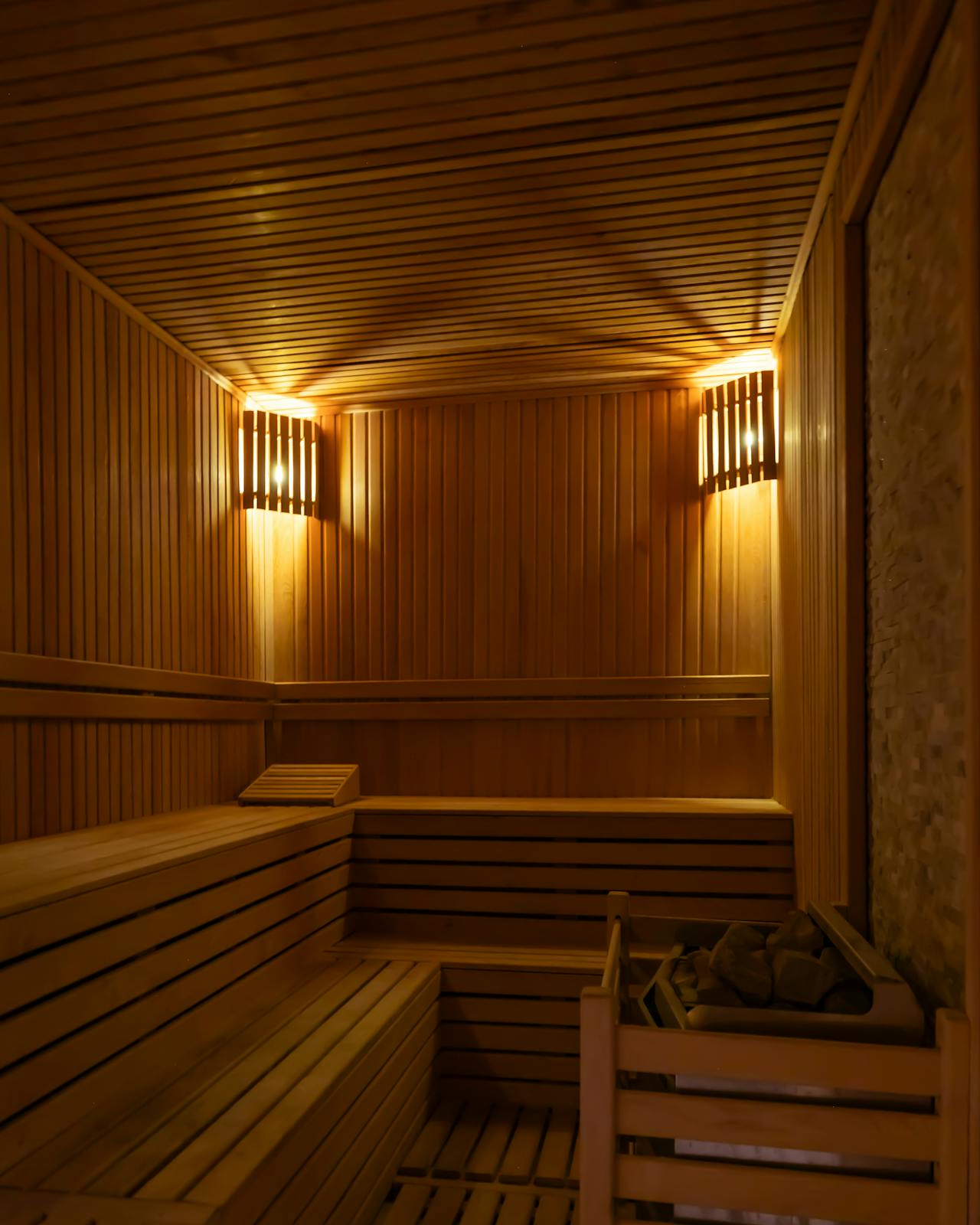
Source: Pexels
The recovery benefit of infrared saunas
When it comes to pure post-workout recovery, infrared saunas have some compelling advantages.
Why infrared works better for immediate recovery:
- Less severe cardiovascular responses, less stressful to a tired system
- More heat penetration means faster clearing of inflammation
- Better blood flow reaches damaged muscle tissue directly.
- Lower temperatures mean longer, more comfortable sessions
- Better preservation of next-day athletic performance
Many people use saunas to aid their muscles in recovering from working out. Infrared options are a less intense but still effective way to treat post-workout muscle stress if you want to set up a full Polar Recovery routine at home. They can be a regular part of a simple recovery routine.
Research published in Frontiers in Sports and Active Living found that traditional sauna bathing might actually be detrimental to maximal physical performance the following day. However, these negative effects were not observed with infrared sauna use. In fact, infrared sauna sessions immediately after exercise improved recovery of explosive jump performance.
A study on male basketball players found that a single 20-minute infrared sauna session after resistance training resulted in less severe muscle soreness and better countermovement jump performance 14 hours later.
Traditional saunas: Where they shine
Don't write off traditional saunas completely. They offer benefits that infrared simply can't match.
The intense heat stress triggers more robust hormonal responses. Studies have shown that growth hormone levels can increase by 200-500% following a traditional sauna session. This spike is transient, but growth hormone has well-documented benefits for muscle development.
Traditional saunas are also excellent for heat acclimatization. If you are working on your fitness like building up your endurance in weather or getting ready for a big event in the heat, using a traditional sauna regularly can help your body adjust to performing well in hot conditions.
Traditional saunas are ideal for:
- Pre-competition acclimatization
- Maximizing hormonal adaptations to training
- Cardiovascular resilience. Hardening with time
- Mental toughness training
- Dedicated recovery days with no next-day training
Matching your sauna to your workout type
Here's a practical framework for deciding which sauna fits your training:

Maximizing recovery with sauna use
When you pick a sauna it is really important to do what you are supposed to do.
You should start with fifteen to twenty minutes in the sauna. Then you can slowly increase to thirty minutes as your body gets used to the sauna. A good temperature for feeling better in the sauna is between forty to fifty degrees Celsius. If you use the sauna to feel better you should try to get the temperature to eighty to ninety degrees Celsius.
The timing is very important. You should go to the sauna after you finish working out while your body's still hot from exercising.
Do not forget to drink water during and especially after your sauna session. Electrolytes can help replace what you've lost. Eating nutritious foods after your session can also help with muscle repair. Drinking water is important for how your body responds to the heat.
Safety tips:
- If you are very dehydrated, tired or sick do not go to the sauna.
- If you have heart or blood pressure issues you should consult a doctor first.
- If you start feeling dizzy, sick. Your heart starts racing to get out of the sauna right away.
The bottom line
Infrared saunas are really good for helping your body recover from exercise. They are not meant to take the place of traditional saunas. Infrared saunas and traditional saunas serve purposes.
If you want to help your muscles feel better after a workout, reduce soreness and be ready to train the next day then infrared saunas are the way to go. Traditional saunas remain the best at heat acclimation and eliciting maximum hormonal responses.
Best way? Well-suited for your training phase and recuperation needs.
Read next: Sauna after a workout: 10 myths vs. facts (science-backed truths)
FAQs
1. When to take the Sauna after a workout?
You can do a sauna session right after training. The best time to hit the sauna after a workout is right after your workout, while your body is still heated up, studies have shown. First, hydrate properly.
2. Can you use the sauna in other ways to recover?
The sauna should be used along with ways to recover, like eating well, sleeping, and moving your body. It should not take the place of these things.
3. How often should you use the sauna to recover?
Positive research protocols typically involved 3-4 sessions per week following training. Begin with 2 or 3 times.
4. Is it good to use a sauna every day?
For most folks, the sauna is no problem for recovery. For recovery, 3-4 sessions a week are best. This is especially good when you're training hard.