REDLINE Fitness: Complete guide to REDLINE fitness games
Learn what REDLINE Fitness Games are, how the race works, its workout stations, training tips, race categories, and how REDLINE compares with HYROX.
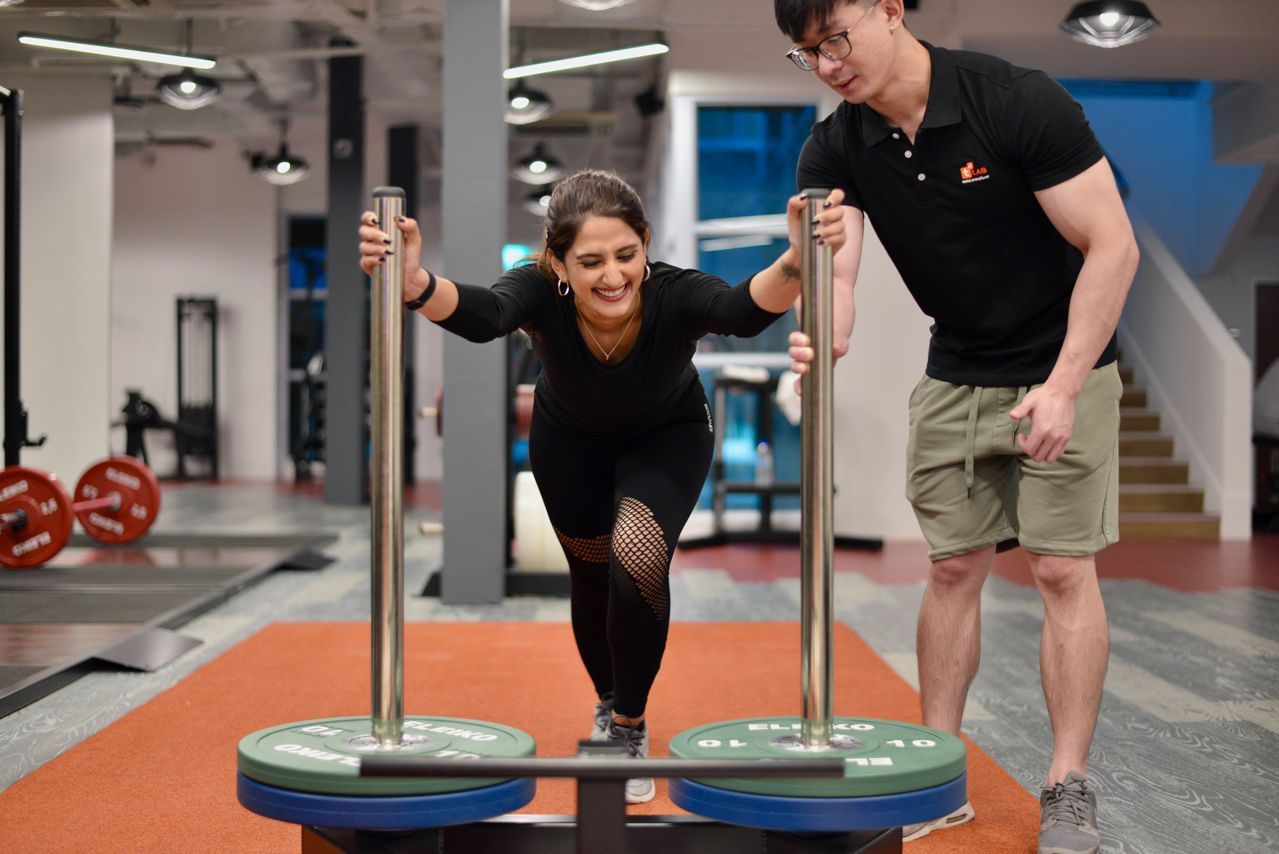
Source: TSquared Lab on Pexels
Functional fitness competitions have become a lot more popular in recent years, but not everyone wants a race that feels like a traditional running event or a highly technical CrossFit competition. That’s where REDLINE Fitness comes in.
REDLINE Fitness Games combines running with functional workout stations to test how well you can perform when strength, endurance, and fatigue all start working against you. Instead of simply seeing how fast you can run or how much weight you can lift, REDLINE challenges you to keep moving through a series of different physical tasks while managing your energy from start to finish.
Depending on the event format, you might find yourself running, pushing or pulling a sled, working through the SkiErg or rower, carrying weights, moving sandbags, or completing bodyweight exercises.
The exact stations and workout details can vary between REDLINE event editions, which is part of what makes preparation interesting. You need more than one strength. Cardiovascular fitness matters, but so do functional strength, grip, muscular endurance, core stability, pacing, and your ability to transition efficiently between movements.
And if you’ve heard of REDLINE because you’re already familiar with HYROX, you’ll probably have a few questions. How does REDLINE actually work? What are the stations? How much running is involved? Is it harder than HYROX? And, most importantly, how should you train for it?
That’s exactly what we’ll cover in this article. We’ll break down the REDLINE Fitness Games format, workout stations, race categories, physical demands, beginner training plan, equipment, race-day preparation, and the key differences between REDLINE and HYROX. By the end, you should have a clear idea of what to expect and whether REDLINE deserves a spot on your fitness calendar.
What is REDLINE Fitness?
REDLINE Fitness is a functional fitness competition designed to test how well you can perform across different types of physical challenges, not just how fast you can run or how much weight you can lift. REDLINE describes itself as a gamified functional fitness event series where gym-goers and fitness enthusiasts can put their overall fitness to the test.
At the center of REDLINE is a race through 12 functional fitness workout stations. These stations combine cardiovascular work with strength, carrying, pushing, pulling, bodyweight movements, and other functional exercises. Rather than completing one long workout of the same movement, you constantly switch between tasks, forcing your body to adapt while you’re already fatigued.
That variety is what gives REDLINE its character. You might feel comfortable on the rower but struggle once your grip is tired during a farmer’s carry. Strong lifters may make quick work of a sled but lose time on cardiovascular stations.
Runners may have an endurance advantage but still need enough functional strength to move efficiently through weighted exercises. A successful REDLINE athlete needs to manage all of these demands rather than relying on one specialty.
The competition is also structured to accommodate different experience levels. REDLINE currently offers Singles, Doubles, and Team Relay formats. Singles competitors can choose between Level 1 for beginners, Level 2 for intermediate athletes, and Level 3 for advanced athletes. Doubles competitors share the workload with a partner, while Team Relay divides the race between four team members.
That makes REDLINE particularly approachable if you already train at a gym but have never entered a fitness competition before. You don’t necessarily need an elite athletic background.
According to REDLINE, its categories are designed to suit different fitness levels, although you should still expect a demanding workout. Depending on the category and individual fitness level, REDLINE estimates that completing a race typically takes around 30 to 55 minutes.
It also reflects a broader shift in how people are approaching fitness. Instead of training only for appearance or isolated strength numbers, more people are using events like REDLINE to give their workouts a measurable goal. Training starts to include endurance, functional strength, recovery, pacing, and movement efficiency, all of which carry over well into everyday fitness.
For gyms and fitness studios, this type of event can also create opportunities to run race-preparation classes, functional training programs, and community challenges. Fitness businesses managing these kinds of sessions can use Rezerv to organize class bookings, memberships, packages, schedules, and customer management in one place.
REDLINE is ultimately less about mastering one exercise and more about answering a simple question: how well can your whole fitness engine keep working when the pressure builds? To understand that properly, it helps to look more closely at what actually happens during the competition.
What are REDLINE Fitness Games?
REDLINE Fitness Games are competitive fitness races built around 12 functional workout stations completed in a fixed order. Think of it as a test of your complete fitness engine. You’re not trying to set a personal best on one lift or simply survive a long run. Instead, you have to keep performing as the race moves between cardio, strength, power, carrying, and bodyweight-based challenges.
According to the official REDLINE Fitness Games website, the event is designed as a gamified functional fitness competition for gym-goers and fitness enthusiasts. Your finishing time determines your result, so every part of the race matters, including how quickly you complete each station, how efficiently you transition between them, and how well you manage fatigue as the workout progresses.
The 12-station structure is one of REDLINE’s defining features. Competitors must complete the prescribed exercises, repetitions or distances, weights, and movement standards for their category. Skipping ahead or completing movements incorrectly can affect whether a result is considered valid, while athletes who cannot complete a station may receive a time penalty before continuing.
You can also choose how you want to compete. Singles is the individual format, with beginner, intermediate, and advanced levels available. Doubles lets two athletes share most of the station workload using a “you-go-I-go” approach, while Team Relay splits the challenge across a four-person team. This gives REDLINE a lower barrier to entry than a competition built only around individual racing. You can start with friends, race alongside a training partner, or take on the full workload yourself once you’re ready.
A typical REDLINE race is also relatively compact. The organizer estimates that most competitors finish in roughly 30 to 55 minutes, depending on their fitness level and chosen category. Don’t mistake that shorter duration for an easy workout, though.
Because one station follows another, fatigue can accumulate quickly. A movement that feels comfortable during training may become much harder after several minutes of running, rowing, carrying, or pushing.
That’s also why REDLINE training tends to go beyond practicing individual exercises. Athletes need to learn how to perform movements while their heart rate is elevated, manage transitions without wasting energy, and pace themselves well enough to avoid burning out early.
Gyms preparing members for events like REDLINE can build dedicated conditioning classes or race-preparation programs around these demands. Platforms such as Rezerv can help fitness businesses manage those classes, schedules, memberships, packages, and bookings in one system.
Another important point is that REDLINE workouts can evolve between event editions. The competition continues to use a 12-station format, but specific exercises, repetitions, distances, weights, or movement standards may be updated.
For example, REDLINE’s 2025 and 2026 rulebooks already show changes to certain station movements. If you’re preparing for a specific event, always check the current workout details and official rulebook rather than relying only on footage or training plans from a previous year.
So, what actually happens once the timer starts? Next, we’ll look at how REDLINE Fitness works, including the Singles, Doubles, and Team Relay formats and how the different competition levels change the challenge.
How does REDLINE Fitness work?
REDLINE Fitness works as a timed race through 12 functional fitness stations, with every station completed in a set order. Unlike formats where running separates every workout, REDLINE treats running as one of the 12 stations. From there, competitors move directly from one functional challenge to the next until they reach the finish.
Your goal is simple: complete the entire course correctly and as quickly as you can. But speed alone is not enough. REDLINE also has movement standards, prescribed repetitions or distances, and specific weights for each category. Judges oversee the stations, so performing a movement incorrectly can cost you time or result in a no-rep.
Under the current 2026 rules, completing stations in the wrong order or skipping a station entirely can lead to disqualification. If an athlete attempts a station but cannot finish it, they can continue with a time penalty added to their result.
The exact rules, movements, and workloads can change between editions, so competitors should always check the official REDLINE rulebook for their specific event before race day.
How much of that workload falls on you depends on the category you enter.
REDLINE Singles
Singles is REDLINE in its most straightforward form: one athlete completes all 12 stations.
There is no partner to take over when your grip starts fading or your legs get heavy. You have to manage every repetition, distance, transition, and recovery period yourself.
That makes pacing especially important. Going too hard on an early cardio station might feel fast in the moment, but it can make a later strength station much more difficult.
Singles competitors choose from three fitness levels:
- Level 1: Beginner
- Level 2: Intermediate
- Level 3: Advanced
The overall structure remains similar, but the workload becomes progressively more demanding through changes in calories, repetitions, distances, and resistance.
This setup makes Singles useful for both first-time competitors and experienced athletes. You can enter at a level that matches your current ability instead of being forced into the same prescribed workout as everyone else.
REDLINE Doubles
REDLINE Doubles turns the race into a two-person effort. Teams can compete as Men's Doubles, Women's Doubles, or Mixed Doubles. The key difference is how the work is shared. With the exception of the run, Doubles follows a "You-Go-I-Go" format.
One partner works while the other rests, and you can switch roles throughout a station. The required repetitions or distance belong to the team, rather than having both athletes complete the full amount individually.
For example, if a station requires a certain number of repetitions, one athlete might complete a larger opening set before switching. Or you might use shorter, faster sets to prevent either person from reaching muscular failure. There is no universal best strategy. The smarter approach depends on each partner's strengths.
The run works differently. Both athletes complete it together, and both must arrive at the next station before work can begin. Only one partner can work at a time during the other stations, and both partners must eventually cross the finish line together.
That adds a tactical element you don't get in Singles. A strong pairing isn't necessarily two athletes with identical abilities. Sometimes complementary strengths work better. One person may be excellent on cardio machines, while the other handles heavy carries or strength-focused movements more efficiently.
REDLINE Team Relay
Team Relay spreads the race across four athletes, making it the most team-oriented of REDLINE's main formats. Rather than dividing individual stations between teammates, the 12-station course is split into four consecutive sections. The first athlete completes stations 1 to 3, the second takes stations 4 to 6, the third handles stations 7 to 9, and the fourth completes stations 10 to 12.
Each athlete completes their three stations before passing the team's timing chip to the next person inside a designated changeover area. Only one team member competes inside the arena at a time. Once the final athlete completes the last section, their crossing of the finish line with the timing chip records the team's finishing time.
Standard Team Relay categories include Men's Team Relay, Women's Team Relay, and Mixed Team Relay, with the mixed category consisting of two men and two women. Some REDLINE events may also introduce additional team categories, such as corporate divisions, so it's worth checking the registration options for the specific city you're entering.
Team Relay can be a good entry point if completing all 12 stations sounds intimidating. You still experience the pressure and atmosphere of a fitness race, but you can focus your training on a smaller section of the course.
REDLINE Fitness levels
The three REDLINE fitness levels currently apply to Singles competition, giving athletes a way to choose a challenge that better matches their experience. Level 1 is designed for beginners.
The movements still test multiple areas of fitness, but the prescribed workloads are scaled down. In the 2026 edition, for example, Level 1 athletes complete fewer calories on the erg machines, fewer repetitions on several stations, and lighter loads on exercises such as the sled compared with the higher divisions.
Level 2 is the intermediate step. Distances, repetitions, calories, or weights increase, creating a much greater demand on both conditioning and muscular endurance. It suits athletes who already have a solid training base and are comfortable performing functional movements while fatigued.
Level 3 is the advanced category. This division uses the most demanding prescribed workloads. The exercises themselves aren't necessarily more technically complicated, but you have to handle more work at race pace.
That combination of heavier resistance, higher volume, and accumulated fatigue is what separates it from the lower levels. This scaling system is one reason REDLINE can work for a relatively broad range of athletes.
You don't need to wait until you're "elite" before entering, but you should choose your category realistically. Being able to perform an exercise fresh in the gym is different from performing it against the clock after several hard stations.
For gyms and studios, that also creates room to offer beginner, intermediate, and race-specific preparation classes instead of putting everyone through the same program. A fitness management platform such as Rezerv can help organize those training sessions, bookings, memberships, and programs as participation in functional fitness events grows.
Next, we'll break down the 12 REDLINE Fitness stations themselves, including what each exercise involves and which areas of fitness it puts to the test.
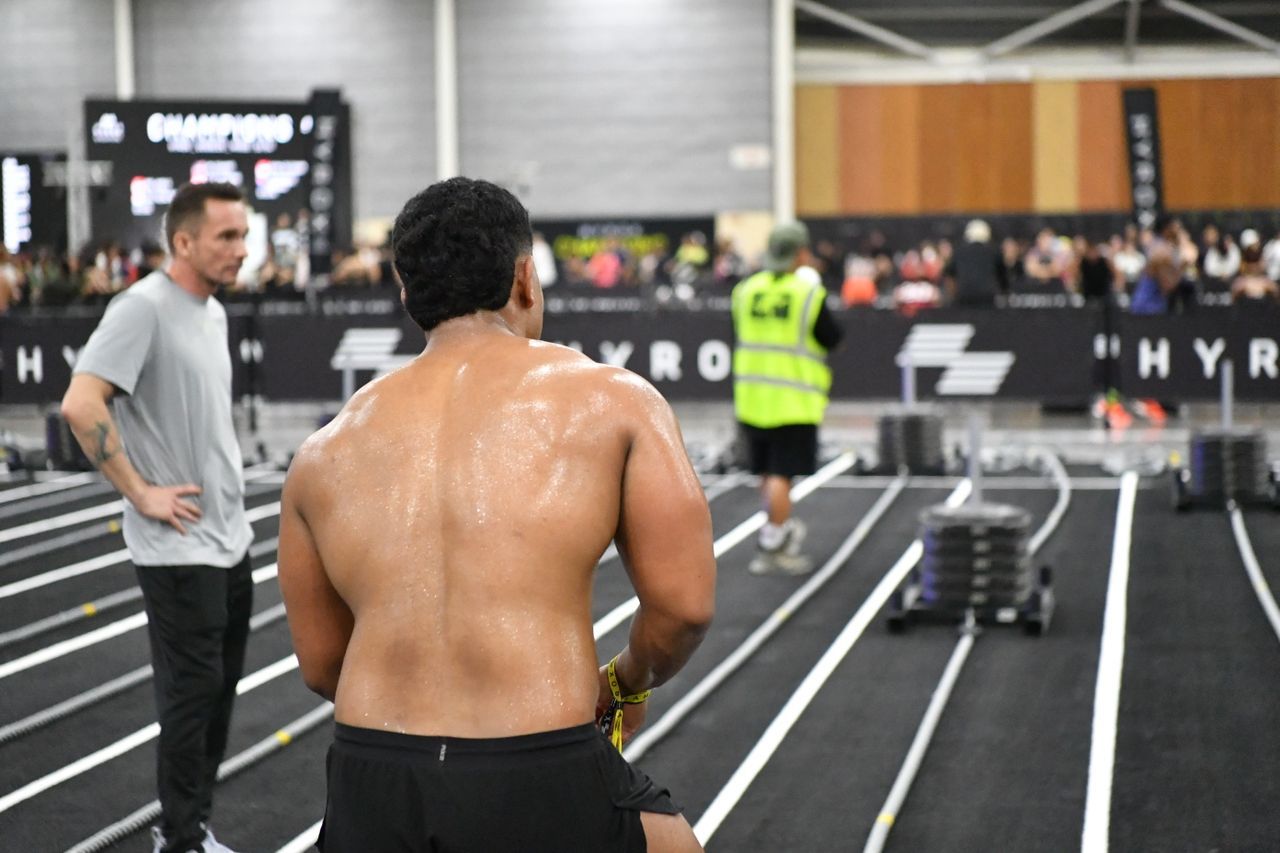
Source: Chen Te on Pexels
REDLINE Fitness vs HYROX: What's the difference?
If REDLINE sounds familiar, there’s a good reason. Like HYROX, it combines cardiovascular work and functional exercises into a timed fitness race. Both attract gym-goers, runners, functional fitness athletes, and people who want something more measurable than a regular workout.
But once you look at how the races are structured, the similarities start to fade.
The biggest difference is that REDLINE Fitness Games is built around 12 consecutive functional fitness stations, while HYROX alternates eight 1 km runs with eight workout stations. HYROX therefore places much more emphasis on sustained running, while REDLINE moves athletes through a denser variety of exercises with less traditional running between stations.
There is also a difference in standardization. HYROX uses the same core race format around the world, which makes performances directly comparable across events. REDLINE standardizes its workout for each calendar year but intentionally changes two or three stations from year to year.
So while the two competitions belong to the same broad world of functional fitness racing, they test athletes in noticeably different ways.
REDLINE vs HYROX race format
A REDLINE race moves through 12 stations in a fixed sequence. In the current 2026 format, the first station is a 500-meter run, followed by exercises such as SkiErg, deadball work, BikeErg, farmer's carries, shuttle runs, sandbag movements, rowing, bodyweight conditioning, The Mule, and a final sled push and pull.
HYROX uses a more repetitive pattern:
1 km run → workout → 1 km run → workout
That sequence continues until you've completed eight runs and eight functional stations, giving you a total of 8 km of running.
This creates two very different racing rhythms.
REDLINE moves quickly from one type of exercise to another. You could go from an ergometer to a loaded carry, then into shuttle runs and core work without a long running section separating them.
HYROX repeatedly brings you back to running. No matter how well you handle a station, another kilometer is waiting afterward.
REDLINE vs HYROX workout stations
There is some overlap between the two races. Both use familiar functional fitness tools such as the SkiErg, rower, farmer's carry equipment, sandbags, and sleds.
HYROX currently has eight standardized workout stations: SkiErg, sled push, sled pull, burpee broad jumps, rowing, farmer's carry, sandbag lunges, and wall balls. The sequence is consistent across standard HYROX races worldwide.
REDLINE uses 12 stations and incorporates a wider mix of movement patterns. Alongside SkiErg, rowing, farmer's carries, sandbag work, and sled work, you may encounter exercises such as BikeErg, shuttle runs, deadball movements, The Mule, and other core or bodyweight exercises.
REDLINE also deliberately refreshes part of its workout each year. The organizer states that two to three stations are changed annually, while the workout remains standardized across REDLINE events within that calendar year.
That makes the preparation slightly different. HYROX athletes can build training around a highly predictable eight-station sequence. REDLINE athletes should develop broader functional fitness while still practicing the movements prescribed for their event year.
REDLINE vs HYROX running
Running may be the clearest difference between REDLINE and HYROX.
HYROX requires 8 km of running, broken into eight 1 km sections. Running accounts for a major part of the race, and HYROX itself emphasizes running as a central component of race preparation.
REDLINE's current format starts with a 500-meter run and later includes shuttle runs as a separate station. You don't complete another long-distance run between every workout station.
That doesn't mean cardiovascular fitness matters less in REDLINE. BikeErg, SkiErg, rowing, shuttle runs, high-repetition bodyweight work, and fast transitions can keep your heart rate elevated almost continuously.
The difference is where that cardiovascular stress comes from.
In HYROX, a significant amount comes from running. In REDLINE, it is spread across a larger mix of exercises.
If you're already a strong runner, HYROX may play more directly to your strengths. If you prefer mixed conditioning and shorter running bouts, REDLINE may feel more natural.
REDLINE vs HYROX strength and conditioning
Neither competition is a pure strength event, but both punish athletes who neglect resistance training. HYROX includes demanding sled pushes and pulls, farmer's carries, sandbag lunges, and wall balls.
The Pro divisions raise several of the prescribed loads substantially compared with Open divisions, making strength more important as you move into higher competitive levels.
REDLINE spreads its strength demand across more movement types. Depending on the year's workout, you may need to move deadballs, kettlebells, sandbags, sleds, and other equipment while also completing high-repetition conditioning work.
Its Singles structure also offers Level 1, Level 2, and Level 3, with increasing repetitions, distances, calories, and resistance as you move through the levels.
For both competitions, relative strength is more useful than simply having a big one-rep max. You need to move resistance efficiently without exhausting yourself, then continue racing.
REDLINE vs HYROX difficulty
So, is REDLINE harder than HYROX?
Not necessarily. And HYROX isn't automatically harder than REDLINE either.
They create difficulty in different ways.
HYROX has a substantial endurance component because you repeatedly return to 1 km runs and eventually accumulate 8 km of running. If running is your weakness, that can make HYROX particularly demanding.
REDLINE uses much less continuous running but packs 12 different stations into a shorter race. Frequent movement changes, muscular fatigue, grip demands, loaded work, and limited opportunities to settle into one rhythm can make REDLINE feel intense in a different way.
Your athletic background matters enormously. A runner with decent strength might find HYROX's structure easier to predict. A functional fitness athlete who excels at carries, ergs, sleds, and mixed conditioning could feel more comfortable in REDLINE.
Someone else might have the exact opposite experience. That's why comparisons based purely on which event is "harder" aren't especially useful. A better question is: which event exposes more of your weaknesses?
REDLINE vs HYROX race duration
REDLINE is generally the shorter race. REDLINE's official FAQ estimates that competitors typically need around 30 to 55 minutes to finish, depending on fitness level and race category.
HYROX usually requires a longer sustained effort. HYROX's own preparation guidance describes an average race duration of around 90 minutes, although actual finishing times can vary considerably by athlete, category, and competitive level. That changes how you should approach pacing.
REDLINE can feel more compressed. You're moving through stations quickly and may have fewer opportunities to settle into a steady endurance rhythm. HYROX demands patience. Going too aggressively during the first few kilometers or workout stations can become expensive once you still have several runs left.
Neither approach is easy. They simply require different ways of managing fatigue.
REDLINE vs HYROX competition categories
Both events give you several ways to race, including competing individually, with a partner, or as part of a team. REDLINE Singles is divided into Level 1 Beginner, Level 2 Intermediate, and Level 3 Advanced for men and women.
REDLINE also offers Men's, Women's, and Mixed Doubles, plus Men's, Women's, and Mixed Team Relay categories. HYROX uses a different structure. Individual competitors can enter Open or Pro, while athletes can also participate in Doubles, Doubles Pro where offered, or a four-person Relay. HYROX also uses age-group rankings within relevant divisions.
The REDLINE levels can be particularly useful for someone entering their first functional fitness race because the beginner category reduces the prescribed workload rather than asking every individual competitor to complete the same volume.
HYROX Open is designed as its more accessible individual category, while Pro increases several weights for experienced competitors.
Which is better: REDLINE or HYROX?
There isn't one winner here. It depends on what kind of challenge you actually enjoy.
HYROX may suit you better if you enjoy running, like training toward a highly standardized race, want to compare your performance across events, or prefer knowing that the same eight workout stations will be waiting for you wherever you compete.
REDLINE may suit you better if you enjoy mixed functional training, prefer less continuous running, want more exercise variety, or like the idea of choosing between beginner, intermediate, and advanced Singles levels.
REDLINE can also appeal to athletes who get bored doing the same type of conditioning repeatedly. Moving through 12 stations creates constant changes in what your body has to do. HYROX, on the other hand, rewards athletes who can repeatedly return to a strong running pace despite accumulating fatigue from the workout stations.
You don't necessarily have to choose only one, either. Training for either event develops many transferable qualities, including aerobic endurance, functional strength, grip, muscular endurance, pacing, and the ability to work efficiently while tired.
For gyms and fitness studios, that overlap also makes REDLINE and HYROX preparation suitable for dedicated functional fitness programs. Platforms such as Rezerv can help fitness businesses manage race-preparation classes, recurring sessions, memberships, packages, and bookings as part of a structured training program.
Ultimately, REDLINE and HYROX share the same basic idea: turn functional fitness into something you can race. HYROX leans more heavily into running and standardized endurance racing, while REDLINE offers a shorter, station-dense challenge with greater movement variety. Which one feels tougher will depend far more on your strengths, weaknesses, and training background than the name printed on the finish line.
REDLINE Fitness vs other functional fitness competitions
REDLINE sits within a growing category of fitness competitions that turn gym training into something you can race, score, and train toward. But not every functional fitness event tests athletes in the same way.
Some prioritize technical lifting and gymnastics. Others combine running with fixed workout zones or take competitors outdoors through obstacles and uneven terrain. REDLINE's identity is relatively straightforward: a timed indoor race through 12 functional fitness stations, with Singles, Doubles, and Team Relay options.
The workout is standardized within each calendar year, although REDLINE typically changes two or three stations annually. Here's how that compares with some of the biggest names in functional fitness.
REDLINE vs CrossFit
REDLINE and CrossFit share plenty of training movements, but the competition experience is quite different. CrossFit is built around constantly varied functional movements performed at high intensity. A typical CrossFit program can mix running, rowing, cycling, Olympic lifting, powerlifting, gymnastics, bodyweight movements, and carries in countless combinations.
CrossFit competition follows that philosophy too. At the CrossFit Games, athletes don't simply repeat one standardized race. Events change and may test very different skills, from heavy snatches and cleans to handstand walking, pull-ups, rowing, skiing, and high-repetition conditioning. Some Games events are even revealed shortly before athletes compete.
REDLINE is much more predictable. You know you're racing through 12 stations, and the prescribed workout for that year's event can be studied and practiced beforehand.
Movement complexity is another major difference.
REDLINE generally relies on relatively accessible functional movements such as running, ergs, carries, sandbags, bodyweight exercises, and sled work. CrossFit can involve more technically demanding skills, particularly Olympic lifts and gymnastics movements such as muscle-ups or handstand work.
So, if you like varied training and developing advanced skills, CrossFit may appeal more. If you prefer a clearly defined race that lets you prepare for a known set of challenges, REDLINE may feel more approachable.
REDLINE vs DEKA
DEKA is probably one of the closest comparisons to REDLINE in terms of workout structure. Both use a sequence of standardized functional fitness stations and test a combination of cardio, strength, carrying ability, and muscular endurance. They also share several familiar movements and pieces of equipment, including rowing, SkiErg, farmer's carries, weighted lunges, deadball work, and push-pull exercises.
The main difference is the format. DEKA FIT has 10 fitness zones, with a 500-meter run before every zone. That adds up to 5 km of running across the race. DEKA also offers other versions, including DEKA MILE with one mile of total running and DEKA STRONG with no running at all.
REDLINE uses 12 stations instead. Running is one station within the race rather than something repeated before every workout zone. REDLINE also refreshes part of its workout each calendar year, whereas DEKA's 10-zone structure is designed around a consistent fitness benchmark.
That gives the two competitions slightly different personalities. DEKA FIT rewards athletes who can repeatedly switch between running and functional work. REDLINE puts more emphasis on moving through a wider sequence of different exercises with fewer long running sections separating them.
If you enjoy the idea of benchmarking yourself against a consistent fitness test, DEKA has a strong appeal. If you want greater workout variety and less repeated running, REDLINE may suit you better.
REDLINE vs Spartan
REDLINE and traditional Spartan Race events demand broad fitness, but that's where much of the similarity ends. Classic Spartan races are obstacle course races, typically held outdoors.
For example, the Spartan Sprint combines a 5K course with 20 obstacles, while longer formats include the 10K Super, 21K Beast, and 50K Ultra. Obstacles can involve climbing walls, crawling, hanging from monkey bars, carrying objects, and throwing a spear, often across off-road terrain that may include mud, water, and elevation changes.
REDLINE is much closer to a gym-based fitness race.
Instead of negotiating obstacles or unpredictable terrain, you're completing controlled functional exercises at dedicated stations. That makes the environment more standardized and allows you to prepare specifically for most of what you'll encounter.
The physical demands are different too. Spartan places considerable emphasis on running endurance, obstacle technique, grip strength, climbing ability, and adapting to terrain. REDLINE focuses more on mixed conditioning, functional strength, erg performance, carries, muscular endurance, and efficient transitions.
A strong obstacle racer may already have the cardio and grip required for REDLINE, but would still benefit from practicing sleds, ergs, sandbags, and race-specific functional movements. Likewise, a REDLINE athlete moving into Spartan would need to become comfortable with longer running distances and obstacles that are rarely found in a normal gym.
REDLINE vs HYROX
Of all these competitions, HYROX is probably the most useful comparison for someone trying to understand REDLINE. Both are indoor mass-participation fitness races that combine cardiovascular endurance with familiar gym-based functional exercises. Both also allow athletes to compete individually, with a partner, or as part of a relay team.
The difference is how those ingredients are arranged.
HYROX follows a fixed pattern of 1 km running followed by one workout station, repeated eight times. Every finisher therefore completes 8 km of running plus eight workouts. The format stays consistent worldwide, which makes results easier to compare between cities and events.
REDLINE moves through 12 functional stations, with running included as part of the station lineup rather than repeated between every exercise. That creates a more station-dense race with more frequent changes in movement. REDLINE also changes a small number of stations each year.
As a result, HYROX generally places greater emphasis on sustained running performance. REDLINE spreads its cardiovascular demand across running, ergs, shuttle work, loaded movements, and high-repetition exercises.
Neither format is automatically harder. A runner with good functional strength may find HYROX's repeated 1 km sections manageable but struggle with REDLINE's constant movement changes. An athlete coming from circuit training or CrossFit-style conditioning may enjoy REDLINE's variety but find 8 km of compromised running in HYROX much tougher.
The training overlap is still significant. Aerobic conditioning, sled work, carries, grip strength, rowing, SkiErg training, lunges, and muscular endurance can all transfer well between the two.
That's also why functional fitness competitions are becoming useful programming opportunities for gyms and studios. Instead of offering only general strength or HIIT classes, businesses can create REDLINE, HYROX, or functional race preparation programs with progressive training blocks and dedicated simulation sessions. Platforms such as Rezerv fitness management software can help gyms manage those classes, memberships, packages, schedules, and bookings in one place.
Ultimately, the right competition depends on what you want from the experience. CrossFit rewards versatility and technical skill. DEKA offers a standardized 10-zone fitness benchmark.
Spartan combines endurance with outdoor obstacles. HYROX heavily blends running and functional workouts. REDLINE sits somewhere between them, offering a compact, fast-moving test built around 12 varied functional fitness stations.
If you enjoy training across several areas of fitness rather than specializing in one, that's exactly what makes REDLINE worth considering
How to train for REDLINE Fitness
Training for REDLINE Fitness is about becoming well-rounded under fatigue.
You need enough cardiovascular endurance to keep your heart rate under control, enough functional strength to move sleds and loaded objects, enough grip to survive carries and pulls, and enough muscular endurance to keep performing once the race starts to hurt. Just as importantly, you need to learn how to connect all of those abilities without wasting time between stations.
The current REDLINE format consists of 12 functional fitness stations. The 2026 workout includes running, SkiErg, deadball work, BikeErg, farmer's carries, shuttle runs, plank pulls, sandbag exercises, rowing, burpee thrusters, The Mule, and sled work.
Specific movements and prescriptions can change between editions, so always check the official REDLINE Fitness Games website and current rulebook before building your final race-specific training block.
You don't need to perform complete REDLINE simulations every week. A better approach is to develop the individual qualities first, then gradually combine them as race day gets closer.
Build your aerobic base
Start with your engine. Although REDLINE includes plenty of strength work, a large portion of the race still places continuous stress on your cardiovascular system. Running, SkiErg, BikeErg, shuttle runs, rowing, and high-repetition movements can keep your heart rate elevated for much of the event.
Building an aerobic base helps you sustain that effort without reaching your limit too early. Include steady sessions where you can maintain a controlled pace for around 30 to 60 minutes. Running is useful, but you don't have to do all your aerobic work on foot. Cycling, rowing, and SkiErg sessions can increase your conditioning while spreading the load across different muscle groups.
General exercise guidance from the American College of Sports Medicine also emphasizes combining regular aerobic exercise with strength training rather than focusing exclusively on one type of fitness.
Keep most aerobic sessions controlled enough that you aren't exhausted afterward. REDLINE-specific intensity comes later.
Improve functional strength
REDLINE strength is less about chasing a huge one-rep max and more about making the race loads feel manageable. Exercises such as squats, deadlifts, lunges, rows, presses, carries, and sled work can build the foundation you need for sandbags, deadballs, The Mule, farmer's carries, and the final sled station.
Focus especially on the legs, posterior chain, upper back, and core. These areas contribute to a large percentage of REDLINE movements. You still want to become stronger, but think in terms of strength reserve.
If a prescribed sled or sandbag load represents almost everything you can handle, fatigue will quickly become a problem. If you've developed enough strength that the race load feels moderate, you can move much more efficiently.
Two focused strength sessions per week can be enough for many recreational athletes when combined with conditioning and race-specific training.
Train grip strength
Your grip can quietly become one of your biggest REDLINE weaknesses.
Farmer's carries make that obvious, but your hands and forearms are also working during SkiErg, rowing, deadball movements, sandbag carries, plank pulls, and sled pulling.
You don't need a separate hour-long forearm workout.
Instead, add grip training naturally to your strength sessions. Farmer's carries are one of the most race-specific options. You can also use heavy dumbbell holds, dead hangs, rows, Romanian deadlifts, and loaded carries with different implements.
Try not to use lifting straps for every pulling exercise if grip development is one of your goals. You should also occasionally train grip while already tired. A farmer's carry after a short rowing or SkiErg interval will tell you much more about your REDLINE readiness than a fresh carry at the start of a workout.
Develop muscular endurance
REDLINE isn't simply asking whether you can perform a movement. It's asking whether you can keep performing it repeatedly. Sandbag squats and lunges, shuttle runs, burpee-based movements, carries, and erg work can create significant local muscular fatigue. Your legs may still be capable of producing force, but every repetition starts feeling slower.
Train for this with moderate loads and longer working sets. For example, instead of always performing five heavy squats, occasionally use lighter resistance for 10 to 15 controlled repetitions. You might perform walking lunges over distance, longer loaded carries, or repeated sets with relatively short recovery.
Circuit-style strength sessions can also help once you have good movement technique.
The goal isn't to turn every workout into a race. It's to gradually improve your ability to produce repeated submaximal efforts without your form collapsing.
Practice high-intensity intervals
REDLINE isn't entirely aerobic. There will be moments when your effort rises sharply, especially on ergs, shuttle runs, burpees, sleds, and other demanding stations.
That's where interval training becomes useful.
You could perform something as simple as:
1 minute hard → 1 minute easy × 6 to 10 rounds
This can work on the SkiErg, rower, BikeErg, or while running.
As your fitness improves, you can lengthen the work periods, shorten the recovery, or combine different machines.
Concept2's SkiErg training resources use similar progressive interval methods, gradually increasing work duration and reducing recovery rather than asking beginners to perform maximal efforts immediately.
One or two higher-intensity conditioning sessions per week is usually more useful than trying to turn every workout into an all-out effort.
Train transitions
You can lose a surprising amount of time without technically being slow at any station.
Finish the BikeErg. Walk around trying to catch your breath. Find the kettlebells. Adjust your hands. Pause again. Then finally start the farmer's carry.
Ten or fifteen seconds disappear quickly. Race-specific sessions should therefore include transitions between exercises. Practice finishing one movement and calmly starting another. You don't have to sprint between stations. The aim is to eliminate hesitation.
For example:
500 m run → SkiErg
BikeErg → farmer's carry
Shuttle runs → sandbag work
RowErg → burpee-based movement
Loaded carry → sled push
These combinations also teach you something important: how one station changes the next.
A farmer's carry after cycling feels different from a fresh carry. A sled push after loaded sandbag work feels nothing like a sled push at the beginning of a strength session.
That's the kind of fatigue REDLINE training needs to prepare you for.
Improve pacing
One of the fastest ways to ruin a REDLINE race is to confuse feeling good early with being able to maintain that effort. You will probably feel strong during the first few stations.
Don't let that fool you.
REDLINE races typically last tens of minutes rather than a few minutes, with the official 2026 rulebook estimating approximately 30 to 60 minutes depending on category and fitness level.
That means pacing matters from the opening run. Practice identifying an intensity you can maintain without needing long breaks later. On the ergs, learn what calorie output or pace feels challenging but sustainable. During high-repetition movements, experiment with breaking sets before you reach failure.
For example, completing 20 smooth repetitions without stopping may be faster than attacking 15, reaching your limit, then standing still for 20 seconds. Your goal is consistent output, not the fastest possible first five minutes.
A useful rule during training is to finish some race-specific workouts feeling like you could have continued for another few minutes. Once you understand your sustainable pace, you can start experimenting with where to push harder.
Combine running with functional movements
You don't need HYROX-level running volume for REDLINE, but you should still learn to perform functional movements immediately after cardiovascular work.
That is very different from doing your strength workout first and then jogging on the treadmill afterward.
Try simple combinations such as:
400 to 500 m run → 15 calories on the rower
400 m run → 20 walking lunges
500 m run → farmer's carry
Shuttle runs → sandbag squats
Short run → sled push and pull
The purpose isn't necessarily to recreate the entire race. You're training the transition between breathing hard and producing force. Start with two movements. Then three. As race day approaches, you can build longer combinations containing four, five, or more stations.
You can also perform an occasional partial or full race simulation once your conditioning is strong enough, but don't make this your default workout. Constant simulations create plenty of fatigue without always giving you enough quality training in the areas you actually need to improve.
For gyms and fitness studios, REDLINE preparation works particularly well as a progressive class format. Coaches can separate aerobic development, strength sessions, station technique, and race simulations before combining everything closer to an event. Fitness businesses can use Rezerv to manage those training classes, schedules, memberships, packages, and participant bookings.
The best REDLINE preparation is ultimately specific without becoming repetitive. Build your aerobic capacity. Get stronger. Develop your grip and muscular endurance. Then teach those qualities to work together.
You don't need to train like an elite athlete from day one. You need to progress gradually enough that when race day arrives, none of the 12 stations feels completely unfamiliar, and moving from one to the next feels like something you've already done many times in training.
REDLINE Fitness race categories
REDLINE gives you three main ways to compete: Singles, Doubles, and Team Relay. The underlying challenge is still the same 12-station functional fitness race, but how much work you personally complete changes significantly depending on the category.
That choice matters more than you might think. Singles gives you complete control over your race but also leaves you responsible for every station. Doubles introduces workload sharing and partner strategy. Team Relay breaks the race into much smaller sections, making it particularly attractive for groups or first-time competitors.
The current REDLINE lineup includes men's and women's Singles across three fitness levels, Men's, Women's, and Mixed Doubles, plus several Team Relay divisions. Some individual events also offer additional categories, such as Corporate Team Relay, so always check the registration page for your specific city.
Singles
Singles is the individual version of REDLINE. You complete all 12 stations yourself, in the prescribed order, and your final race time determines your result.
REDLINE currently divides Singles into three ability levels:
Level 1: Beginner
This is designed as the most accessible individual division. The workout retains the 12-station structure but uses lower repetitions, calorie targets, distances, or resistance than the more advanced categories.
Level 2: Intermediate
Level 2 increases the workload and suits athletes who already have a solid combination of cardiovascular conditioning and functional strength.
Level 3: Advanced
This is the most demanding Singles category. Expect higher workloads and resistance, making strength, muscular endurance, and efficient pacing increasingly important.
The official 2026 competition structure also uses age divisions for some Singles levels at certain events. For example, the Kuala Lumpur rulebook separates Level 2 competitors into 15 to 39, 40 to 49, and 50+ groups, while Level 3 uses 18 to 39, 40 to 49, and 50+. Level 1 does not use separate age categories in that event.
Those details can vary between editions, so check the category information for the race you're actually entering.
Doubles
Doubles allows two athletes to complete the 12-station race together.
Current categories include:
- Men's Doubles
- Women's Doubles
- Mixed Doubles
The biggest difference from Singles is workload sharing.
With the exception of the running station, Doubles uses a You-Go-I-Go format. One partner works while the other rests, and the team can switch athletes as often as needed until the station's required repetitions or distance has been completed.
For example, if your team needs to complete a set number of repetitions, you don't necessarily have to divide them 50/50.
One athlete might complete 15 repetitions, switch, then return for another short set. If one partner is particularly strong at a movement, they may take on a larger share.
That's where Doubles becomes tactical.
A good partnership isn't only about being equally fit. Knowing each other's strengths can be more valuable. Maybe you're stronger on the SkiErg while your partner handles loaded movements more efficiently. Or perhaps one person has better muscular endurance while the other is stronger but benefits from shorter sets.
The running station is different because both partners must complete it together. You therefore need to consider the slower runner's sustainable pace rather than treating the race as two separate individual efforts.
Team Relay
Team Relay divides REDLINE across four athletes. Rather than sharing every station, each team member completes three consecutive stations before handing over to the next teammate. Together, the four athletes cover the complete 12-station course.
The current standard relay divisions include:
- Men's Team Relay
- Women's Team Relay
- Mixed Team Relay]
For Mixed Team Relay, the standard division consists of two men and two women. Some current REDLINE events, including Bangkok and Ho Chi Minh City, also offer Corporate Team categories with additional permitted gender combinations.
Team Relay creates a different kind of strategy.
Because each athlete only completes three stations, you can focus more specifically on the part of the course assigned to you. Someone who enjoys cardio may be particularly comfortable with one section, while a stronger teammate might be better suited to a portion containing more loaded work.
However, you don't necessarily get to pick individual stations independently. Under the current structure, teammates complete blocks of three consecutive stations, so each person still needs to prepare for everything contained within their section.
Relay transitions matter too. The timing chip must be passed between athletes in the designated changeover area, so teams should understand the handover procedure before competing.
For first-timers, Team Relay can be one of the least intimidating ways to experience REDLINE. You get the atmosphere, competition, timing, and race-day pressure without having to complete all 12 stations yourself.
It can also work especially well for friends, coworkers, gym communities, and training groups looking for a shared fitness goal.
Which REDLINE category should you choose?
The best REDLINE category depends less on how "fit" you consider yourself and more on what type of race experience you want.
Choose Singles Level 1 if you're relatively new to functional fitness competition but want to complete the full race yourself. It's still demanding, but the beginner prescription offers the clearest individual entry point.
Choose Singles Level 2 if you already train consistently, have good cardiovascular fitness and functional strength, and are comfortable completing longer mixed-conditioning workouts.
Choose Singles Level 3 if you're an experienced functional fitness athlete and the advanced prescribed loads and volumes are realistic for you even while fatigued.
Choose Doubles if you want the full REDLINE experience with a partner and enjoy the strategic element of sharing work. This can also be an excellent first category for athletes who have enough fitness to race but aren't confident about completing every station alone.
Choose Team Relay if you'd rather compete as part of a group, want a smaller individual workload, or simply enjoy team-based competition more than individual racing.
Don't choose a harder category simply because it sounds more impressive.
The smartest division is the one where the prescribed workload challenges you without turning every station into a near-maximal effort. Check the official weights, repetitions, and distances beforehand and test several of them in training.
You can explore the latest categories and event-specific requirements directly through the official REDLINE Fitness Games website.
For gyms, studios, and training communities, having multiple competition formats also makes REDLINE useful for group programming. You could run beginner preparation classes, Doubles training sessions, or organize relay teams from within your existing member community. Fitness businesses can use Rezerv to manage those classes, schedules, memberships, packages, and participant bookings.
There is no single "best" REDLINE category. The right one is the format that gives you a challenging but realistic first race, then leaves you with somewhere to progress next time.
Frequently asked questions
What is REDLINE Fitness?
REDLINE Fitness is a functional fitness competition that challenges athletes across 12 workout stations. The race combines cardiovascular conditioning, functional strength, power, grip, agility, coordination, and muscular endurance.
REDLINE describes the Fitness Games as a gamified competition designed for gym-goers and fitness enthusiasts who want to test their overall fitness in a race environment. Competitors can participate individually, with a partner, or as part of a four-person team.
You can find current event information on the official REDLINE Fitness Games website.
Is REDLINE the same as HYROX?
No. REDLINE and HYROX belong to the same broad category of functional fitness racing, but they use different race formats.
HYROX requires athletes to complete eight 1 km runs and eight functional workout stations, alternating between running and workouts throughout the race. REDLINE instead uses a race through 12 functional fitness stations, with running included within its station structure.
The equipment and fitness demands overlap in several areas, but the racing experience is noticeably different.
What is the difference between REDLINE and HYROX?
The biggest difference is how the workload is structured.
HYROX follows the same repeating pattern throughout the race:
1 km run → workout station → 1 km run → workout station
Athletes eventually complete 8 km of running and eight workouts.
REDLINE moves competitors through 12 stations and includes a broader mix of cardiovascular, carrying, strength, and conditioning tasks. Because REDLINE doesn't place another 1 km run between every station, its race tends to feel more like continuous mixed conditioning.
HYROX therefore places greater emphasis on sustained running, while REDLINE places more emphasis on frequent changes between different types of physical work.
Is REDLINE harder than HYROX?
Not universally. HYROX can be particularly demanding for athletes who struggle with running because every competitor completes 8 km across the race. REDLINE involves less continuous running but exposes athletes to more frequent changes in movement across 12 stations.
A strong runner may find HYROX's rhythm easier to manage. Someone with a background in mixed functional conditioning might feel more comfortable in REDLINE.
The harder event is often the one that exposes more of your individual weaknesses.
Is REDLINE easier than HYROX?
REDLINE isn't automatically easier simply because it involves less long-distance running.
The shorter running volume is balanced by a dense sequence of functional exercises that can create cardiovascular, grip, leg, core, and muscular fatigue. REDLINE also offers different Singles levels, so the difficulty increases considerably from Level 1 Beginner to Level 3 Advanced.
For some athletes, REDLINE may feel more manageable. For others, constantly switching movements could make it more difficult than the predictable run-workout pattern of HYROX.
How long does a REDLINE race take?
REDLINE's official FAQ estimates that a race usually takes around 30 to 55 minutes, depending on the athlete's fitness level and competition category.
Individual results can obviously fall outside that range. Beginners may need more time, while highly competitive athletes may finish considerably faster.
Your finishing time will also depend on how efficiently you transition between stations and whether you can maintain a consistent effort without taking long breaks.
How many stations are in REDLINE?
A REDLINE Fitness Games race contains 12 functional fitness workout stations.
The stations are designed collectively to test qualities including cardiovascular endurance, strength, power, agility, balance, coordination, grip, and muscular endurance.
What are the REDLINE workout stations?
The official 2026 REDLINE rulebook lists a 12-station structure that includes:
- Run
- SkiErg
- Deadball Over Shoulder
- BikeErg
- Farmer's Carry
- Shuttle Run
- Plank Pull
- Sandbag Gauntlet
- RowErg
- Burpee Thruster
- The Mule
- Sled Push & Pull
However, always check the workout page for the specific REDLINE event you're entering. Movement selections, repetitions, distances, resistance, and competition standards can be updated between editions and event formats.
The official REDLINE rulebook is the safest reference when preparing for an upcoming race.
Can beginners compete in REDLINE?
Yes. REDLINE offers a dedicated Singles Level 1 Beginner category. Level 2 is designed for intermediate athletes, while Level 3 is the advanced Singles division. Beginners can also enter Doubles or Team Relay if they'd prefer to share the race rather than completing all 12 stations alone.
You should still train beforehand. Beginner-friendly means the workload is more accessible, not that the race requires no fitness.
Can I compete in REDLINE with a partner?
Yes. Choose REDLINE Doubles if you want to compete with one partner. Doubles competitors share the station workload, with athletes swapping throughout the race rather than both completing every repetition individually. Current REDLINE categories include Men's, Women's, and Mixed Doubles.
Doubles can be a good first-race option if you want the full REDLINE experience but aren't ready to handle the complete Singles workload.
Can I compete in REDLINE as a team?
Yes. REDLINE Team Relay uses teams of four, with each athlete completing three consecutive workout stations. Together, the four competitors complete the full 12-station course.
Men's, Women's, and Mixed Team Relay categories are available, while certain events also offer additional corporate team divisions. This format works particularly well for friends, gym communities, and colleagues who want to train and compete together.
How should I train for REDLINE?
Your REDLINE training should combine:
- Aerobic conditioning
- Functional strength
- Grip training
- Muscular endurance
- Running
- Ergometer practice
- Loaded carries
- Sled work
- High-intensity intervals
- Transition practice
Don't train every session as a complete REDLINE simulation.
Build your individual fitness qualities first, then gradually combine them. For example, perform a short run before a farmer's carry or move directly from the BikeErg into loaded exercises.
As race day approaches, include longer circuits that teach you to maintain strength and movement quality while your heart rate is elevated.
What equipment is used in REDLINE?
Equipment can include:
- SkiErg
- BikeErg
- RowErg
- Kettlebells
- Deadballs
- Sandbags
- Wall balls
- Sleds
- Sled straps
- Other functional fitness equipment
There are also stations involving running and bodyweight movements. The equipment and prescribed loads depend on the workout and category.
You don't need all of this equipment for every training session, but practicing with the actual race equipment before competing can make a big difference.
How long should I train before REDLINE?
If you already exercise regularly, four to six weeks of focused REDLINE preparation can provide a practical starting point. Use that time to learn unfamiliar movements, improve cardiovascular conditioning, build functional strength, and practice combining stations.
If you're new to exercise or returning after a long break, give yourself longer. Eight weeks or more gives you more time to develop general fitness before adding harder race-specific sessions.
Your starting level matters more than following an arbitrary countdown.
Where can I compete in REDLINE Fitness Games?
REDLINE currently has a strong presence in Southeast Asia.
As of September 2026, the official REDLINE calendar lists:
Ho Chi Minh City, Vietnam: 26 September 2026 at World Trade Center EXPO
Bangkok, Thailand: 22 November 2026 at Queen Sirikit National Convention Center
Singapore: 23 January 2027 at Singapore EXPO
Kuala Lumpur, Malaysia: Returning in 2027, with the exact date still to be announced.
Because the calendar continues to develop, check the official REDLINE Fitness Games website for new cities, updated dates, tickets, and registration information before making travel plans.
What should I do before my first REDLINE race?
Start by reading the official workout and rulebook for your event. Make sure you know your category's repetitions, distances, weights, and movement standards before race day.
During your final weeks, practice the movements that are least familiar to you, especially SkiErg, RowErg, sled work, sandbags, deadballs, and loaded carries. Include a few race-style circuits so you know what these movements feel like while fatigued.
In the final week, reduce your overall training volume rather than trying to squeeze in one last brutal workout. Prepare your race clothes and equipment, eat familiar foods, stay hydrated, and give yourself plenty of time to arrive and check in.
Most importantly, don't make your first REDLINE entirely about your finishing time. Learn the race, complete the stations, establish your first benchmark, and use that experience to train smarter for the next one.
And if you're a gym or fitness studio helping members prepare for competitions such as REDLINE, Rezerv can help you manage training classes, schedules, packages, memberships, and bookings from one platform.
