The best types of exercise for fat loss
Discover the best types of exercise for fat loss, from strength training and walking to HIIT, cardio, swimming, and sports, plus tips to stay consistent.
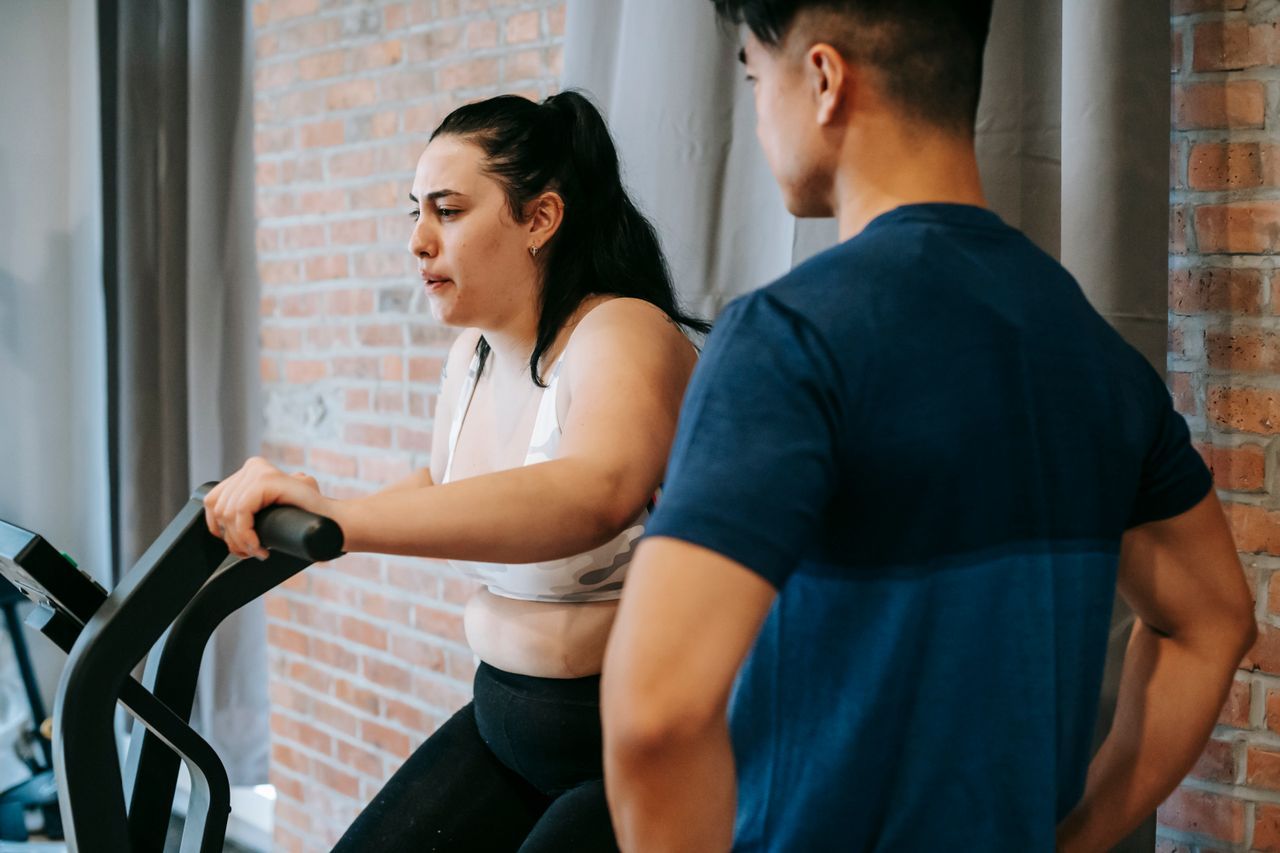
Source: Andres Ayrton on Pexel
If you’re trying to lose body fat, exercise is probably one of the first things you think about. Maybe you start running more, sign up for HIIT classes, or spend extra time on the treadmill because you want to burn as many calories as possible. Exercise absolutely can support fat loss, but the type of workout you choose is only one part of the picture.
Fat loss happens when your body consistently uses more energy than you consume. Exercise can help create that calorie deficit by increasing how much energy you use, but it also does something equally important: it helps you stay strong, maintain muscle, improve your fitness, and build habits that make an active lifestyle easier to maintain.
That’s why the best exercise for fat loss isn’t necessarily the workout that burns the most calories in an hour. A tough workout might burn plenty of energy, but it won’t help much if you hate doing it and stop after two weeks. Your fitness level, schedule, recovery, and personal preferences all matter when choosing how you train.
For most people, a well-rounded approach works best. Strength training can help you maintain muscle while losing weight, cardio can increase your overall energy expenditure and improve cardiovascular fitness, and simple activities such as walking can add a surprising amount of movement to your week without exhausting you.
In this guide, we’ll look at some of the best types of exercise for fat loss, how each one can support your progress, and how you can combine them into a routine that actually fits your life.
How exercise helps with fat loss
Exercise helps with fat loss in a pretty straightforward way: moving your body requires energy. The more active you are, the more calories your body uses throughout the day. When you consistently use more energy than you consume, your body has to draw on stored energy, including body fat. This is the calorie deficit that drives fat loss.
That doesn’t mean you need to burn hundreds of calories in every workout. In fact, the CDC explains that most weight loss comes from reducing calorie intake, while physical activity helps increase the number of calories you use and plays an important role in keeping weight off. Trying to compensate for a high-calorie diet with increasingly intense workouts can quickly become difficult to maintain.
Exercise also becomes especially valuable when you care about body composition, not just the number on the scale. During weight loss, your body can lose both fat and lean tissue. Resistance training gives your muscles a reason to stick around. The National Institute of Diabetes and Digestive and Kidney Diseases (NIDDK) notes that muscle-strengthening activities can help maintain muscle mass while you lose weight. This is one reason strength training deserves a place in a well-rounded fat-loss routine.
Then there’s everything you do outside your workouts. A one-hour gym session matters, but so does walking to lunch, taking the stairs, cleaning the house, playing a sport, or simply spending less of your day sitting down. All of that movement contributes to your total daily energy expenditure. You don’t have to make every activity feel like a workout for it to count.
Exercise also gives you benefits that go well beyond fat loss. Regular physical activity can improve cardiovascular health, strengthen your muscles and bones, support better sleep, and make everyday activities easier. So even during weeks when the scale barely moves, your training can still be doing something valuable for your health.
The goal, then, is to find activities you can do consistently without making your routine unnecessarily exhausting. Strength training, walking, steady cardio, HIIT, fitness classes, swimming, and recreational sports can all contribute. The best combination depends on your fitness level, schedule, goals, and what you actually enjoy doing.
Next, let’s look at each type of exercise and where it fits into a fat-loss routine.
Strength training
If fat loss is your goal, strength training deserves a regular spot in your routine. It may not always burn as many calories during a single session as running or an intense cardio workout, but that’s not the only thing that matters.
When you lose weight, your body doesn’t automatically lose fat alone. Some of that weight can come from lean tissue, including muscle. Strength training provides a stimulus that helps your body maintain muscle while you’re in a calorie deficit. This matters because the goal for most people isn’t simply to weigh less. It’s to lose body fat while keeping as much strength and muscle as possible.
The Physical Activity Guidelines for Americans, for example, specifically notes that muscle-strengthening activity can help maintain muscle mass during weight loss.
Strength training also changes how you can measure progress. The scale might move slowly, but you may notice that your waist gets smaller, your clothes fit differently, or you can lift heavier weights than you could a few months ago. These changes can tell you more about improvements in body composition than body weight alone.
What counts as strength training?
You don’t need to become a powerlifter or spend every evening lifting heavy barbells. Strength training simply means making your muscles work against resistance.
That can include:
- Free weights such as dumbbells, kettlebells, and barbells
- Resistance machines at the gym
- Resistance bands
- Bodyweight exercises such as squats, push-ups, lunges, and pull-ups
- Functional strength training
- Strength-focused group fitness classes
If you enjoy exercising with other people, a structured class can also make strength training easier to get into. Rezerv’s guide to choosing the right fitness class for your goals covers several options, including strength and functional training classes.
How often should you strength train for fat loss?
You don’t have to lift weights every day to see benefits. Current CDC recommendations advise adults to perform muscle-strengthening activities that work all the major muscle groups on at least two days per week.
For many people trying to lose fat, around two to four strength sessions per week can be a practical range, depending on your training experience, schedule, and recovery. A beginner might start with two full-body sessions per week, while someone with more experience may prefer three or four sessions split across different muscle groups.
More importantly, focus on progressive overload. As your body adapts, gradually increase the challenge by adding a little more weight, performing more repetitions, improving your technique, or progressing to a harder variation. You don’t need to make every workout dramatically harder than the last. Small improvements over time are enough.
And don’t worry about turning every strength session into a calorie-burning competition. Lift with good form, train your major muscle groups, give yourself enough time to recover, and let your overall calorie deficit take care of the actual fat loss. Strength training’s main job here is to help you become stronger and hold onto the muscle you already have while the fat comes down.
Walking

Source: David Brown on Pexel
Walking might not feel like a serious fat-loss workout, especially when you compare it with running, HIIT, or a hard gym session. But that simplicity is exactly what makes it so useful.
Walking increases your daily energy expenditure without putting much stress on your body. You can usually do it frequently, recover from it easily, and fit it around other workouts. That makes it particularly helpful when you’re already strength training or doing more intense cardio and don’t want every day to feel like another hard training session.
For fat loss, the biggest advantage may be how easy walking is to repeat. A 20-minute walk after lunch might not seem significant on its own, but doing it most days can add a meaningful amount of activity over the course of a week. You can walk after meals, take a longer route to work, use the stairs more often, walk while taking phone calls, or add a short treadmill walk after your gym session.
You don’t need to obsess over hitting exactly 10,000 steps either. There isn’t a single step target that everyone must reach for fat loss. Your current activity level matters more. If you normally average 4,000 steps a day, moving toward 6,000 or 7,000 is already a useful increase. Once that feels normal, you can gradually add more.
Walking also works well on days when you don’t have the energy for a full workout. Instead of treating a missed gym session as a completely inactive day, you can go for an easy walk and keep some movement in your routine. That kind of flexibility can make staying consistent much easier over several months.
If consistency is something you struggle with, Rezerv’s guide on staying consistent with fitness also covers how small, realistic activities can help you build a routine that fits your actual schedule.
Walking probably won’t replace strength training or all of your cardio, but it doesn’t have to. Think of it as one of the easiest ways to quietly increase how much you move throughout the week, without making your fat-loss routine harder than it needs to be.
Zone 2 cardio
Zone 2 cardio has become one of the most talked-about training methods in fitness, but the basic idea is actually pretty simple. It’s steady aerobic exercise performed at an intensity you can maintain for a relatively long time. You’re working harder than an easy stroll, but you’re nowhere near an all-out effort.
You might reach this intensity through brisk incline walking, cycling, swimming, rowing, jogging, or using an elliptical. Heart-rate zones can help you monitor your effort, although the exact numbers vary depending on the method used to calculate them and your individual fitness level. For most people, the talk test is an easier guide: you should be breathing harder but still able to hold a conversation.
Why can Zone 2 cardio help with fat loss?
One of its biggest advantages is that it’s sustainable. Because you aren’t pushing yourself to your limit, you can usually exercise for longer without accumulating the same level of fatigue you might get from repeated high-intensity workouts. A 30 to 45-minute cycling session at a comfortable pace, for example, may be much easier to recover from than 30 minutes of hard intervals.
That makes Zone 2 particularly useful when you’re combining cardio with strength training. You can increase your weekly activity and calorie expenditure without making every workout physically demanding. Over time, those extra sessions can contribute to the calorie deficit needed for fat loss. The CDC notes that physical activity increases the amount of energy your body uses, which can support weight management when combined with appropriate calorie intake.
You may also hear Zone 2 described as the “fat-burning zone.” There is some truth behind the phrase, but it can easily be misunderstood. At lower and moderate exercise intensities, your body tends to rely on a greater proportion of fat for fuel compared with very intense exercise.
That doesn’t mean spending all your workouts in Zone 2 automatically leads to greater body-fat loss. Your overall calorie balance, nutrition, training routine, and consistency still determine the bigger picture.
So, don’t worry about finding a magical heart rate where fat suddenly starts melting away. Think of Zone 2 as a practical way to get more aerobic exercise without constantly exhausting yourself.
How much Zone 2 cardio should you do?
There isn’t one Zone 2 schedule that everyone needs to follow. Your current fitness level and the rest of your training matter. If you’re just starting out, one or two 20 to 30-minute sessions per week can be enough to build the habit. As your fitness improves, you can gradually make those sessions longer or add another day.
For general health, current guidelines recommend that adults aim for at least 150 minutes of moderate-intensity aerobic activity per week, alongside muscle-strengthening activity on at least two days. You don’t have to complete all of that cardio in long sessions either. It can be spread across your week in whatever way works with your schedule.
You can also keep it simple. Walk uphill on a treadmill after your strength workout, go for a bike ride on a rest day, swim for half an hour, or take a cardio-based fitness class. Rezerv also covers the benefits of building an aerobic base in its article on fitness facts that may surprise you, including how easier aerobic sessions can complement harder training.
Zone 2 isn’t a shortcut to fat loss, but that’s also why it works so well for many people. It gives you a manageable way to increase your activity, improve cardiovascular fitness, and burn additional calories without feeling like every cardio session has to leave you completely wiped out.
High-intensity interval training (HIIT)
If you want to get a lot of work done in a relatively short workout, high-intensity interval training, or HIIT, can be a useful option. HIIT alternates short periods of hard effort with periods of easier movement or rest. For example, you might cycle hard for 30 seconds, recover for 60 seconds, and repeat that pattern several times.
The main appeal is efficiency. Because the harder intervals push your heart rate and breathing up quickly, you can get a challenging cardiovascular workout without spending an hour on the treadmill. Mayo Clinic describes HIIT as alternating intense bursts of activity with recovery periods, and notes that it can improve cardiovascular fitness while fitting into shorter workout sessions.
Does HIIT help with fat loss?
It can, but HIIT isn’t a special shortcut that automatically burns more body fat than every other type of exercise. Its main advantage for fat loss is that vigorous exercise can burn a meaningful amount of energy in a relatively short period. If you’re short on time, a 20-minute interval session may be easier to fit into your week than a much longer steady-state cardio workout.
HIIT can also continue to raise energy expenditure for a period after your workout as your body recovers. You may have heard this referred to as the afterburn effect, or excess post-exercise oxygen consumption (EPOC). However, it’s worth keeping this in perspective. The extra calorie burn after exercise exists, but it usually isn’t large enough to turn HIIT into a fat-loss cheat code.
Your overall calorie deficit still matters far more than trying to maximise the afterburn from a single workout.
What does a HIIT workout look like?
There’s no single HIIT formula. The work and recovery periods can change depending on your fitness level and the activity you choose.
A simple beginner-friendly session could look like this:
- Warm up for 5 minutes
- Exercise hard for 30 seconds
- Recover at an easy pace for 60 to 90 seconds
- Repeat for 5 to 8 rounds
- Finish with a short cool-down
You can use a stationary bike, treadmill, rowing machine, stair climber, or even bodyweight exercises. HIIT also appears in plenty of group workouts, including circuit training, boxing, bootcamp, and indoor cycling classes. Rezerv’s guide to choosing the right fitness class includes HIIT alongside other popular class formats, which can be helpful if you prefer instructor-led workouts.
How often should you do HIIT?
This is where more isn’t necessarily better. HIIT is demanding, so doing hard intervals every day can make recovery difficult, particularly if you’re strength training at the same time.
For many people, one or two HIIT sessions per week is plenty alongside strength training, walking, and lower-intensity cardio. Beginners can start with even less and build up gradually as their fitness improves.
You also don’t need to treat every interval like an all-out sprint. “High intensity” is relative to your current fitness level. What feels challenging for a beginner may look very different from what an experienced athlete does.
If you’re new to intense exercise, starting with shorter intervals and longer recovery periods can make HIIT much more manageable. You can read a guide to quick workouts for busy schedules, which includes a simple introduction to HIIT and other time-efficient workouts.
HIIT works best as one part of your routine, not the entire routine. Use it when you want a short, challenging cardio session, then balance it with strength training, walking, easier cardio, and enough recovery to keep performing well.
Group fitness classes
For some people, the hardest part of exercising isn’t knowing what to do. It’s actually showing up and doing it consistently. That’s where group fitness classes can be especially useful.
Instead of walking into the gym and figuring out your workout as you go, a class gives you a set time, a planned session, and an instructor to guide you through it. You simply book your spot and follow along. That extra structure can make exercise feel much easier to fit into your weekly routine.
There’s also the social side. Exercising around other people can provide encouragement and accountability, especially if you regularly attend the same class.
Which fitness classes are good for fat loss?
There isn’t one class that automatically burns fat better than the rest. Different classes simply give you different ways to stay active and increase your overall energy expenditure.
Some popular options include:
- Indoor cycling, which provides a cardio-focused workout that can be adjusted to your fitness level
- HIIT classes, which combine short bursts of harder exercise with recovery
- Strength classes, which use weights or resistance exercises to build and maintain muscle
- Circuit training, which moves you through several exercises with relatively short breaks
- Boxing or kickboxing, which combines cardiovascular exercise with repeated upper and lower body movements
- Dance fitness, which can be a more enjoyable way to get sustained aerobic activity
You can explore more options in Rezerv’s guide to choosing the right fitness class for you, which covers popular class formats and how to match them with your goals.
The number of calories you burn in any class will vary based on the activity, intensity, session length, your body size, and how hard you personally work. So, choosing a class purely because it promises the highest calorie burn isn’t always the smartest approach. A slightly less intense class that you genuinely enjoy and attend three times a week can be more useful than a brutal workout you keep finding excuses to skip.
Group classes benefit
Another advantage is that classes turn exercise into an appointment. If you’ve already booked a cycling class for Tuesday evening or a strength class every Saturday morning, you’ve removed some of the daily decision-making involved in staying active.
You can make that commitment even more social by booking with friends. Rezerv’s group booking feature, for example, allows customers at participating fitness businesses to arrange classes and sessions together rather than coordinating separate bookings.
That doesn’t mean you need a class every day. Group workouts can simply fill one or two spots in a broader routine that also includes strength training, walking, and easier cardio.
Ultimately, the best class for fat loss is one that challenges you enough, suits your current fitness level, and gives you a reason to keep coming back. If having an instructor, a schedule, and other people around makes you more likely to exercise regularly, group fitness can be a valuable part of your fat-loss plan.
Swimming

Source: david hou on Pexels
Swimming is a great option if you want cardio that works your whole body without the repeated impact of running or jumping. Because the water supports your body, it can feel gentler on your joints while still giving your heart, lungs, and muscles plenty to do.
That makes swimming especially useful for people who don’t enjoy traditional gym cardio or who simply want more variety in their routine.
Can swimming help with fat loss?
Yes. Like other forms of aerobic exercise, swimming increases your energy expenditure, which can help create the calorie deficit needed for fat loss.
The intensity can vary a lot depending on how you swim. Recreational swimming can count as moderate-intensity activity, while swimming laps at a harder pace can reach vigorous intensity.
The number of calories you burn will also depend on your body size, swimming stroke, speed, fitness level, and how long you stay in the pool. So there isn’t one universal calorie-burn number that applies to everyone.
What matters more is that swimming gives you another way to increase your total weekly activity. The CDC notes that physical activity increases the amount of energy your body uses, which can contribute to weight loss when paired with an appropriate calorie intake.
Swimming works more than just your cardiovascular system
Unlike some forms of cardio that mainly rely on the lower body, swimming involves your arms, shoulders, back, core, and legs at the same time.
The water also creates resistance with every stroke. That doesn’t make swimming a complete replacement for dedicated strength training, but it does mean your muscles are working while you move through the water.
You can also change the challenge by switching strokes, increasing your pace, or adding intervals. A relaxed breaststroke session feels very different from repeated freestyle laps at a faster pace.
If you prefer something more structured, water-based fitness classes can be another option. Rezerv’s guide to the benefits of exercising in water covers water aerobics and other forms of aquatic exercise in more detail.
How often should you swim?
There’s no specific number of swimming sessions you need for fat loss. One or two sessions per week can work well alongside strength training, walking, or other cardio, especially if swimming is an activity you genuinely enjoy.
You could start with 20 to 30 minutes at an easy or moderate pace and gradually increase the duration as your fitness improves. More experienced swimmers might prefer longer sessions or intervals that alternate faster laps with easier recovery laps.
Swimming can also contribute toward the general recommendation of at least 150 minutes of moderate-intensity aerobic activity or 75 minutes of vigorous activity per week for adults.
Most importantly, you don’t need to become a competitive swimmer for it to count. If getting in the pool twice a week makes you more active and gives you a form of cardio you actually look forward to, that alone can make it a useful addition to your fat-loss routine.
Sports and recreational activities
Not every fat-loss workout has to happen inside a gym. If running on a treadmill feels boring or you struggle to stay motivated with traditional cardio, playing a sport can be a much easier way to get yourself moving.
Padel, tennis, badminton, pickleball, football, and basketball can all increase your heart rate and add meaningful physical activity to your week. Most also involve frequent changes in direction, short bursts of faster movement, and periods of lower-intensity activity. You might not be thinking about calories while chasing a shuttlecock or trying to win a rally, but your body is still doing plenty of work.
That matters because physical activity contributes to your overall energy expenditure. The CDC explains that being more physically active can support weight management alongside appropriate calorie intake. Regular activity also provides benefits beyond fat loss, including better cardiovascular health, stronger bones and muscles, and improved sleep.
Why sports can make fat loss feel easier
One of the biggest benefits of recreational sports has less to do with finding the activity that burns the most calories and more to do with enjoyment.
If you look forward to playing badminton with friends every Wednesday, you’re more likely to keep doing it than a cardio routine you have to force yourself through. That consistency can make a huge difference over several months.
Sports also give you a reason to move for longer without constantly watching the clock. An hour-long padel game can pass quickly because your attention is on the ball, your partner, and the score. Compare that with spending an hour staring at the timer on a cardio machine, and it’s easy to see why some people find recreational exercise easier to maintain.
What sports are good for fat loss?
There’s no single winner, but activities that keep you moving regularly can all contribute.
Padel and tennis involve repeated movement around the court, quick changes of direction, and short bursts of effort. Padel can be especially approachable for beginners because it’s played in doubles and tends to be highly social. If you’re new to the sport, Rezerv’s padel tips for improving your game can help you understand the basics and get more comfortable on court.
Badminton can become surprisingly intense once the rallies pick up. You’re repeatedly lunging, changing direction, and accelerating across a relatively small court. Rezerv’s badminton training guide also explains how conditioning, footwork, and agility all play a role in the sport.
Basketball and football add even more continuous movement, while pickleball can provide a more accessible option for people who enjoy racket sports but prefer a smaller court and a slower learning curve.
The exact amount of energy you use during any sport will vary with your body size, fitness level, playing intensity, and session length. A relaxed doubles match and a highly competitive game are obviously not the same workout, so calorie estimates should always be treated as rough figures rather than guarantees.
Let enjoyment do some of the work
Recreational sports don’t need to replace your strength training or other cardio. They can simply make your routine more varied.
You might strength train three times a week and play padel on Saturday. Or perhaps walking and badminton are your main forms of cardio. The CDC notes that different types of moderate and vigorous aerobic activity can contribute toward your weekly physical activity target, so your routine doesn’t need to revolve around one particular exercise.
For fat loss, that flexibility is valuable. The activity that looks best on paper isn’t very helpful if you rarely do it. Finding a sport you genuinely enjoy gives you another way to stay active, burn additional energy, and build a routine that feels less like a chore.
Which exercise burns the most fat?
If your goal is fat loss, it’s tempting to look for the exercise that burns the most calories and simply do more of that. Running, cycling, swimming, HIIT, and other vigorous activities can burn a lot of energy in a relatively short time. But the exercise with the highest calorie burn isn’t automatically the best choice for fat loss.
Your actual calorie expenditure depends on several factors, including your body weight, workout intensity, duration, and fitness level. For example, the CDC estimates that a 154-pound person may burn around 295 calories during 30 minutes of jogging at 5 mph, compared with about 140 calories from walking at 3.5 mph.
Someone who weighs more may burn more doing the same activity, while someone lighter may burn less. That’s why calorie-burn estimates are better used as rough comparisons rather than exact targets.
High-intensity exercise usually burns more calories per minute
In general, harder activities require more energy. Running, vigorous cycling, lap swimming, rowing, and high-intensity classes can therefore burn calories faster than easier activities.
Harvard Health’s calorie estimates show the same pattern. For a 155-pound person, 30
minutes of general weightlifting is estimated at around 108 calories, while vigorous stationary rowing is estimated at around 369 calories. The numbers change depending on body weight and how intensely you exercise.
However, intensity comes with a trade-off. You probably can’t sprint, perform hard intervals, or train at maximum effort for several hours. Walking or moderate cycling may burn fewer calories per minute, but you can often do them for longer and more frequently with less fatigue.
That’s why total activity across the week matters more than chasing the highest possible number during one workout.
Burning more fat during a workout isn’t the same as losing more body fat
This is another area that can get confusing. During lower-intensity exercise, your body tends to use a larger proportion of fat as fuel. During harder exercise, it relies more heavily on carbohydrates.
That might make lower-intensity exercise sound automatically better for fat loss, but your body doesn’t decide your long-term fat loss based on what fuel you used during one workout.
What matters more is your overall energy balance over time. The CDC explains that increasing physical activity raises the number of calories your body uses, and combining that with an appropriate calorie intake can create the deficit needed for weight loss.
So you don’t need to stay in a specific “fat-burning zone” every time you exercise.
So, which exercise should you choose?
Instead of asking which activity burns the most calories in 30 minutes, it can be more helpful to ask which one you can realistically do several times a week.
Running might burn more calories per minute than walking, but walking could still contribute more to your weekly activity if you’re happy to do it every day. HIIT might be efficient, but doing several intense sessions on top of strength training may leave you too tired to perform well. Swimming, cycling, group classes, or recreational sports may work better if you genuinely enjoy them.
A practical fat-loss routine often combines different types of movement rather than relying on one “best” calorie burner. You could strength train to help maintain muscle, use walking and Zone 2 cardio to increase weekly activity, and add a harder cardio session or sport when it fits your schedule.
The best exercise for fat loss is rarely the one that wins a calorie-burn chart. It’s the combination that lets you stay active consistently, recover properly, and maintain a calorie deficit without turning every workout into a punishment.
What is the best exercise routine for fat loss?
A good fat-loss routine doesn’t need to be complicated. In most cases, you’ll get more from combining a few different types of movement than from doing the same intense workout every day.
The basic idea is simple: use strength training to help maintain muscle, add cardio to increase your weekly activity, and keep moving on the days between harder sessions. You also need enough recovery to keep the routine sustainable.
A balanced week could look something like this:
Monday: Strength training
Tuesday: Walking or Zone 2 cardio
Wednesday: Strength training
Thursday: Rest or light activity
Friday: Strength training
Saturday: Group fitness class, sport, swimming, or cardio
Sunday: Walking and recovery
This is only an example. You don’t have to train six days a week, and beginners definitely don’t need to jump straight into a packed schedule.
If you’re just getting started, two strength workouts and a few walks each week can already give you a solid foundation. Once that starts feeling manageable, you might add a cycling session, swimming, a fitness class, or another activity you enjoy.
Balance hard workouts with easier movement
One common mistake is assuming every workout needs to leave you exhausted.
It doesn’t. If Monday is a challenging strength session and Tuesday is an intense HIIT workout, following both with another hard session on Wednesday might leave you sore, tired, and less motivated to train. Easier activities such as walking, light cycling, or swimming can keep you moving while giving your body more room to recover.
This also makes your routine easier to maintain. You can save your harder sessions for days when you have more energy and use lower-intensity activity when you need something lighter.
Build your routine around your actual schedule
The best weekly plan is one you can realistically repeat.
If you know you’re busy Monday to Friday, trying to schedule five gym sessions during the working week probably won’t last very long. You might do two shorter weekday workouts, then save a longer session or fitness class for the weekend.
Booking your workouts ahead of time can also help. Instead of deciding every day if you feel like exercising, you already know that Tuesday evening is your strength class or Saturday morning is your padel session.
Rezerv’s guide to staying consistent with fitness makes a similar point: routines tend to work better when they fit your real schedule rather than an idealised version of it.
You can also give yourself a lighter version of your routine for busy weeks. Maybe your normal plan includes three strength sessions and two cardio days, but your minimum is two workouts and a few walks. That way, one hectic week doesn’t turn into giving up altogether.
For fat loss, consistency over several months matters much more than having one perfect week. Build a routine that gives you enough activity to make progress, enough strength training to support your muscles, and enough flexibility that you can actually keep doing it.
Common exercise mistakes that can make fat loss harder
Exercise can make fat loss easier, but doing more isn’t always the answer. Sometimes the problem is how you’re approaching your workouts.
You can train hard five days a week and still struggle to lose fat if your overall routine is difficult to maintain, recovery is poor, or your calorie intake consistently exceeds what you use. The CDC explains that physical activity supports weight loss by increasing energy expenditure, but calorie intake still plays a major role.
Here are some common mistakes worth avoiding.
1. Doing too much too soon
Starting a fat-loss goal can make you want to change everything at once. Suddenly you’re strength training four times a week, doing HIIT after every session, walking 15,000 steps a day, and squeezing in cardio on your rest days.
That might feel productive at first, but your body still needs time to adapt.
A better approach is to increase your activity gradually. If you currently train twice a week, start there and add another session or more daily movement once your body adjusts. This gives your muscles, joints, and cardiovascular system time to keep up with the extra workload.
Rapid increases in training volume or intensity can also raise the risk of overuse problems. Mayo Clinic recommends adjusting training gradually and paying attention to persistent pain or fatigue rather than continually pushing through it.
2. Relying only on cardio
Cardio is useful for increasing calorie expenditure, but it shouldn’t automatically replace strength training.If you’re losing weight, resistance training can help you maintain muscle and strength. You can still run, cycle, swim, or take cardio classes, but adding at least a couple of strength sessions gives your routine a more balanced foundation.
This is also why spending more and more time on the treadmill isn’t necessarily the solution when progress slows. Sometimes you need to look at your overall activity, nutrition, and recovery rather than simply adding another hour of cardio.
3. Treating calories burned during exercise as exact
Your watch, treadmill, bike, or fitness app might tell you that you burned 500 calories during a workout. It’s tempting to treat that number like money you can immediately spend on extra food. Be careful with that approach.
Calorie-burn numbers are estimates. Your actual energy expenditure depends on factors such as body size, exercise intensity, fitness level, and duration. Even the CDC’s calorie tables are presented as approximate figures based on a specific body weight.
Use workout calorie estimates as a general reference rather than assuming every displayed calorie has been measured perfectly.
4. Training hard but barely moving for the rest of the day
A workout is only one part of your daily activity. You might train for an hour in the morning, then spend another ten hours sitting at a desk, in a car, or on the couch. That doesn’t cancel your workout, but it does mean your total daily movement may be lower than you think.
This is where simple habits make a difference. Walk during your lunch break. Take the stairs. Get up between long periods of sitting. Go for a short walk after dinner.
You don’t need to turn every spare moment into exercise. Just remember that your overall activity matters, not only the time you spend in the gym.
5. Ignoring recovery
More workouts don’t always lead to faster progress. If you’re constantly sore, your performance keeps declining, or every session feels harder than it should, your body may need more recovery rather than another intense workout.
Rest days, enough sleep, appropriate nutrition, and easier training sessions all help you stay capable of exercising consistently. Rezerv’s guide to training readiness and recovery also explains why adding recovery into your schedule can make your actual training more productive.
6. Changing your workout every week
Variety can keep exercise interesting, but constantly switching routines makes it difficult to tell if you’re actually improving.
If you strength train, repeating key exercises gives you a chance to track your weights, repetitions, and technique. With cardio, using similar routes, distances, or machines occasionally makes it easier to see improvements in pace and endurance.
Give your routine enough time to work before replacing it because you found a new workout online. Tracking a few simple metrics can help here. Rezerv’s guide to tracking fitness progress recommends looking beyond body weight and following things like strength, endurance, measurements, and workout performance over time.
7. Treating every workout like punishment for what you ate
Exercise shouldn’t become a way to “earn” food or make up for a meal.
That mindset can easily turn your routine into an exhausting cycle of eating, feeling guilty, and trying to burn everything off. Fat loss works much better when nutrition and exercise support each other.
Use your diet to create a manageable calorie deficit and your workouts to become stronger, fitter, and more active. You don’t need to destroy yourself in the gym after having dessert.
In the end, the biggest exercise mistake is building a routine you can’t realistically maintain. You don’t need perfect workouts or maximum effort every day. You need enough activity to support your goal, enough recovery to keep going, and a routine you can still see yourself following months from now.
Conclusion
There isn’t one exercise that everyone needs to do for fat loss. Strength training can help you maintain muscle. Walking is easy to repeat and adds more movement to your day. Zone 2 cardio gives you a manageable way to build aerobic fitness, while HIIT can be useful when you want a shorter, more intense workout. Swimming, group fitness classes, and recreational sports can also support fat loss while giving you more variety.
The bigger picture matters more than choosing the exercise with the highest calorie burn. Fat loss still comes down to maintaining a calorie deficit over time, and exercise works best as part of a routine that also includes appropriate nutrition, enough recovery, and regular movement throughout the week.
You also don’t need to make every workout difficult. A realistic routine might combine two or three strength sessions with walking, cardio, or a sport you enjoy. The exact mix can change depending on your fitness level, schedule, and preferences.
Most importantly, choose activities you can actually see yourself doing consistently. A simple workout routine you follow for months will usually take you further than an aggressive plan you can only maintain for a couple of weeks.
If classes, sports, or scheduled sessions help you stay accountable, booking them ahead of time can make exercise easier to fit into your week. You can explore more fitness tips and workout ideas on the Rezerv blog.
Fat loss doesn’t require the perfect workout. It requires a routine that helps you move more, keep your muscle, manage your energy intake, and keep showing up.
Read more: Gym membership vs Class packages: Which one is better for you?