What is Cadillac Pilates and why is it so popular?
Learn what Cadillac Pilates is, how the Pilates Cadillac works, its benefits, common exercises, and how beginners can get started safely.
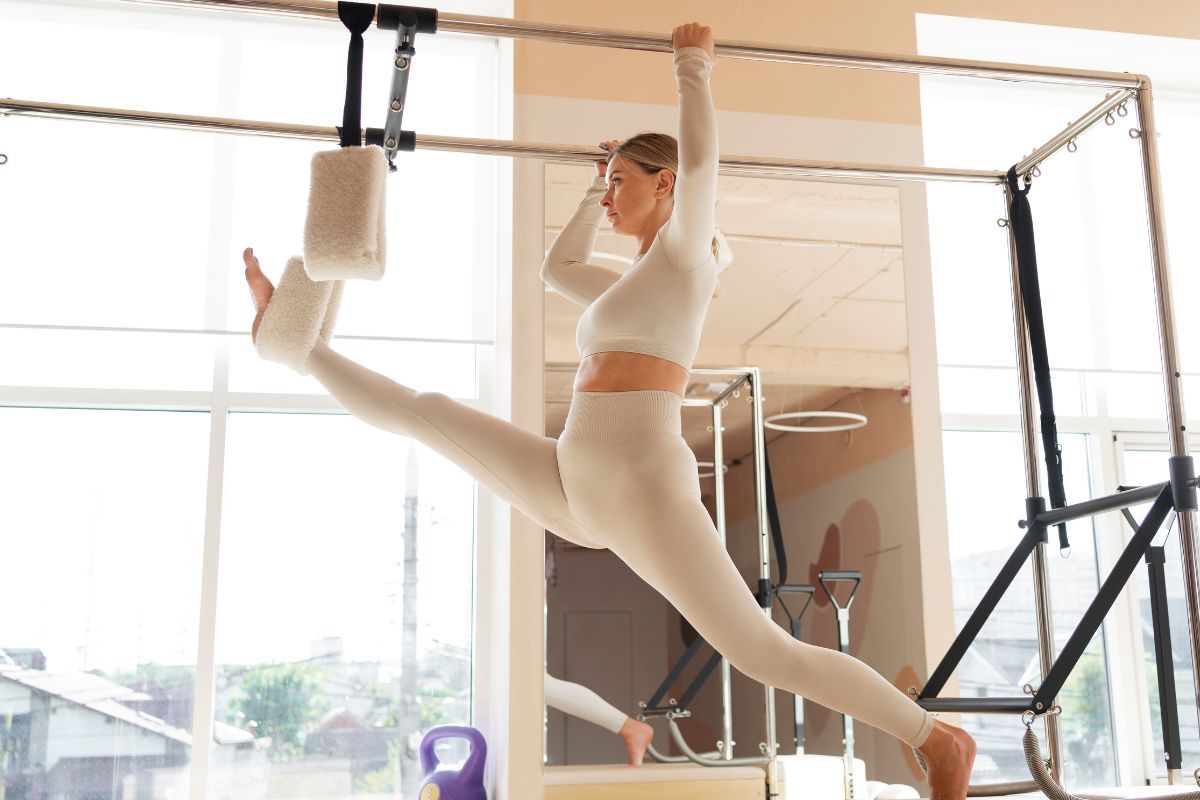
Source: Freepik
If you’ve ever walked into a Pilates studio and noticed a large table-like machine with a metal frame, springs, straps, and bars attached to it, you were probably looking at a Pilates Cadillac. At first glance, it can look a little intimidating, especially if you’re new to equipment-based Pilates. But once you understand how it works, the Cadillac becomes much less mysterious and a lot more interesting.
Cadillac Pilates is one of the most recognizable forms of Pilates equipment training. It uses a specialized machine called the Pilates Cadillac, also known as the Trapeze Table, to support, challenge, and guide the body through different movements. Unlike mat Pilates, where you rely mostly on your own body weight, Cadillac Pilates adds springs, bars, and straps to create resistance, assistance, and control.
One of the reasons Cadillac Pilates has become so popular is its versatility. The same piece of equipment can be used for gentle stretching, core strengthening, posture work, mobility training, and more advanced full-body exercises. That makes it useful for many different people, from Pilates beginners who need extra support to experienced practitioners looking for more challenging movement options.
You’ll also often see the Pilates Cadillac used in both fitness and rehabilitation settings. Because the equipment allows instructors to adjust resistance and support the body in different positions, it can help people move with more control and less strain.
For someone recovering from an injury, rebuilding strength, or improving mobility, this guided setup can make movement feel safer and more manageable when done under proper instruction.
At the same time, Cadillac Pilates is not only for rehab or gentle exercise. It can also be a serious strength and flexibility workout. The springs create resistance that encourages deeper muscle engagement, especially through the core, hips, shoulders, and postural muscles. The bars and straps help you explore movement in a way that improves coordination, balance, and body awareness.
As more people become interested in Pilates beyond the mat, equipment-based Pilates has gained a lot of attention. Beginners are drawn to the extra support. Fitness enthusiasts enjoy the variety.
Instructors and studio owners value how adaptable the Cadillac can be for different bodies, goals, and ability levels. It’s one of those pieces of equipment that can meet you where you are, then continue to challenge you as you get stronger and more confident.
In this article, we’ll break down what Cadillac Pilates is, how the equipment works, the most common Cadillac Pilates exercises, and the key benefits you can expect from this type of training. We’ll also look at who Cadillac Pilates is best suited for, how it compares to Reformer Pilates, and what you can expect if you’re thinking about trying a Cadillac Pilates class for the first time.
What is Cadillac Pilates?
Cadillac Pilates is a type of equipment-based Pilates performed on a large apparatus called the Pilates Cadillac. You may also hear it called the Trapeze Table, mainly because of its elevated frame and trapeze-style attachments.
It looks like a padded table with a metal or wooden frame around it, plus springs, straps, bars, and handles that allow the body to move in different directions with support and resistance.
At first, the Cadillac can look more complicated than a Reformer. But the idea behind it is actually simple: it helps you move with more control. Instead of relying only on body weight, the Cadillac uses spring resistance and adjustable attachments to either support a movement or make it more challenging.
That’s what makes it useful for so many different goals, from gentle mobility work to advanced strength and flexibility training.
One of the biggest strengths of Cadillac Pilates is how adaptable it is. A beginner might use the springs for assistance while learning how to activate the core or move the spine safely. Someone more experienced might use the same equipment for deeper stretches, suspended movements, or more demanding full-body exercises.
This flexibility is also why many Pilates studios include Cadillac sessions alongside mat, Reformer, and private equipment training. The Cadillac is made up of several key components, and each one plays a different role in the workout:
- Trapeze bar: Often used for more advanced movements, supported hanging work, and full-body coordination exercises.
- Springs: Provide adjustable resistance for strengthening, stretching, and controlled movement.
- Push-through bar: A moving bar attached to springs, commonly used for spinal mobility, core work, stretching, and upper-body control.
- Leg and arm straps: Help guide the limbs through precise movement patterns while adding resistance.
- Safety straps or chains: Help control the range of certain bars and attachments so exercises can be performed more safely under instructor guidance.
The Cadillac has a special place in Pilates history. It is part of the broader Pilates system developed by Joseph Pilates, who designed equipment to help people improve strength, control, alignment, and movement quality. The Cadillac is often linked to his early work with spring-based resistance, where supported movement allowed people to build strength even when they needed a gentler setup.
That history is one reason the Cadillac is still highly valued today. It is not just a “fancy” Pilates machine. It was built around a very practical idea: the body can become stronger, more flexible, and more coordinated when movement is guided with the right amount of support and challenge.
For Pilates clients, this means Cadillac Pilates can feel both approachable and powerful. For studio owners and instructors, it offers a wide range of programming possibilities, especially for private sessions, rehabilitation-focused classes, mobility work, and premium equipment-based training.
If you run a Pilates studio and offer equipment-based sessions like Cadillac Pilates, a platform like Rezerv’s Pilates studio software can also help manage bookings, class schedules, memberships, and client communication in one place.
How does a Pilates Cadillac work?
A Pilates Cadillac works by combining a stable raised table with springs, bars, straps, and handles. Instead of moving on a sliding carriage like you would on a Reformer, you usually work from a fixed surface while the equipment creates resistance, support, or assistance around your body.
The main idea is controlled movement. The springs can make an exercise feel more challenging by adding resistance, but they can also make movement feel more accessible by giving your body support. This is what makes the Cadillac so versatile. One person might use it to build strength through the arms, legs, and core, while another might use it to stretch more safely or work through a limited range of motion.
Because the resistance can be adjusted, Cadillac Pilates can be adapted to different fitness levels. A beginner may start with lighter springs and simpler movements to learn alignment and breathing. A more experienced client may use stronger resistance, less support, or more complex positions to challenge balance, coordination, and control.
This is also why the Cadillac is often used in both fitness and rehabilitation-focused settings. The equipment gives instructors more ways to guide the body carefully. When used properly, it can help clients build strength, improve mobility, and practice movement without placing too much stress on the joints.
For studio owners offering equipment-based sessions, having a clear booking and scheduling system through a platform like Rezerv can also make it easier to manage private sessions, class types, packages, and client communication in one place.
For anyone curious about the equipment itself, Pilates manufacturers such as Merrithew show how a Cadillac or Trapeze Table typically includes arm springs, leg springs, a push-through bar, a trapeze bar, straps, and safety attachments. Each part gives the instructor more options to support or challenge the client depending on the exercise.
Spring resistance training
Springs are one of the most important parts of Cadillac Pilates. They create resistance that changes depending on how far they are stretched, so your muscles have to stay active and controlled throughout the movement.
This type of resistance helps you avoid rushing. You cannot simply “throw” your body through an exercise and expect the spring to do the work for you. Instead, you need to move with precision, especially when returning to the starting position. That controlled return is where a lot of the strength-building happens.
Spring resistance is especially useful for improving muscle engagement. It can help activate the deep core, strengthen the hips and shoulders, and improve how the body moves as one connected system. For beginners, it teaches control. For advanced practitioners, it adds challenge without relying on heavy weights.
Assisted movements
One of the most helpful things about the Cadillac is that it can support the body while you learn. The springs, straps, and bars can assist your movement, making certain exercises feel more stable and less intimidating.
This is useful for beginners who are still learning proper Pilates technique. For example, if someone struggles with spinal articulation, hip control, or shoulder stability, the equipment can help guide the movement so they can focus on form instead of forcing the body into position.
Assisted movement also helps reduce unnecessary strain. Instead of pushing through discomfort or compensating with the wrong muscles, clients can work within a range that feels safer and more controlled. Over time, this builds confidence and better movement habits.
Advanced movement challenges
While the Cadillac can be gentle and supportive, it can also be very challenging. Once a client has developed enough strength and control, the equipment can be used for more advanced exercises that require coordination, balance, flexibility, and full-body awareness.
The trapeze bar, push-through bar, and spring attachments can create movements that challenge the body in multiple directions. Some exercises may involve lifting the legs, stabilizing the pelvis, controlling the spine, or coordinating the arms and legs at the same time.
This is where Cadillac Pilates becomes especially exciting for experienced practitioners. The equipment allows for a wide range of progressions, so workouts do not have to feel repetitive. A small adjustment in spring tension, body position, or range of motion can completely change the difficulty of an exercise.
Rehabilitation applications
Cadillac Pilates is also commonly used in rehabilitation and corrective exercise programs because it allows for controlled, low-impact movement. The raised table makes it easier for clients to get into position, while the springs can either support or lightly challenge the body depending on the goal of the session.
For someone recovering from an injury, dealing with stiffness, or rebuilding strength after a period of inactivity, this kind of guided movement can be very helpful. The instructor can modify the exercise, adjust the resistance, and choose positions that reduce pressure on sensitive areas.
Of course, Cadillac Pilates should not replace medical care when an injury or condition needs professional treatment. But when guided by a qualified instructor and, when needed, coordinated with a healthcare professional, it can be a valuable part of a movement-based recovery plan.
In simple terms, the Pilates Cadillac works because it gives the body both structure and freedom. It supports you when you need help, challenges you when you are ready, and teaches you to move with more awareness from one session to the next.
.jpg)
Source: senivpetro on Freepik
Common Cadillac Pilates exercises
One of the best things about Cadillac Pilates is the variety. The equipment may look like one big structure, but it can support many different types of movement. You can use it for strength training, stretching, mobility work, posture correction, balance, and even more advanced full-body exercises.
Most Cadillac exercises use a combination of springs, bars, straps, and the raised table. Some movements feel gentle and supported, while others can be surprisingly challenging. That’s why Cadillac Pilates can work well for beginners, experienced practitioners, athletes, older adults, and clients who need a more guided approach to movement.
For instructors and studio owners, this variety also makes the Cadillac useful for private sessions and small-group programming. A studio might offer beginner Cadillac sessions, mobility-focused sessions, rehabilitation-informed training, or advanced equipment classes.
1. Leg spring exercises
Leg spring exercises are some of the most common movements performed on the Cadillac. In these exercises, the client usually lies on the table while their feet or legs are connected to springs through straps. From there, the legs move through controlled patterns such as circles, bends, extensions, or openings.
These movements are great for lower-body strength because they target the hips, glutes, inner thighs, hamstrings, and deep stabilizing muscles. But they are not just about “working the legs.” They also require the pelvis and core to stay steady while the legs move, which helps improve control and alignment.
Leg spring exercises can also support hip mobility. Because the springs guide the movement, clients can explore a wider range of motion without forcing it. This makes the exercise useful for people who feel tight around the hips or want to improve lower-body coordination.
2. Arm spring exercises
Arm spring exercises focus on the upper body, especially the shoulders, arms, upper back, and postural muscles. The client may lie down, sit, kneel, or stand while holding the handles attached to the springs. From there, they perform controlled pulling, pressing, or circular movements.
These exercises can help improve upper-body strength without relying on heavy weights. The resistance feels smooth and progressive, so the body has to stay engaged throughout the full movement. This is especially helpful for people who want to build strength while still keeping the movement precise and joint-friendly.
Arm spring exercises are also useful for posture. Many people carry tension in the shoulders or develop rounded posture from sitting at a desk, using a phone, or working at a computer for long hours. With proper guidance, arm spring work can help strengthen the upper back, improve shoulder stability, and encourage better alignment.
3. Push-through bar exercises
The push-through bar is one of the most distinctive parts of the Pilates Cadillac. It is usually attached to springs and can be pushed or pulled through different ranges of motion. Depending on the setup, it can be used for core work, spinal mobility, stretching, and upper-body control.
Push-through bar exercises often involve movements that flex, extend, or articulate the spine. This makes them especially valuable for improving spinal awareness. Instead of moving stiffly or rushing through the exercise, clients learn how to move one segment of the spine at a time with control.
The push-through bar can also help with deep core activation. Because the body has to stabilize while the bar moves, the abdominal muscles, back muscles, and pelvis all work together. For beginners, the bar can offer support. For more advanced practitioners, it can add resistance and complexity.
If readers want to see how this type of movement is often taught, Cadillac-focused tutorials such as Pilates Anytime’s Push Thru Series can give a helpful visual example of how the push-through bar is used in practice.
4. Trapeze exercises
Trapeze exercises are often what make the Cadillac look so unique. These exercises may involve the trapeze bar, fuzzy straps, or hanging-style movements that challenge the whole body. While some trapeze work is advanced, not every trapeze exercise is extreme or acrobatic. Many variations can be modified depending on the client’s ability and comfort level.
The trapeze can support full-body coordination because the client has to manage several things at once: strength, balance, flexibility, and control. The core needs to stay active, the shoulders and hips need to stabilize, and the body has to move with intention.
For experienced Pilates practitioners, trapeze exercises add variety and challenge. They can help develop body control in positions that are not always possible on a mat or Reformer. For instructors, they offer creative progressions when a client is ready for more complex movement.
5. Stretching exercises
Cadillac Pilates is also well known for stretching. The equipment can support the body in positions that allow for deeper, more controlled stretches. Instead of simply holding a stretch on the floor, clients can use springs, straps, or bars to guide the movement and maintain better alignment.
Stretching exercises on the Cadillac can target the hamstrings, hips, back, shoulders, and chest. They can also help improve range of motion, especially when the client moves slowly and breathes properly throughout the exercise.
This is one reason Cadillac Pilates is often used for mobility and recovery-focused sessions. The equipment gives the body support, but it also encourages active participation. You are not just relaxing into a stretch. You are learning how to control the movement, release unnecessary tension, and create more space in the body.
Overall, Cadillac Pilates exercises can be gentle, strong, restorative, or advanced depending on how they are programmed. That flexibility is what makes the Cadillac such a valuable part of the Pilates system. Whether the goal is strength, posture, flexibility, rehabilitation support, or better body awareness, the Cadillac offers many ways to move with purpose.
Benefits of Cadillac Pilates
Cadillac Pilates is popular because it gives you more than just a workout. It helps you build strength, improve flexibility, move with better control, and understand your body more clearly. The equipment supports you when you need guidance, but it also challenges you when you are ready to progress.
That balance is what makes the Cadillac so effective. It can feel gentle and supportive in one session, then strong and athletic in another. With the right instructor, the same machine can be used for beginners, advanced Pilates clients, older adults, athletes, and people working through mobility or recovery goals.
1. Improved core strength
Core strength is one of the biggest benefits of Cadillac Pilates. Many exercises require you to stabilize your trunk while your arms or legs move against spring resistance. This activates the deeper abdominal muscles, not just the surface muscles you might feel during crunches.
A stronger core helps support your spine, pelvis, and overall posture. It can also make everyday movement feel easier, whether you are walking, lifting, sitting at your desk, or doing another type of workout. In Cadillac Pilates, the goal is not to move fast. The goal is to move with control, and that is where the deep core work really happens.
2. Better flexibility & mobility
Cadillac Pilates is also known for helping improve flexibility and mobility. The springs, straps, and bars can support your body while you move through a controlled range of motion. This makes stretching feel more guided instead of forced.
For example, leg spring exercises can help open the hips and lengthen the hamstrings, while push-through bar exercises can encourage spinal mobility. Because the equipment gives you feedback, you can explore movement with more awareness and less tension.
This is especially helpful for people who feel stiff from sitting too much, training hard, or moving in the same patterns every day. Over time, Cadillac Pilates can help the body feel more open, balanced, and comfortable.
3. Enhanced posture
Good posture is not just about “standing up straight.” It is about having the strength and awareness to support your body in a healthier position. Cadillac Pilates helps with this by strengthening the muscles around the core, back, shoulders, and hips.
Many Cadillac exercises encourage proper alignment. The instructor can use the equipment to guide your body into better positions, helping you notice when you are overusing certain muscles or compensating in ways you do not realize.
This can be especially useful for people who spend long hours at a desk, drive often, or experience tension around the neck and shoulders. With consistent practice, Cadillac Pilates may help you build the strength and awareness needed to carry yourself better throughout the day.
4. Low-impact full-body training
One of the reasons many people enjoy Pilates is that it is low-impact. Cadillac Pilates gives you a full-body workout without the jumping, pounding, or high-impact movements often found in other fitness routines.
That does not mean it is easy. The springs can create serious resistance, and many exercises require focus, stability, and control. But because the movement is smooth and adjustable, it can be kinder to the joints compared to high-impact training.
This makes Cadillac Pilates a good option for many fitness levels. Beginners can start with simple, supported movements. Experienced clients can progress into more demanding sequences. The intensity can change depending on the spring setting, body position, and exercise selection.
5. Rehabilitation & recovery support
The Cadillac is often used in rehabilitation-informed Pilates because it offers a controlled environment for movement. The raised table makes it easier to get into position, while the springs can assist the body or add gentle resistance depending on what the client needs.
For someone recovering from injury, rebuilding strength, or improving movement patterns, this support can be valuable. Exercises can be modified to reduce strain, target specific muscles, and work within a comfortable range of motion.
Of course, Cadillac Pilates should be done with proper guidance, especially for anyone dealing with pain, injury, or medical conditions. A qualified instructor can adjust the equipment, choose appropriate exercises, and make sure the movement matches the client’s ability and goals.
6. Increased body awareness
Cadillac Pilates also helps you become more aware of how your body moves. Because the exercises are controlled and precise, you start to notice small details: how your spine moves, whether your shoulders are tense, how your hips are positioned, or whether one side of your body works harder than the other.
This kind of body awareness is useful beyond the studio. It can improve how you move during daily activities, other workouts, and even rest. You begin to understand what good alignment feels like, not just what it looks like.
That mind-body connection is a major reason Pilates remains so popular. It is not only about building stronger muscles. It is about learning how to move better, breathe better, and feel more connected to your body.
For Pilates studios, these benefits are also what make Cadillac Pilates a valuable service to offer. Clients may come in for flexibility, posture, rehabilitation support, or strength training, but they often stay because the practice feels personal and adaptable.
If your studio offers equipment-based sessions, Rezerv’s Pilates studio software can help manage class schedules, private appointments, memberships, payments, and client communication more smoothly.
.jpg)
Source: Freepik
Who is Cadillac Pilates for?
Cadillac Pilates is for a wider range of people than many beginners expect. Because the equipment can assist, support, or challenge the body, it can be adapted for different ages, fitness levels, and movement goals.
That does not mean every Cadillac exercise is suitable for everyone. Some movements are gentle and beginner-friendly, while others require a lot of strength, flexibility, and control. The key is working with a qualified Pilates instructor who can choose the right exercises, adjust the springs, and make sure the movement fits your body.
1. Pilates beginners
Cadillac Pilates can be a great starting point for beginners because the equipment offers extra support. If you are new to Pilates, some mat exercises can feel confusing at first, especially when you are trying to understand breathing, alignment, core engagement, and control all at once.
The Cadillac can make that learning process easier. Springs, straps, and bars can guide your movement so you can focus on proper technique instead of guessing whether you are doing it correctly. For example, the springs can help support your legs during certain exercises, making it easier to feel how your core should stabilize the body.
It also gives beginners a clear sense of progression. You can start with simple supported movements, then gradually increase resistance, range of motion, or complexity as your strength and confidence improve.
2. Older adults
Cadillac Pilates can also be a helpful option for older adults who want low-impact movement. The raised table makes it easier to get into certain positions compared to working only on the floor, and the equipment can provide support during strength, mobility, and balance-focused exercises.
This matters because movement needs often change with age. Some people want to maintain flexibility. Others want to improve posture, balance, or confidence in daily activities. Cadillac Pilates can support these goals without relying on high-impact movements that may feel uncomfortable on the joints.
With the right instructor, sessions can be adjusted to match the client’s current ability. Exercises can be kept gentle, focused, and functional, which makes the Cadillac useful for older adults who want to stay active without feeling overwhelmed.
3. Rehabilitation clients
Cadillac Pilates is often used in rehabilitation-informed Pilates because the equipment allows for controlled movement. The springs can assist the body, reduce strain, or provide light resistance depending on what the client needs.
For someone recovering from an injury, dealing with limited mobility, or rebuilding strength, this kind of controlled environment can be valuable. An instructor can modify the position, limit the range of motion, and choose exercises that focus on stability, alignment, and gradual strength-building.
That said, rehabilitation clients should approach Cadillac Pilates with proper guidance. If you have an injury, chronic pain, or a medical condition, it is best to work with a qualified instructor and, when necessary, follow advice from a healthcare professional. Pilates can support movement recovery, but it should not replace medical treatment when medical care is needed.
For readers who want a general overview of how Pilates can support strength, flexibility, posture, and injury recovery, this Cleveland Clinic guide to Pilates is a helpful resource.
4. Athletes
Athletes can use Cadillac Pilates to improve strength, flexibility, stability, and body control. Many sports involve repeated movements, which can sometimes create tightness, weakness, or imbalance in certain areas of the body.
Cadillac Pilates helps athletes slow down and notice those patterns. The springs challenge the body in a controlled way, while the equipment encourages better alignment and coordination. This can be especially useful for improving hip stability, shoulder control, spinal mobility, and core strength.
It can also complement other forms of training. While strength training, running, cycling, or sports practice often focus on power and performance, Cadillac Pilates adds precision. It helps athletes move with more awareness, which may support better technique and more efficient movement.
5. Experienced Pilates practitioners
For experienced Pilates practitioners, the Cadillac offers a lot of room to grow. It provides access to advanced exercises, deeper stretches, and more complex movement patterns that are not always possible on a mat or Reformer.
The trapeze, push-through bar, and spring attachments can create full-body challenges that require strength, balance, flexibility, and coordination at the same time. Even small changes in spring tension or body position can make a familiar exercise feel completely different.
This is one reason many dedicated Pilates clients enjoy Cadillac sessions. The equipment keeps the practice interesting. It allows you to refine your technique, explore new progressions, and build a deeper understanding of how your body moves.
For Pilates studios, this wide audience is also what makes Cadillac Pilates a valuable offering. A studio can use the same equipment for beginner sessions, private training, mobility-focused work, athletic conditioning, and rehabilitation-informed programs.
If your studio offers multiple Pilates services, Rezerv can help manage bookings, memberships, payments, trainer schedules, and client communication in one place.
Cadillac Pilates vs Reformer Pilates
Cadillac Pilates and Reformer Pilates are two of the most well-known types of equipment-based Pilates. Both use springs to create resistance, both can build strength and flexibility, and both can be adapted for different fitness levels. But they do not work in exactly the same way.
The main difference comes down to how the equipment is designed and how the body moves on it. The Cadillac is more like a raised table with an overhead frame, while the Reformer uses a moving carriage that slides back and forth. Because of this, each machine creates a different training experience.
If you are new to Pilates, you do not need to choose one as “better” than the other. They simply serve different purposes. Many studios offer both because they complement each other well. A client may use the Reformer for dynamic, flowing sequences and the Cadillac for more supported strength, mobility, stretching, or rehabilitation-focused work.
For Pilates studios that offer multiple equipment types, it also helps to make the difference clear in your class descriptions.
Equipment design
The Cadillac has a stationary padded table with a surrounding frame. Attached to the frame are springs, straps, a push-through bar, a trapeze bar, and other accessories. Since the table itself does not move, the client usually works from a stable surface while the springs and bars create support or resistance.
The Reformer, on the other hand, has a sliding carriage. The carriage moves along tracks as the client pushes or pulls against spring resistance. It also includes a footbar, straps, pulleys, and shoulder rests. This moving carriage is what gives Reformer Pilates its smooth, dynamic feel.
In simple terms, the Cadillac offers a more stable base with many attachment options, while the Reformer creates movement through the carriage. Both can be challenging, but the sensation is different. The Cadillac often feels more supported and precise. The Reformer often feels more rhythmic and flowing.
For a visual reference, readers can explore equipment examples from trusted Pilates equipment providers such as Balanced Body’s Cadillac/Trapeze Table and Merrithew’s Pilates Reformers.
Exercise variety
The Cadillac is known for its wide exercise range. Because it has an overhead frame, bars, straps, and springs placed at different heights and angles, it allows for many types of movement. Clients can lie down, sit, kneel, stand, stretch, hang, push, pull, or work through assisted movement patterns.
This makes the Cadillac especially useful for private sessions where the instructor wants to tailor the workout closely to the client’s body. It can support gentle stretching, deep core activation, spinal mobility, postural work, and advanced full-body challenges.
The Reformer also offers excellent variety, but the movement style is usually more dynamic. Many Reformer exercises involve pushing the carriage away, controlling it back in, or coordinating the arms and legs while the carriage moves. This makes it great for building strength, endurance, flow, and coordination.
So, while both machines are versatile, they shine in slightly different ways. The Cadillac gives more options for supported and specialized exercises. The Reformer is often loved for its continuous, movement-based sequences.
Support & accessibility
One reason the Cadillac is popular with beginners and rehabilitation clients is the amount of support it can provide. The stable table, adjustable springs, and different attachments allow the instructor to reduce strain, guide the body, and modify exercises carefully.
For example, a client who has difficulty lifting their legs during a mat exercise may use leg springs for assistance. Someone working on spinal mobility may use the push-through bar to move with more control. This support can make certain movements feel more approachable, especially when the client is still learning proper technique.
The Reformer can also be beginner-friendly, but it has a different learning curve. Because the carriage moves, clients need to understand how to control the equipment while also managing their own alignment. Some people love this right away. Others may need a few sessions to feel confident.
This does not mean one is easier than the other. A Cadillac exercise can be very challenging, and a Reformer exercise can be very gentle. The real difference is how each machine supports the learning process.
Training goals
If your main goal is mobility, flexibility, postural work, or guided rehabilitation-style movement, the Cadillac can be a strong choice. Its setup allows the instructor to slow things down, adjust the resistance, and focus on very specific movement patterns.
If your goal is strength, endurance, coordination, and a more flowing workout experience, the Reformer may feel more natural. The moving carriage adds rhythm and challenge, making it popular in group Pilates classes and athletic conditioning sessions.
That said, the best option depends on the person, not just the machine. A beginner might benefit from either one. An athlete may use both. A rehabilitation client may start on the Cadillac and later add Reformer work as they progress.
In many Pilates studios, the Cadillac and Reformer are not competitors. They are part of the same system. The Cadillac helps clients explore control, support, mobility, and deeper body awareness. The Reformer adds dynamic strength, flow, and stamina. Together, they create a more complete Pilates experience.
What to expect in a Cadillac Pilates class
If you have never tried Cadillac Pilates before, the equipment may look a little intimidating at first. There are springs, straps, bars, and an overhead frame, so it is completely normal to wonder, “Am I supposed to climb on that?” But a good Cadillac Pilates class should feel guided, structured, and surprisingly approachable.
Most sessions are led by a trained Pilates instructor, especially because the Cadillac offers so many setup options. Your instructor will usually adjust the springs, bars, and straps based on your body, experience level, and goals. This is one of the biggest differences between Cadillac Pilates and a general fitness class. It is not about copying random movements. It is about moving with intention.
A Cadillac session may focus on strength, flexibility, posture, mobility, rehabilitation support, or a combination of all of these. Some classes feel slow and restorative. Others can be more challenging and strength-focused. The exact structure depends on the studio, instructor, and whether you are joining a private session or a small-group equipment class.
If you are booking your first session, it is always helpful to check the class description first. Some studios label Cadillac sessions as beginner-friendly, private equipment training, clinical Pilates, rehabilitation-informed Pilates, or advanced apparatus work.
For studio owners, making these class types clear on your booking page can help clients choose the right session with more confidence. Platforms like Rezerv can help studios manage class descriptions, bookings, memberships, payments, and client communication in one place.
Initial assessment
A Cadillac Pilates class often begins with a short assessment or check-in. Your instructor may ask about your fitness background, injuries, mobility limits, posture concerns, or what you want to improve. This step helps them understand what your body needs before you start moving.
The assessment does not have to feel formal or complicated. It may be as simple as watching how you stand, breathe, bend, or move your spine. In a private session, the instructor may take more time to look at your alignment, range of motion, and strength. In a group setting, the check-in may be quicker, but it still helps guide the class safely.
This part is especially important if you are new to Pilates, recovering from an injury, or dealing with discomfort. The Cadillac can be adjusted in many ways, but the instructor needs to know what to modify. The more clearly you communicate, the better they can support you.
Warm-up exercises
After the check-in, the class usually moves into warm-up exercises. These movements prepare your muscles and joints before the more focused Cadillac work begins.
A warm-up may include breathing exercises, gentle spinal movement, pelvic tilts, simple core activation, or light spring work. The goal is to help your body settle into the session. Instead of jumping straight into difficult exercises, you start by building awareness and control.
This is also where you begin to understand the rhythm of Pilates. You learn how to breathe with the movement, how to stabilize your core, and how to move without rushing. Even simple warm-up exercises can feel meaningful when you pay attention to alignment and muscle engagement.
Guided cadillac exercises
The main part of the class is where you perform Cadillac Pilates exercises using the springs, bars, straps, and table. Your instructor may choose a mix of leg spring exercises, arm spring exercises, push-through bar work, trapeze movements, and supported stretches.
Some exercises may target specific areas, such as the hips, shoulders, spine, or core. Others may feel more full-body, requiring you to coordinate your breath, posture, and control at the same time. The Cadillac allows your instructor to make small adjustments, so an exercise can become easier, harder, more supportive, or more strength-focused depending on your needs.
For example, leg springs may help you build hip stability and lower-body control. Arm springs can strengthen the upper body and improve posture. The push-through bar can support spinal mobility and deep core activation. Trapeze-based exercises may challenge balance, coordination, and full-body strength.
What makes this part of the class different is the level of precision. You are not just moving your arms or legs. You are learning how your whole body responds. A good instructor will guide your pace, correct your alignment, and help you notice where you may be holding tension or compensating.
Cool down & stretching
Most Cadillac Pilates classes end with a cool down or stretching sequence. This helps your body transition out of the workout and gives you time to release tension after more focused strength or mobility work.
The Cadillac is especially useful for stretching because the equipment can support your body while you move through a controlled range of motion. You may use straps, springs, or the push-through bar to stretch the hamstrings, hips, back, shoulders, or chest.
This final part of the session often feels calming, but it is still active. You are not simply relaxing into a stretch. You are learning how to breathe, lengthen, and maintain alignment while your body releases. Over time, this can help improve flexibility, recovery, and body awareness.
By the end of a Cadillac Pilates class, you may feel stronger, taller, more open, or simply more aware of how your body moves. And that is part of what makes the Cadillac so popular. It does not just give you exercises to complete. It gives you a better way to understand and work with your body.
How to get started with Cadillac Pilates
Getting started with Cadillac Pilates does not have to feel intimidating. Yes, the equipment looks more complex than a mat or Reformer, but you are not expected to figure it out on your own. The best way to begin is with proper instruction, a beginner-friendly session, and a willingness to learn the basics before jumping into advanced exercises.
Because the Cadillac uses springs, bars, straps, and different body positions, guidance matters. A qualified Pilates instructor can help you understand how the equipment works, adjust the resistance for your level, and make sure your body is moving safely.
This is especially important if you are new to Pilates, returning to exercise after a break, or dealing with pain, injury, or limited mobility.
Start by looking for a reputable Pilates studio that offers Cadillac or Trapeze Table sessions. Some studios may list them as private Pilates, equipment Pilates, clinical Pilates, or apparatus training.
If you are unsure, check the class description or ask the studio whether the session is suitable for beginners. You can also look for instructors with recognized Pilates training or certification, especially if your goal involves rehabilitation support or movement correction.
For your first few sessions, choose a class or private appointment that focuses on fundamentals. This gives you time to learn how to breathe properly, engage your core, control your movement, and understand basic alignment. Cadillac Pilates is not about doing the most dramatic-looking exercise in the room. It is about learning how to move well.
It also helps to be honest with your instructor. Tell them if you have injuries, tight areas, recent surgeries, balance concerns, or specific goals. Maybe you want to improve flexibility. Maybe you want better posture. Maybe you are curious about Pilates equipment but feel nervous. These details help your instructor choose the right exercises and make useful modifications.
As you continue, focus on consistency rather than complexity. You do not need to master every Cadillac exercise right away. In fact, many of the biggest benefits come from repeating simple movements with better control each time.
Over time, your instructor can gradually increase the resistance, add more challenging positions, or introduce advanced exercises when your body is ready.
If you are a Pilates studio owner, this beginner experience matters a lot. Clear class descriptions, smooth booking, easy payment options, and helpful client communication can make new clients feel more confident before they even walk into the studio.
A platform like Rezerv’s Pilates studio software can help manage schedules, private sessions, memberships, payments, and client messages in one place, so your team can focus more on the client experience.
The most important thing is to start at the right level. Cadillac Pilates can be gentle, challenging, restorative, or athletic depending on how it is taught. With the right instructor and a gradual approach, it can become a safe and rewarding way to build strength, improve mobility, and develop better body awareness.
.jpg)
Source: Freepik
Common misconceptions about Cadillac Pilates
Cadillac Pilates can look impressive from the outside. With its raised table, overhead frame, springs, bars, and straps, it is easy to make quick assumptions about what it is for and who should try it.
But many of those assumptions are not completely accurate.
Like many Pilates methods, Cadillac Pilates is highly adaptable. It can be gentle or challenging, simple or advanced, supportive or strength-focused. The experience depends on the instructor, the client’s goals, and how the equipment is used.
“Cadillac Pilates is only for advanced users”
This is one of the most common misconceptions. Because the Cadillac looks complex, many beginners assume it is only for people who already have years of Pilates experience.
In reality, the Cadillac can be very beginner-friendly when used properly. The springs and straps can support the body, guide movement, and make certain exercises easier to understand. For someone who is new to Pilates, this extra support can actually make the practice feel more approachable.
Of course, the Cadillac can also be used for advanced exercises. But that does not mean beginners should avoid it. A qualified instructor can modify the setup, reduce the difficulty, and choose exercises that match the client’s current ability.
“Cadillac Pilates is only used for rehabilitation”
The Cadillac is often used in rehabilitation-informed Pilates because it offers a controlled and supportive movement environment. But that is only one part of what it can do.
Cadillac Pilates can also be used for strength training, flexibility, mobility, posture work, athletic conditioning, and advanced Pilates practice. The same equipment that helps someone rebuild movement after an injury can also challenge an experienced client with demanding full-body exercises.
This versatility is one of the reasons many Pilates studios invest in Cadillac equipment. It allows instructors to serve a wide range of clients, from beginners to athletes to people looking for more personalized movement training.
“Pilates equipment makes exercise easier”
Some people think using Pilates equipment means the workout will be easier than mat Pilates. But that is not always true.
The Cadillac can assist movement, but it can also add resistance and increase the challenge. Springs require control in both directions, especially when returning to the starting position. That means your muscles have to stay engaged, not just during the “hard” part of the exercise, but throughout the entire movement.
In many cases, Pilates equipment makes the workout more precise. It gives feedback, highlights imbalances, and encourages better control. So while the Cadillac can support your body, it can also reveal where you need more strength, stability, or awareness.
“Cadillac Pilates is the same as Reformer Pilates”
Cadillac Pilates and Reformer Pilates both use spring resistance, but they are not the same. The Cadillac uses a stationary table with an overhead frame, while the Reformer uses a sliding carriage that moves back and forth.
Because of this, the exercises feel different. The Cadillac is often used for supported movement, stretching, spinal mobility, and targeted strength work. The Reformer is commonly used for flowing, dynamic sequences that build strength, endurance, and coordination.
Both are valuable, and many people enjoy practicing both. If you are trying to choose between them, think about your goals. If you want more guided support, mobility work, or a personalized equipment session, Cadillac Pilates may be a great place to start. If you enjoy a more rhythmic, movement-based workout, Reformer Pilates may feel more natural.
“You’ll see results after just a few sessions”
Cadillac Pilates can help you feel more aware of your body quite quickly, especially if you are not used to moving with this level of control. You may notice better posture, improved mobility, or a stronger connection to your core after a few sessions.
But lasting results take consistency. Strength, flexibility, coordination, and posture all improve gradually. Like any good fitness practice, Cadillac Pilates works best when it becomes part of a regular routine.
The goal is not to rush into harder exercises as fast as possible. The goal is to build a strong foundation, improve movement quality, and keep progressing safely over time. For general guidance on how Pilates supports strength, flexibility, posture, and body awareness, readers can also explore this helpful overview from Cleveland Clinic.
For Pilates studios, clearing up these misconceptions can also help clients feel more confident before booking. When your class descriptions explain who each session is for, what clients can expect, and how the equipment is used, beginners are less likely to feel intimidated.
FAQs about Cadillac Pilates
1. What is Cadillac Pilates?
Cadillac Pilates is a type of Pilates training performed on a specialized piece of equipment called the Cadillac or Trapeze Table. The equipment usually includes a raised padded table, an overhead frame, springs, bars, straps, and handles.
The main purpose of Cadillac Pilates is to help the body move with better strength, control, flexibility, and awareness. Some exercises use the springs for resistance, while others use them for support. This makes the Cadillac useful for many different goals, from beginner-friendly movement to advanced Pilates practice.
2. Is Cadillac Pilates suitable for beginners?
Yes, Cadillac Pilates can be suitable for beginners when it is taught by a qualified instructor. In fact, the Cadillac can sometimes feel more supportive than mat Pilates because the springs, straps, and bars help guide the body through each movement.
Beginners can start with simple exercises that focus on breathing, core engagement, alignment, and control. As they become stronger and more confident, the instructor can gradually increase the challenge by adjusting the spring resistance, changing the body position, or adding more complex movement patterns.
3. What is the difference between Cadillac Pilates and Reformer Pilates?
The biggest difference is the equipment design. The Cadillac uses a stationary table with an overhead frame, while the Reformer uses a sliding carriage that moves back and forth.
Because the Cadillac has more bars, straps, springs, and attachment points, it is often used for supported movement, stretching, spinal mobility, and more customized exercises. The Reformer, on the other hand, is popular for dynamic, flowing movements that build strength, coordination, and endurance.
Both are valuable, and one is not automatically better than the other. Many Pilates studios offer both because they support different training goals. Readers who want a broader comparison of Pilates benefits can also explore this Cleveland Clinic guide to Pilates.
4. Can Cadillac Pilates help with rehabilitation?
Cadillac Pilates is often used in rehabilitation-informed and corrective movement settings because the equipment allows for controlled, low-impact exercises. The springs can assist movement, reduce strain, or add gentle resistance depending on the client’s needs.
That said, Cadillac Pilates should be done with proper guidance, especially for anyone recovering from an injury or managing a medical condition. A qualified Pilates instructor can modify exercises, but medical concerns should still be discussed with a healthcare professional when needed.
5. Is Cadillac Pilates a full-body workout?
Yes, Cadillac Pilates can be a full-body workout. Depending on the exercises chosen, it can target the core, legs, arms, back, shoulders, hips, and postural muscles.
A single session may include strength work, stretching, mobility training, balance, and body awareness. This is one reason the Cadillac is so versatile. It can be used for gentle movement, focused rehabilitation support, athletic conditioning, or advanced Pilates progressions.
6. How often should you do Cadillac Pilates?
The right frequency depends on your goals, fitness level, and schedule. Some people do Cadillac Pilates once a week as part of a balanced fitness routine, while others practice more often through private sessions or equipment-based classes.
For beginners, consistency matters more than doing too much too soon. Starting with one or two sessions per week can be a realistic way to build strength, learn proper technique, and become more comfortable with the equipment.
7. Do you need Pilates experience before trying the Cadillac?
No, you do not need previous Pilates experience before trying Cadillac Pilates. Many exercises can be adjusted for beginners, and a good instructor will explain how the equipment works before asking you to perform any movement.
However, it helps to start with a beginner-friendly class or private session. This gives you more time to learn the basics, ask questions, and understand how your body should feel during each exercise.
8. Is Cadillac Pilates better than mat Pilates?
Cadillac Pilates is not necessarily better than mat Pilates. It is simply different. Mat Pilates uses body weight and floor-based exercises, while Cadillac Pilates uses equipment to add resistance, support, and variety.
Mat Pilates is accessible and effective for building control and core strength. Cadillac Pilates offers more options for assistance, stretching, resistance, and exercise modification. Many people benefit from combining both because they train the body in different ways.
9. What should you wear to a Cadillac Pilates class?
Wear comfortable, fitted activewear that allows you to move freely. Clothes that are too loose may get in the way of the springs, straps, or bars, so it is better to choose something that stays close to the body.
Grip socks are also commonly recommended in Pilates studios because they help with stability and hygiene. Before your first session, check the studio’s class guidelines so you know what to bring and what to expect.
10. How can Pilates studios manage Cadillac Pilates bookings more smoothly?
For Pilates studios, Cadillac Pilates is often offered through private sessions, small-group equipment classes, or specialized programs. Because these sessions may require specific equipment, instructor availability, and class capacity limits, smooth booking management becomes important.
Rezerv helps studios manage class schedules, private appointments, memberships, payments, and client communication in one integrated platform. This can make it easier for clients to book the right session while helping studio teams stay organized behind the scenes.
Conclusion: Why Cadillac Pilates remains a cornerstone of Pilates training
Cadillac Pilates has remained one of the most respected parts of the Pilates system for a reason. It brings together support, resistance, control, and movement variety in one piece of equipment.
With its raised table, overhead frame, springs, bars, and straps, the Cadillac gives instructors many ways to help clients move better, whether the goal is strength, flexibility, mobility, posture, or recovery support.
What makes Cadillac Pilates so valuable is its adaptability. A beginner can use the equipment to learn proper movement patterns with more support. An experienced Pilates practitioner can use it for deeper challenges and advanced progressions.
Older adults may benefit from its low-impact setup, while athletes can use it to improve stability, coordination, and body awareness. For rehabilitation clients, the controlled environment can also support safer, more guided movement when used under qualified instruction.It is also one of the best examples of what makes Pilates different from many other workouts.
Cadillac Pilates is not only about doing more reps or pushing harder. It asks you to slow down, pay attention, and move with purpose. The springs give feedback. The bars and straps guide your body.
The instructor helps you notice details you might normally miss. Over time, that can lead to stronger muscles, better alignment, improved flexibility, and a deeper understanding of how your body moves.
If you are new to Cadillac Pilates, the best way to start is with a qualified instructor and a beginner-friendly session. The equipment may look intimidating at first, but with the right guidance, it can feel supportive, precise, and surprisingly approachable.
Start with the basics, focus on consistency, and allow your strength and confidence to build gradually.For Pilates studios offering Cadillac Pilates, creating a seamless client experience is just as important as delivering exceptional instruction.
Clients should be able to understand the class, book the right session, manage their memberships, and receive clear communication from the studio. Rezerv’s Pilates studio software helps Pilates studios manage class scheduling, bookings, memberships, payments, and client communication through one integrated platform, allowing instructors to focus on helping clients move and feel their best.
Cheers,
Friska
.jpg)