Digital privacy tips for gym owners and wellness coaches
Protecting client information is one of the serious considerations that fitness businesses should be making at present.
Nowadays, the fitness and wellness industry is highly digital. Gym and wellness businesses depend on technology to enhance their services through online bookings and membership management, payment processing, and client communication amongst other features.
Although these tools have made operations more efficient, they have also introduced new challenges related to safeguarding highly sensitive client information.
Many fitness professionals collect various kinds of personal information from their clients including payment details, health records, progress photos, and communication history.
Mismanagement of this data can expose these businesses to security breaches, damage their reputation, and lead to loss of trust from clients.
In this document, we discuss straightforward digital privacy steps that fitness professionals can take in order to secure their business and clients.

Source: Pexels
Understand what client data you collect
Privacy protection can only be achieved once a business clearly understands the kind of data it accesses.
Generally, data that fitness facilities collect comprises:
- Names and contact information
- Details of membership
- Payment information
- Health and fitness evaluations
- Photographs showing progress
- Track records of appointments
- Documented client communication
Once gym owners know where client information is stored, it becomes easier for them to secure it and avoid unnecessary risks to privacy.
Go for secure fitness management software
Setting up a proper fitness software can be a great help to gyms and wellness businesses. Such software can help in combining bookings, memberships, payments, while at the same time improve security of data. On the other hand, working with spreadsheets for managing member information is a recipe for data leak.
A fitness management platform will give you a centralized and secured working environment. The modern versions of software solutions provide functionalities for gym owners to handle memberships, scheduling, client communication, and payment management, all inside one secured system.
If you want:
- Implementation of strong user identification
- Permission for staff access according to their roles
- Cryptographic storage of data
- Scheduled backups
- Tracking activities
These are some of the features that can help you reduce security risks while using fitness management software.
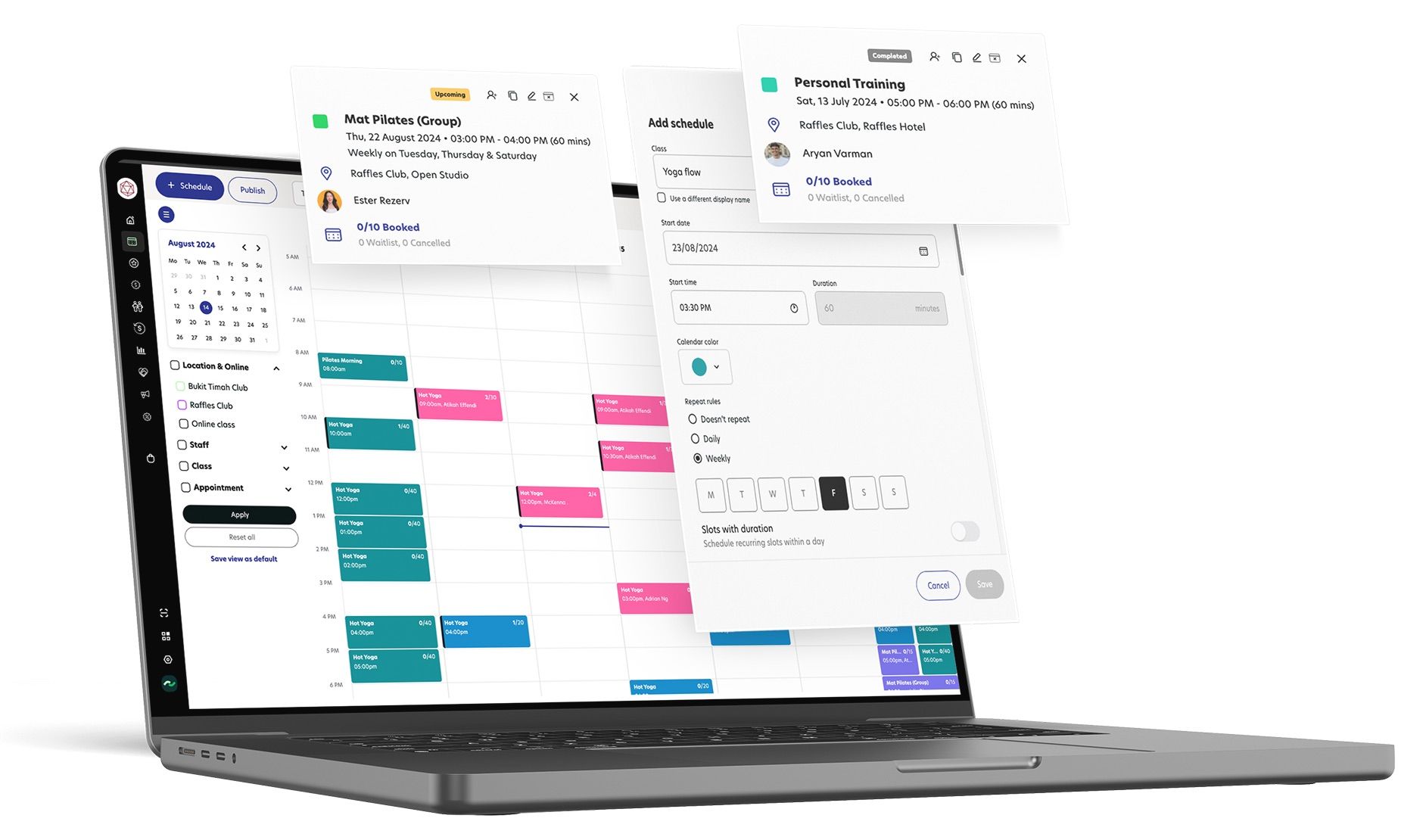
How fitness management platforms support data privacy
Member information when dispersed across several tools increases a lot of risks for data breaches. Many gyms and wellness facilities still maintain separate systems for booking, payment, and client communication, which makes it difficult to uphold privacy standards.
Contemporary fitness management solutions operate on a concept of a centralized and secured working environment. Among the functionalities that can help keep unauthorized access and data loss at bay are role-based permissions, encrypted data storage, automatic backups, and secure payment.
For those fitness businesses who are on the rise, adopting an integrated platform can not only make daily operations smoother but also enhance the practices of privacy and security.
Protect member information with access controls
Access to client data should be limited to only those members of staff who really need it.
For instance, receptionists require only partial client information like appointment details whereas managers need access to payment records. In order to minimize risks of denial or misuse of information, it is better to base access on roles.
Among the best methods are:
- Generating a separate account for each employee
- Granting permissions based on roles
- Disabling access as soon as the employees leave
- Conducting permissions audits periodically
Access control is a very fundamental aspect of privacy that almost no fitness business can afford to ignore.
Secure online payments and transactions
Information regarding payments is some of the most sensitive data that a fitness business handles.
Therefore, it is important to:
- Work with authorized payment processors
- Only keep necessary card details
- Keep enable payment encryption
- Check payment transactions regularly
- Keep all payment systems maintenance up to date
Handling payments in a secure manner not only saves the business but also members from becoming victims of financial fraud.

Source: Pexels
Strengthen website and member portal security
Most fitness businesses use scheduling software in modern times to ease their bookings as well as to have better control over their customer data. Therefore, it is crucial that these systems are kept safe from unauthorized persons gaining access to it.
Some of the main security measures are:
- Possession of SSL certificates
- Strong passwords enforcement
- Multi-factor authentication (MFA)
- Regular update of software
- Secure hosting environments
Having a website that is secured can also help keep information of members safe and earn customer confidence.
Train staff on privacy best practices
Technology, no doubt, plays a big role in preventing security breaches. However, it alone cannot stop every incident.
Your workers should be aware of:
- What phishing emails look like
- How to design passwords safely
- Correct ways to handle client info
- Steps to report suspicious activities
Doing staff training regularly will not only reduce human error but also help employees in identifying a phishing attack and other threats commonly encountered online.
Protect data when working remotely
Quite a number of wellness coaches work from home and thus rely on using business systems remotely when traveling or from public networks.
Certainly, it is also the case that such internet access should be secured. For people working remotely who want to add extra protection on top of their internet connection, then they may want to consider getting a VPN. Review of various tools for cybersecurity that mention VPNs can be found at best VPN according to Cybernews.
Be transparent about data usage
Clients are entitled to know exactly how their personal information is collected, stored, and used.
Privacy policy made public should tell:
- Data being collected
- Reasons for collecting data
- Length of time data will be kept
- Persons who can access the sampled data
- Clients' ways of asking for the data to be deleted or updated
Being transparent is what builds trust and shows that you are a professional.
Why data privacy matters more than ever
Cybersecurity risks are increasingly impacting businesses of all sizes including gym studios and wellness practices. Research studies show that data breaches result in financial losses, interruptions to business, and lasting damage to the reputation of the company.
The situation becomes even more serious for fitness businesses since they have access to a lot of personal and health information of their clients. A single lapse in security can cause loss of customers due to lack of trust.
In fact, it's better to take preventive measures to enhance privacy protection as the cost of doing this will usually be much lower than paying for the aftermath of a data breach.
Create a privacy-focused business culture
Rather than doing privacy protection as a one off event, it should be made part of your business operations.
Building a culture centering on privacy, gym owners and wellness coaches can do:
- Security procedures should be reviewed frequently
- Prompt update of the software
- Staff should be educated about privacy
- Clients should be communicated openly
- Be on the lookout for new cybersecurity risks
Small changes implemented consistently will massively reduce privacy risks over time.
Conclusion
Protecting client information is one of the serious considerations that fitness businesses should be making at present. Besides securing payments, managing access to staff, deciding on the best software and training employees, all these steps play a part in making a safe environment for businesses and members.
Adopting these digital privacy tips will help gym owners and wellness coaches not only strengthen client trust but also improve security of operations and build a better and a more resilient business for the future.
Read next: How to use software data to grow your yoga business (2026 guide)
FAQs
1. Why is digital privacy important for gym owners and wellness coaches?
Digital privacy safeguards sensitive client information like contact details, payment data, and health records. This ultimately reduces the likelihood of data breaches and loss of trust by your customers.
2. What is the best way to secure member information?
Security of data can be greatly enhanced by employing secure fitness management software, implementing role-based access controls, using strong passwords, and multi-factor authentication.
3. How can fitness businesses protect online payments?
The use of trusted payment processors, payment gateways with encryption, and compliance with PCI DSS security standards are some of the measures fitness businesses should take to safeguard customer transactions.
4. Should wellness coaches use secure communication tools with clients?
Certainly, wellness coaches should use platforms for messaging and video calls that are encrypted especially when they are discussing sensitive health and wellness information with clients.
5. How often should gyms review their privacy and security practices?
Gyms should review staff permissions monthly, update software regularly, and conduct security assessments at least once or twice a year to stay protected against emerging threats.
6. Can small gyms benefit from investing in privacy and security measures?
Definitely. No matter how small a fitness business is, it will still have a customer database. Working on basic security measures like secure software, strong passwords, staff training, and encrypted payment systems can greatly decrease privacy risks and enhance client trust.
