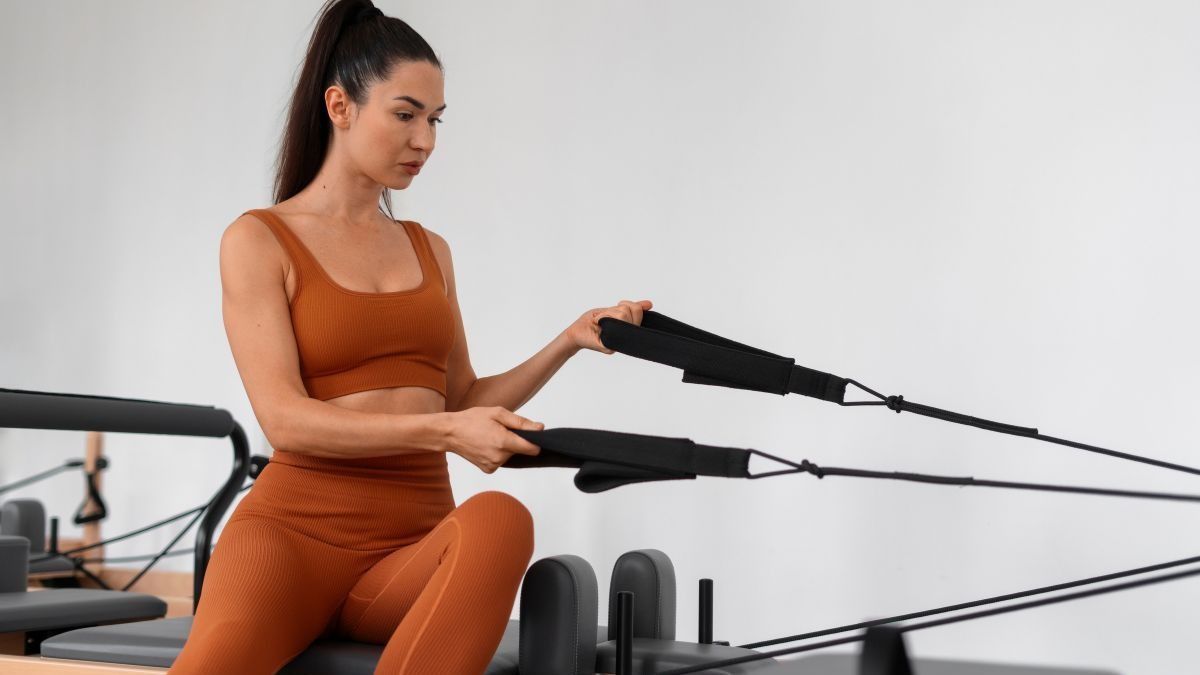
How Pilates studios handle instructor certifications and specializations
Learn how Pilates studios manage instructor certifications, equipment qualifications, and teaching specializations to maintain high training standards.
Hiring a Pilates instructor is not as simple as checking if they are certified.
A certification tells you something, but not everything. It does not always show what the instructor can actually teach, what equipment they are trained on, or which clients they are prepared to work with.
For Pilates studios, that matters a lot.
The right instructor helps you maintain class quality, protect client safety, and build trust in your studio. The wrong fit can lead to inconsistent teaching, scheduling problems, and classes that do not match your clients’ needs.
This is why Pilates instructor certifications are important for studio owners and managers. They help you make smarter hiring decisions and assign instructors to the right class types.
For example, one instructor may be trained for mat classes only. Another may be qualified to teach reformer, Chair, Cadillac, and private sessions. Some may also have extra training for prenatal clients, beginners, seniors, or injury support.
That is why studios need to look beyond the word “certified.” They need to understand what kind of certification an instructor has, how much hands-on experience they have, and what specializations they bring to the studio.
In this guide, we will look at how Pilates studios handle instructor certifications and specializations, what to check before hiring, and how to match instructors to the classes they are best prepared to teach.
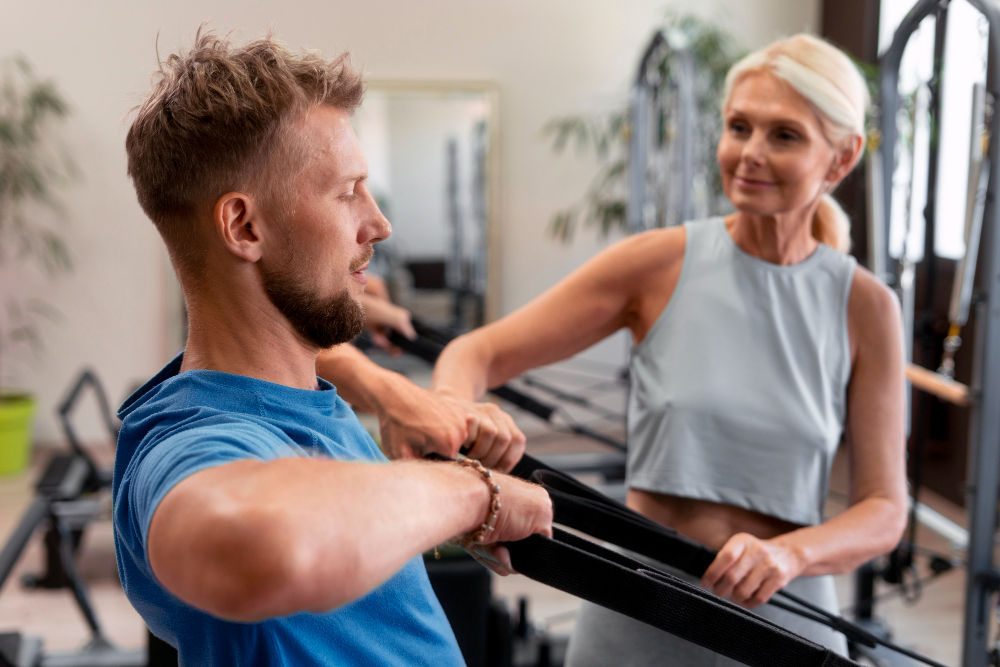
Source: Freepik
I. What Pilates instructor certifications actually mean
When a Pilates instructor says they are “certified,” that does not automatically tell you everything your studio needs to know.
In practice, Pilates certifications are usually grouped into a few main categories: Mat, Reformer, and Comprehensive. The Pilates Method Alliance’s ITTAP accreditation framework uses those same training categories, which is one reason these labels show up so often across the industry.
1. Mat certification
A mat certification usually means the instructor has been trained to teach Pilates on the mat, often with small props and exercise variations. It builds the foundation of Pilates teaching, including movement principles, exercise progressions, modifications, and class sequencing.
For example, Balanced Body describes mat training as the foundation of the Pilates method, while Merrithew’s mat program includes instruction time, observation, physical review, and practice teaching hours.
For studio owners, this usually means the instructor may be qualified for mat classes, especially beginner or general group sessions. But mat certification alone does not automatically mean they are qualified to teach reformer or other apparatus-based classes.
2. Reformer certification
A reformer certification means the instructor has completed training focused on the reformer machine. That usually includes equipment setup, safety, exercise progressions, client positioning, modifications, and programming for private or group reformer sessions.
Balanced Body and Merrithew both describe reformer training as equipment-specific and include required coursework plus logged hours or practice components.
For a Pilates studio, this is important because reformer classes bring extra safety and operational considerations. A person with mat training only should not be assumed ready to teach reformer classes just because they are “Pilates certified.”
3. Comprehensive certification
A comprehensive certification usually means broader training across multiple parts of the Pilates method. This often includes mat, reformer, and other apparatus such as the Cadillac, Chair, and Barrels.
Balanced Body calls its comprehensive curriculum the “gold standard” in its education pathway and lists 520 total hours, while Merrithew’s comprehensive pathway covers Matwork and Reformer first and expands into broader equipment training.
For studios, comprehensive training usually gives the most flexibility. These instructors are often better positioned to teach across more formats, handle private sessions, and work with a wider range of programming needs. That said, you still need to check the exact scope of training and real teaching experience.
Certifications are not identical across every school
This is the part many studio owners miss.
There is no single certificate that looks exactly the same across every Pilates training provider. Even when schools use similar labels like Mat, Reformer, or Comprehensive, the required hours, structure, and course content can vary.
For example, Balanced Body lists 134 hours for Mat training and 214 hours for Reformer training, while Merrithew lists 95 hours for Intensive Mat Plus and 125 hours for Intensive Reformer in its STOTT PILATES pathway.
That means the word “certified” is only the starting point. A studio should still check:
- what type of certification the instructor completed
- which equipment they were trained on
- how many practice and observation hours were required
- if they passed written and practical exams
- if they have extra training for specific client groups or class types
Specializations are different from core certification
Specializations usually sit on top of an instructor’s main certification. They may include areas like prenatal Pilates, post-rehab support, senior fitness, athletic conditioning, or advanced apparatus work.
The PMA notes that strong teacher training frameworks go beyond choreography and include anatomy, movement principles, ethics, and evidence-informed instruction, which helps explain why studios should look at both baseline certification and any added specialization.
For studio owners, the practical takeaway is simple: certification tells you the base training, while specializations tell you where that instructor may be especially useful in your schedule and client mix.

Source: Freepik
II. How studios match certifications to class types and equipment
For most Pilates studios, the safest and most practical approach is simple: match the instructor’s training to the exact class format and equipment they will teach.
That matters because Pilates training is usually structured by category. The Pilates Method Alliance’s ITTAP framework recognizes Mat, Reformer, and Comprehensive teacher training as distinct program types, and major education providers build their pathways in a similar way.
Mat classes usually go to instructors with mat training
If a studio is hiring for mat-based group classes, a mat-certified instructor may be a strong fit, especially for beginner and general-population sessions.
Balanced Body describes mat training as the foundation of the Pilates method, and its mat curriculum includes exercise purpose, modifications, precautions for injuries and special populations, class design, and guidelines for seniors plus pre- and postnatal classes.
For a studio owner, that usually means mat-certified instructors can be well suited for:
- beginner mat classes
- general group mat sessions
- foundation-level Pilates programming
But mat certification alone should not be treated as proof that someone is ready to teach reformer or other apparatus-based classes.
Reformer classes should go to instructors trained on the reformer
Reformer classes need equipment-specific training. Balanced Body’s reformer pathway is focused on teaching the Pilates repertoire on the reformer itself, including progressions and modifications for special populations.
That makes reformer certification more relevant for studios running reformer group classes or reformer-based private sessions.
This is an important distinction for operations.
A studio should not assume that someone who is “Pilates certified” can automatically teach reformer safely. The reformer has its own setup, resistance changes, movement options, and safety considerations, so the instructor’s training should match that equipment.
Comprehensive instructors give studios more scheduling flexibility
Studios that offer a wider mix of services usually value comprehensive instructors more highly because they can cover more of the schedule.
Balanced Body describes comprehensive training as covering the full Pilates methodology and full studio apparatus, while Merrithew’s comprehensive tracks include matwork, reformer, anatomy, real-world practice, and apprenticeship components.
In practical terms, comprehensive instructors are often a better fit for:
- private sessions
- semi-private sessions
- mixed-equipment environments
- studios that need more staffing flexibility across class formats
That does not mean every class requires a comprehensively trained teacher. It means broader training usually gives a studio more options when building the schedule.
Cadillac, Chair, and Barrels need more than basic reformer knowledge
If your studio offers classes or private sessions on Cadillac, Chair, or Barrels, it is smart to check that the instructor has actually trained on those apparatus.
Merrithew offers a separate Cadillac, Chair, and Barrels course with its own instruction, observation, practice teaching, and apprenticeship hours, which shows that these tools are not treated as a minor extension of mat or basic reformer work.
For studio managers, that means equipment access should be tied to verified training. An instructor may be excellent on the reformer and still not be ready to teach a full chair-based or Cadillac-based session without additional preparation.
Private sessions usually require a higher bar
Private Pilates sessions call for more than knowing the exercises. They often involve deeper assessment, more detailed cueing, and more individualized programming.
PMA notes that strong comprehensive training should include anatomy, biomechanics, cueing strategies, apparatus work, and adaptations for diverse clients.
Because of that, many studios use a higher bar for private sessions than for entry-level group classes. They may prefer instructors with comprehensive training, stronger supervised teaching experience, or added specialization in the population they will work with.
Special populations should be matched carefully
Some classes need extra caution from a staffing perspective.
Balanced Body’s training materials specifically mention precautions for injuries and special populations, plus guidance for seniors and pre- and postnatal clients. Its Reformer Level 2 materials also mention programming for pre- and postnatal clients, osteoporosis, and lower back issues in a group environment.
So if your studio offers:
- prenatal or postnatal Pilates
- senior-focused classes
- lower back support classes
- post-injury or rehab-adjacent sessions
- athletic conditioning with more advanced programming
it makes sense to look beyond basic certification and confirm extra training, experience, or both.
A simple way studios can think about it
A practical way to match instructors is:
- Mat-certified instructors for mat classes and foundation-level group work
- Reformer-certified instructors for reformer classes
- Comprehensive instructors for private sessions, broader apparatus work, and more flexible scheduling
- Specialized instructors for prenatal, seniors, post-injury support, or other focused populations
That framework lines up with how major Pilates training organizations separate mat, reformer, comprehensive, and equipment-specific education.
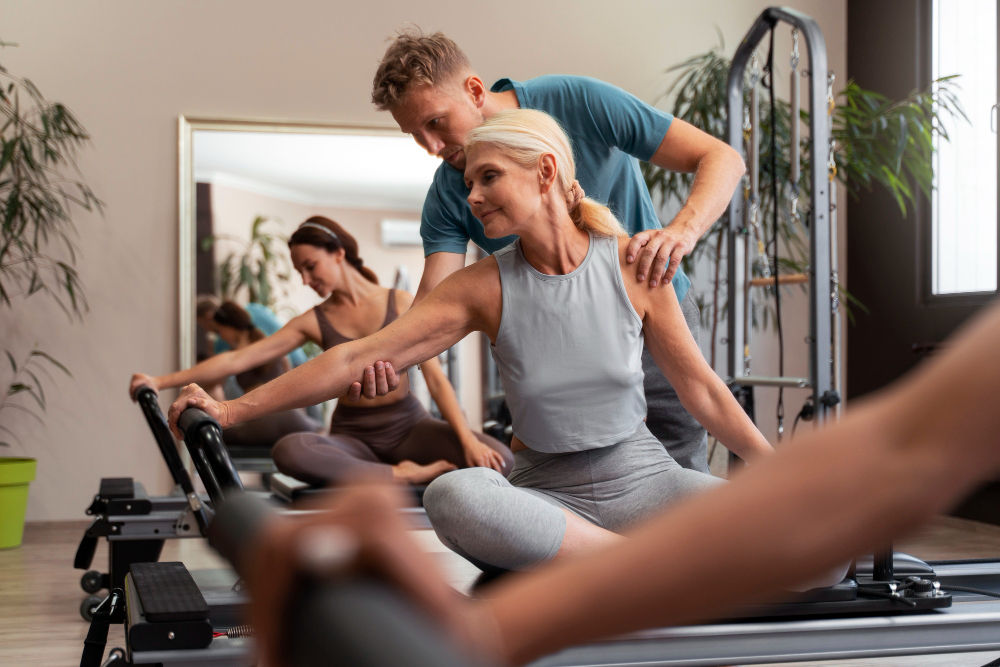
Source: Freepik
III. What studio owners should check before hiring a Pilates instructor
When you hire a Pilates instructor, the goal is not to stop at “Are they certified?”
You need to know what they are certified in, how they were trained, and what they are actually ready to teach in your studio.
1. The exact type of certification
Start with the basics: ask for the exact certification type, not just the word “certified.”
A mat-certified instructor and a comprehensively trained instructor are not the same.
The Pilates Method Alliance’s ITTAP framework separates teacher training into Mat, Reformer, and Comprehensive categories, and major training schools structure their education in similar tracks.
That means a studio should verify:
- mat only
- reformer only
- mat + reformer
- comprehensive
- extra apparatus training such as Cadillac, Chair, and Barrels
This helps you avoid placing someone into a class that goes beyond their actual training.
2. How many hours their program required
Not all Pilates certifications involve the same depth of study.
For example, Balanced Body lists 134 total hours for its Mat program, 214 total hours for Reformer training, and 332 total hours for Mat and Reformer combined. Merrithew lists 95 hours for Intensive Mat Plus and 125 hours for Intensive Reformer.
That is why hours matter. They give you a clearer sense of how much formal preparation an instructor actually completed.
You do not need to obsess over one exact number, but you should absolutely ask:
- How long was the program?
- What did it include?
- Was it just coursework, or did it also include practice teaching and observation?
3. Observation, practice teaching, and real-world teaching prep
This is one of the most important checks.
A good Pilates training program does not stop at theory. It should include observation hours, practice teaching, and supervised or logged hands-on work.
For hiring, that means you should ask:
- How many observation hours did you complete?
- How many practice teaching hours did you log?
- Did you teach real people during training?
- Were those hours supervised or reviewed?
An instructor can complete coursework and still need more live teaching development. This is especially important for private sessions and apparatus-based teaching.
4. Written and practical exams
Studios should also check how the instructor was assessed.
Balanced Body states that full certification requires completing the required coursework and hours and passing written and practical exams. Merrithew also requires exams and submission of practice logs as part of certification completion.
That matters because passing a practical exam tells you more than attendance alone. It shows the instructor had to demonstrate teaching ability, not just sit through training.
5. Which equipment they were trained on
This is where hiring mistakes happen fast.
A Pilates instructor may be excellent on mat or reformer and still not be trained on Cadillac, Chair, or Barrels. Merrithew treats Cadillac, Chair, and Barrels as a distinct course area with its own training structure, which shows these apparatus are not just assumed as part of basic mat instruction.
So if your studio offers multiple apparatus, ask for equipment-specific clarity:
- Which apparatus were included in your training?
- Which ones have you actually taught on?
- Which class formats have you taught before?
6. Special population experience
If your studio serves prenatal clients, seniors, post-injury clients, or athletes, basic certification may not be enough on its own.
Balanced Body’s training materials specifically reference modifications and precautions for special populations in both mat and reformer education. The National Pilates Certification Program also includes special populations as part of its program content requirements.
That is why studio owners should ask:
- Have you worked with prenatal or postnatal clients?
- Do you have experience with seniors?
- Have you taught clients with injuries or movement limitations?
- What extra training have you done beyond your main certification?
This does not mean every instructor needs every specialization. It means their background should match the clients they will actually teach.
7. An additional third-party credential
Some studio owners also look for an added independent credential on top of school-based training.
The National Pilates Certification Program requires at least 450 hours for comprehensive eligibility and 100 hours for mat eligibility, and candidates then sit for a national exam.
That can be a useful extra signal because it is separate from the original training school.
It is not the only way to judge an instructor, and not every studio requires it, but it can add confidence when you are comparing candidates.
A simple hiring rule
Before hiring, a Pilates studio should be able to answer these questions clearly:
- What certification does this instructor actually hold?
- How many hours did their training include?
- Did they complete observation and practice teaching?
- Did they pass written and practical exams?
- Which equipment are they trained on?
- Do they have experience with the client groups we serve?
That gives you a much stronger hiring process than relying on the word “certified” alone.
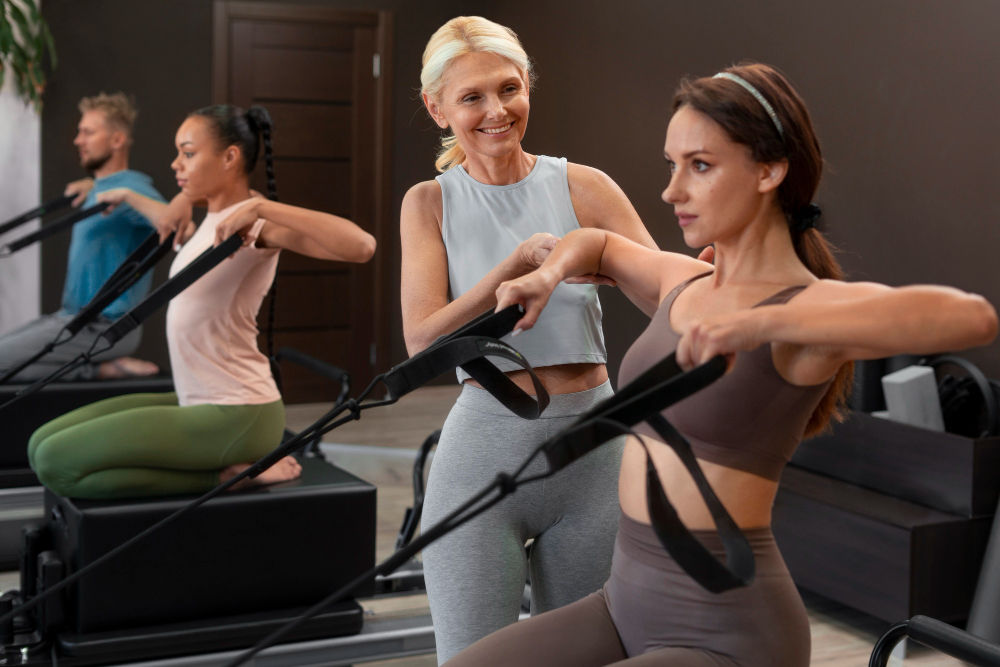
Source: Freepik
IV. Common specializations Pilates studios look for
Once a studio has checked an instructor’s base certification, the next question is usually about specialization.
That is because many studios do not run one simple class model anymore. They may offer prenatal sessions, classes for older adults, athletic conditioning, or private sessions for clients coming back from injury.
The National Pilates Certification Program includes special populations in both its comprehensive program requirements and exam study materials, which shows this is a real part of professional Pilates training, not a side topic.
1. Prenatal and postnatal Pilates
This is one of the most common specializations studios look for, especially in boutique studios with a strong women’s health focus.
Balanced Body’s education content specifically highlights the need for extra education when working with prenatal clients and recommends workshops or added certifications focused on prenatal Pilates. Merrithew also includes pre- and post-natal clients in its Programming for Special Populations workshops.
For studio owners, this specialization matters because these clients often need:
- safer exercise selection
- trimester-aware modifications
- stronger understanding of core and pelvic changes
- more careful cueing in both group and private sessions
2. Active aging and senior-focused Pilates
Another common specialization is working with older adults.
Merrithew’s Specialty Tracks include Active for Life, which is specifically designed around programming for active aging clients and adapting exercises for older adults, including issues like restricted mobility. Merrithew also notes that this kind of specialty development can help instructors support aging clients more effectively.
For studios, this specialization is valuable when you offer:
- low-impact mobility classes
- balance-focused sessions
- private sessions for older clients
- programming for clients who want strength and movement confidence as they age
3. Post-rehab and special-population work
Some studios also look for instructors who can work more confidently with clients who have movement limitations or are returning to exercise after injury.
Merrithew has dedicated Rehab Education and also includes rehab clients in its special populations programming. The NPCP’s program requirements and exam content also include special populations and contraindications, which shows that this area is important enough to be part of broader professional standards.
For a studio, this does not mean the instructor is acting like a medical professional. It means they may be better prepared to:
- modify movements carefully
- spot red flags
- work within safe limits
- handle clients who need a more cautious, individualized approach
4. Athletic conditioning
Pilates is not only for rehab or general wellness. Many studios now serve runners, golfers, dancers, HYROX participants, and other active clients who want better strength, control, and mobility.
Merrithew offers multiple Athletic Conditioning workshops focused on improving strength, power, agility, core stability, and sport-specific movement demands on the reformer and other apparatus. Balanced Body also publishes education content around Pilates for athletes and performance training.
This specialization can be especially useful for studios that want to run:
- sport-specific private sessions
- performance-focused reformer classes
- cross-training programs for active clients
5. Equipment-specific expertise
In some studios, specialization is not only about client type. It is also about equipment.
A studio may want instructors who are especially strong on reformer, chair, Cadillac, barrels, or mixed-apparatus programming.
Balanced Body’s comprehensive pathway positions full-apparatus knowledge as a broader professional toolbox, while Merrithew treats some apparatus and specialty programming as separate continuing education areas.
For studio operations, this matters because an instructor can be fully capable in one part of Pilates and still need more development in another. That becomes especially relevant in private sessions and advanced programming.
Conclusion
Handling Pilates instructor certifications well is about more than checking a box during hiring.
Studios need to understand what each instructor is trained to teach, what equipment they are qualified to use, and how to keep qualifications and renewals organized over time. That leads to safer classes, better scheduling decisions, and more consistent teaching standards.
As your studio grows, managing this manually becomes harder. Rezerv can help you keep your operations more organized, so it is easier to manage your team, schedule, and day-to-day studio workflows in one place.
Book a demo to see how Rezerv can support your Pilates studio.
Cheers,
Friska
FAQs
1. What certifications do Pilates instructors need to teach in a studio?
Most studios look for one of three main training types: Mat, Reformer, or Comprehensive. These are the core categories recognized by the Pilates Method Alliance’s ITTAP framework.
2. What is the difference between mat, reformer, and comprehensive Pilates certification?
Mat certification covers mat-based Pilates. Reformer certification focuses on teaching on the reformer. Comprehensive certification covers mat, reformer, and broader studio apparatus such as Cadillac, Chair, and Barrels.
3. Is reformer certification enough to teach all Pilates classes?
No. Reformer training is specific to the reformer and does not automatically qualify an instructor to teach mat, full apparatus, or specialty sessions.
4. How do Pilates studios verify instructor certifications?
Studios usually ask for the certificate, training provider, course scope, and proof of hours or exams completed. That matters because training depth can vary by program.
5. Do Pilates instructor certifications expire?
Some do. NPCP certification must be renewed every two years, and STOTT PILATES requires continuing education every year to maintain certification.
6. Should Pilates studios require continuing education?
Yes. Continuing education helps instructors stay current and maintain certification standards. NPCP and Merrithew both require ongoing education for renewal or maintenance.
7. Can a Pilates instructor teach prenatal, senior, or post-injury clients without extra training?
Studios should be careful. Many training pathways and certification standards include special populations, which is a sign that these clients need added knowledge and better judgment.
8. Should Pilates studios require CPR or first aid certification?
Many studios do, especially for private sessions or equipment-based classes. It is not the same as Pilates certification, but it supports safer studio operations. This is also commonly listed in Pilates instructor job requirements.