Why fitness is starting to feel more like a social club
Fitness is becoming more than just a workout. See why Pilates studios, run clubs, Padel courts, and gyms are turning into places people actually want to hang out.
Source: magnific.com
The gym isn’t just about working out anymore
A few years ago, choosing where to work out was mostly a practical decision. You looked at the location, checked the membership price, made sure there were enough machines, and hoped the place wasn’t too crowded after work. The goal was simple: show up, exercise, go home.
Today, a lot of people are choosing fitness spaces for reasons that go beyond the workout itself. You might sign up for Pilates because you want to improve your strength or posture, but a few months later, you know which instructor plays the best music, which reformer you always try to book, and the name of the person who somehow ends up next to you every Saturday morning.
Maybe the class finishes and everyone grabs coffee nearby. Maybe there is already a group chat. At that point, it starts to feel like more than just exercise. You can see the same thing happening across fitness. Run clubs have become a way to meet people. Padel games turn into weekend plans.
Climbing gyms have their own communities. Boutique studios organize challenges, workshops, dinners, and events outside regular classes. Even going to the same class every week can create a small circle of familiar faces.
And it makes sense. For many adults, especially those spending most of the week moving between work and home, there are fewer natural opportunities to meet new people. Fitness spaces happen to create the perfect conditions for connection. You show up regularly, see many of the same people, struggle through something together, and eventually start talking.
That social side of fitness is becoming a bigger part of the experience. People still care about getting stronger, moving better, improving their endurance, or simply staying healthy. But they also want somewhere they enjoy coming back to.
Boutique fitness changed the way we experience exercise
Boutique fitness did more than introduce prettier studios and smaller class sizes. It changed what people expect a workout to feel like. Instead of walking into a large gym, putting on headphones, and doing your own thing, boutique studios tend to create a more structured experience.
You book a specific class, show up at a specific time, train with the same instructor, and often exercise alongside many of the same people. That repetition makes the environment feel more personal almost by accident.
Take a weekly Pilates class. If you book the Tuesday 6:30 p.m. session every week, chances are you will start recognizing the regulars. You know who always arrives five minutes early, who prefers the reformer near the window, and which instructor somehow makes the hardest exercises feel slightly less painful. Nobody needs to officially introduce everyone for a sense of familiarity to develop.
That is one reason boutique formats such as Pilates, yoga, indoor cycling, boxing, barre, HIIT, and CrossFit can build strong communities. The class itself creates a shared experience. Everyone follows the same session, struggles through the same difficult part, and finishes at roughly the same time.
There is naturally more room for interaction than when 100 people are independently using equipment across a large gym floor. Smaller class sizes can also change the relationship between members and instructors.
A coach is more likely to notice your technique, remember an injury you mentioned last week, or realize that you have finally improved at an exercise you once struggled with. Those details might seem small, but they make the experience feel personal rather than anonymous.
Then there is routine. Boutique fitness works heavily around schedules and recurring classes. You do not necessarily think, "I should exercise sometime this week." You think, "I have Pilates on Wednesday." That small shift turns exercise into an appointment, and eventually, into part of your weekly rhythm.
Booking technology has helped make that model easier to manage. Fitness businesses can use platforms such as Rezerv to organize class schedules, memberships, packages, bookings, and customer communication, while members can reserve their preferred sessions ahead of time. The technology itself is not the interesting part for most customers. What matters is that it makes showing up easier.
Of course, boutique fitness is not automatically more social. You can still attend a class, say nothing to anyone, and head straight home afterward. But the format creates more opportunities for connection. You see the same instructor. You return at the same time. You recognize familiar faces.
Do that for long enough, and your Tuesday night workout can start to feel less like another item on your fitness checklist and more like somewhere you are expected to be.
.jpg)
Source: pvproductions
The rise of the “third place” workout
There is a useful idea in sociology called the “third place.” Your first place is home. Your second is work. The third place is somewhere you regularly spend time simply because you enjoy being there.
Traditionally, that might have been a café, a neighborhood bar, a library, or a community center. These are spaces where people can casually meet, talk, and develop relationships without needing to organize a formal social event every time.
For some people, fitness spaces are starting to fill that role. A Pilates studio you visit three times a week can become more than somewhere you exercise. The climbing gym where you spend your Sunday afternoons can become part of your social routine. The same goes for a run club, yoga studio, CrossFit box, or Padel court. You start seeing familiar faces often enough that conversations happen naturally.
That matters because meeting people as an adult can be surprisingly difficult. At school, social interaction is built into everyday life. You constantly meet classmates, join activities, and spend time with people your age. Once work takes over most of the week, those opportunities become much less automatic.
Fitness creates a useful middle ground. You already have a reason to be there, so there is less pressure to “go out and make friends.” You can simply show up for a workout. If you happen to talk to someone before class, play a match together, or grab coffee afterward, the social connection grows from there.
There is also something about repeated interaction that makes this easier. Seeing someone once at a networking event probably will not create much of a relationship. Seeing them every Saturday morning for three months is different. Familiarity builds slowly, and eventually the person you used to recognize as “the one who always takes the mat near the door” becomes someone you actually know.
Fitness businesses can encourage that sense of community without forcing it. Consistent class schedules, small-group sessions, member events, workshops, challenges, and social activities all give people more reasons to interact. Even something as simple as making it easy to book the same class every week can help create those recurring groups.
Platforms like Rezerv support that behind the scenes by helping studios manage recurring classes, memberships, events, appointments, and bookings. The software does not create the community itself. People do. But removing friction from scheduling makes it easier for those people to keep showing up.
And that may be the biggest reason fitness works so well as a third place.
You are not gathering just to socialize. You are doing something together. There is already a shared activity, a routine, and a reason to return. The friendships are almost a side effect.
Padel, run clubs, and the return of social sports
Not every fitness community starts inside a studio. Some of the fastest-growing social fitness experiences are happening on courts, running routes, climbing walls, and cycling tracks.
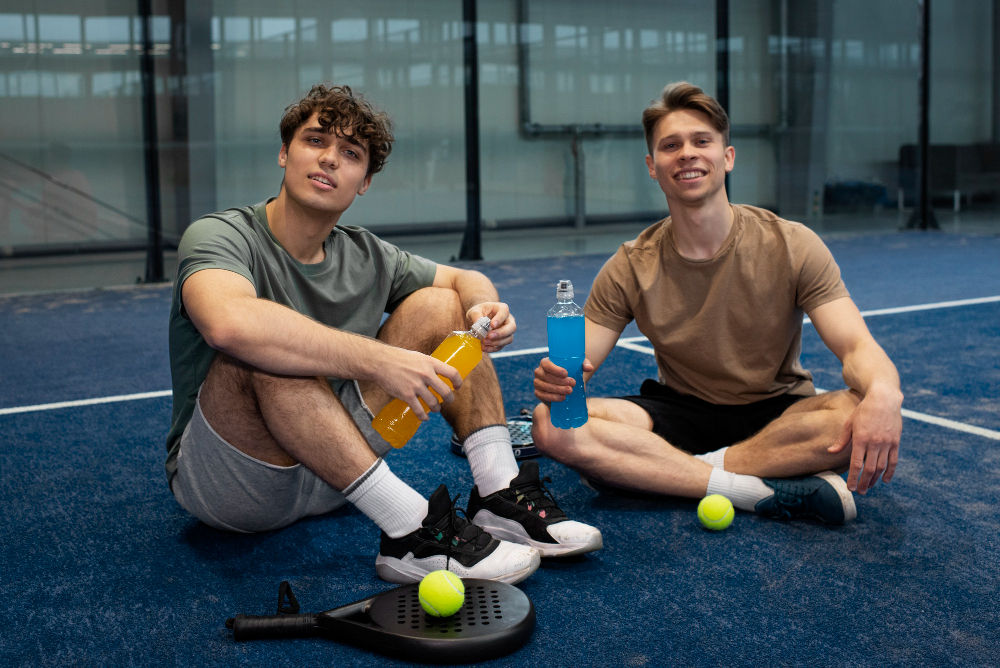
Padel is a good example. Unlike a solo gym session, the sport is usually played in doubles, so you need other people just to get a game going. That changes the experience immediately. You are not only booking a workout. You are organizing a group, finding a time that works for everyone, choosing a court, and spending an hour playing together.
And the social part often continues after the match.
One game turns into another next weekend. Someone adds everyone to a WhatsApp group. A friend brings another friend. Before long, you have a regular group of people who might never have met if it were not for the sport.
Run clubs work in a similar way, even though running itself can be completely individual. Instead of putting on headphones and running alone, people meet at a set place, follow a route together, and often hang around afterward for coffee or breakfast. The exercise gives everyone a reason to show up, but the social routine can become just as important.
Climbing, cycling, pickleball, recreational football, and other group activities create the same kind of low-pressure interaction. You do not need to walk into a room and figure out how to start a conversation with strangers. There is already something to talk about. You can ask about a route, discuss a match, complain about a brutal hill, or simply laugh about how badly the last point went.
That shared activity makes socializing feel less forced. It also helps explain why social sports can be easier to stick with than workouts that rely entirely on personal motivation. Cancelling a solo gym session affects only you. Cancelling a Padel game might leave three other people trying to find a replacement. Skipping a run feels slightly different when you know your usual group is already meeting at 7 a.m.
That does not mean social pressure should be the reason you exercise. But having other people involved can create a useful layer of accountability. You are not only maintaining a fitness routine. You are maintaining a plan with people you enjoy seeing.
Technology has made organizing these activities easier too. Platforms like Rezerv can help fitness and sports businesses manage court availability, bookings, memberships, and schedules, so customers can spend less time coordinating logistics and more time actually playing.
The interesting part is what happens after the booking. A court becomes a weekly ritual. A Saturday run becomes breakfast with friends. A beginner climbing session becomes the reason you keep going back every Thursday. Sometimes you join because you want to try a new sport. Then somehow, you stay for the group chat.
Your instructor might matter as much as the workout
Most people think they choose a fitness class because of the workout. Sometimes, they are actually choosing the instructor. You can see it when a popular coach changes their schedule and suddenly half the regulars move with them. The class format has not changed. The exercises may be almost identical. What changed is the person leading the room.
A good instructor does more than count reps or demonstrate movements. They remember names. They notice when someone has improved. They know who needs a modification and who is ready for a harder variation. They can make a beginner feel less intimidated without making a big deal out of it.
Those small interactions matter because they make people feel seen. Imagine walking into a class after a difficult week and hearing, “Hey, good to see you back.” It is a tiny thing, but it changes the experience. You are no longer just another booking in the 6 p.m. session. Someone noticed you were there.
Great instructors also shape the social atmosphere of a class. They introduce newcomers, encourage people without making things overly competitive, and create little rituals that regulars begin to recognize. Maybe there is a running joke during the hardest part of the session. Maybe everyone knows which song usually means the final push is coming.
Over time, those details give a class its own personality.
This is especially important in smaller studios, where customers may see the same instructor several times a week. Familiarity builds trust. Members become more comfortable asking questions, mentioning an old injury, or admitting that an exercise simply does not feel right. That can help instructors provide a safer and more appropriate experience while still keeping the class moving.
There is also a strong motivational element. When you know the instructor and enjoy their teaching style, booking the next session requires less mental negotiation. You are not asking yourself whether you feel motivated enough to exercise. You already know where you are going, who will be there, and roughly what the experience will feel like.
That is why instructor loyalty can become surprisingly strong. Some members will rearrange their schedules to attend a particular coach's class. Others follow an instructor when they add a new session, teach at another location, or introduce a different class format.
For fitness businesses, making those relationships easy to maintain matters too. A platform like Rezerv can help studios organize instructor schedules, class availability, bookings, and customer communication, making it easier for members to find and return to the sessions they enjoy.
But software cannot manufacture the part that keeps someone saying, “I only book her class.” That comes from the instructor who remembers your name, notices your progress, and somehow makes you want to come back next week.
Fitness is becoming part of our identity
At some point, a workout can stop feeling like something you do and start feeling like part of who you are. You hear it in the way people talk about themselves. “I’m a runner.” “I do Pilates.” “I’m into climbing.” “I play Padel.” Those statements are not just descriptions of exercise. They say something about lifestyle, routine, and the kind of community someone feels connected to.
That shift matters because identity can be a powerful motivator. If you think of yourself as someone who runs, going for a run feels consistent with who you are. If Pilates has become part of your weekly life, booking another class does not feel like starting from scratch every time. You are simply continuing something that already belongs in your routine.
Fitness communities reinforce that identity in small ways. Studios have their own language, traditions, playlists, challenges, merchandise, and inside jokes. Run clubs might have matching shirts and regular coffee spots. CrossFit boxes often celebrate personal records together.
Padel groups build their own WhatsApp chats and recurring matches. Climbing communities develop a shared vocabulary that can sound almost like another language to anyone outside it.
None of this is necessary for getting fit. But it creates culture. And culture gives people a reason to feel attached to a place or activity beyond the physical results. You might be able to get a similar workout somewhere else, but that does not mean the experience will feel the same.
This is also why fitness brands increasingly think beyond individual sessions. They organize community events, workshops, challenges, retreats, social gatherings, and member milestones. The goal is not simply to fill another hour on the schedule. It is to give people more ways to participate in the world around the workout.
Technology can help support that continuity too. Platforms such as Rezerv allow fitness businesses to manage memberships, packages, classes, events, and customer communication in one place, making it easier for members to stay connected to the activities they already enjoy.
But the strongest communities usually do not feel like carefully manufactured marketing strategies. They grow because people keep showing up. You start by booking one class. Then you learn the instructor’s name.
You recognize the regulars. You join the challenge. You buy the studio shirt. A few months later, you are telling a friend, “You should come to my Pilates place.” That word, “my,” says a lot. You are no longer just paying for access to a workout. You feel like you are part of something.
.jpg)
Source: magnific.com
Maybe we’re joining for more than the workout
Most people do not join a fitness studio because they are looking for a social club.
They join because they want to get stronger, feel healthier, improve their mobility, learn a new sport, or simply move more. The goal is usually physical.
But what keeps them coming back can be something else entirely. It might be the instructor who remembers their name. The friend who always books the same Saturday class. The group chat that started with a Padel match and somehow turned into weekend plans. Or the coffee after a run that has become just as important as the run itself.
That is what makes this shift in fitness interesting. Exercise is still the foundation, but the experience around it is becoming much richer. Studios, gyms, clubs, and sports spaces are becoming places where routines form, friendships develop, and people feel connected to something outside work and home.
And you do not need to be the most social person in the room to benefit from it.
Sometimes belonging is as simple as walking into a place and recognizing a few familiar faces. Knowing where you like to stand. Having a favorite instructor. Feeling comfortable enough that showing up no longer feels like effort.
For fitness businesses, that means the experience matters just as much as the workout itself. Great coaching, a welcoming environment, simple booking, flexible memberships, and smooth communication all help make it easier for people to return.
Platforms like Rezerv can handle much of the operational side, from bookings and memberships to classes, courts, and customer communication, so businesses can focus more on the experience people actually remember.
Cheers,
Friska
Read more: Everyone is doing Pilates. Is it actually worth it?