8 pricing psychology tricks that fill your memberships faster
Good pricing psychology rearranges the frame so the path you want taken becomes the user’s own idea.

Source: Pexels
Numbers carry an attitude. That is the easiest way to explain why pricing psychology controls your membership growth. You can offer the same access, the same perks, the same experience, and still get totally different results just by changing how the price shows up. A $30 plan feels like a decision. A $29 plan is a “heck yes.” That one-dollar gap changes everything.
And that shift is exactly what we are here to speed up. You will see 9 psychological pricing strategies that will fill your memberships faster without changing what you sell.
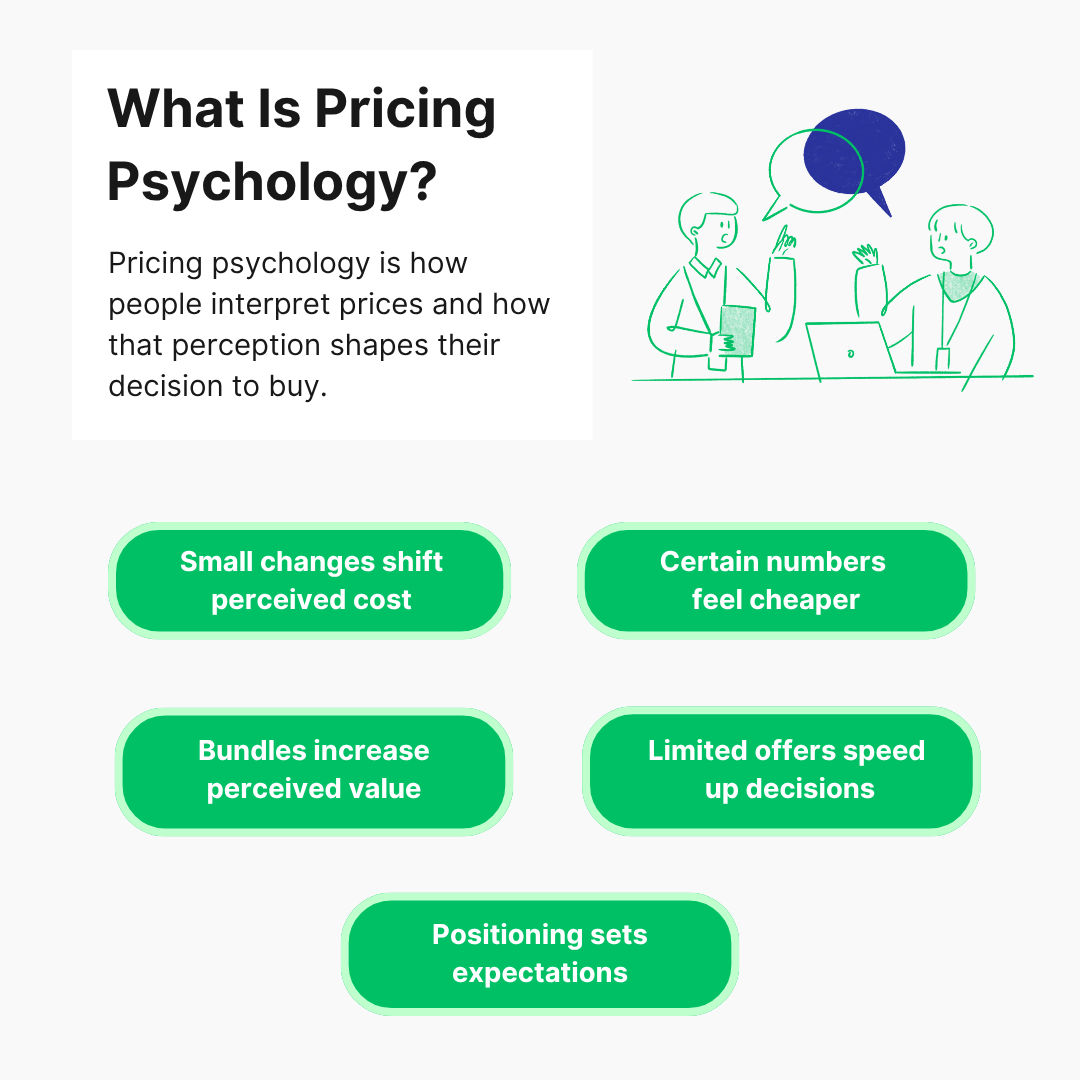
What is pricing psychology?
Pricing psychology refers to how people perceive prices and how those perceptions influence their buying decisions. It is about understanding the consumer psychology and emotional and cognitive triggers that make a price look “right” or “wrong” to a customer.
Pricing psychology looks at patterns like:
- How certain numbers or formats make prices feel cheaper or more expensive.
- How bundles or limited-time offers affect urgency and desire.
- How positioning and context (like “premium” vs. “budget”) frame expectations.
Why using psychology of pricing matters for membership growth: 5 key benefits
Here’s what changes once you start using pricing psychology the right way.
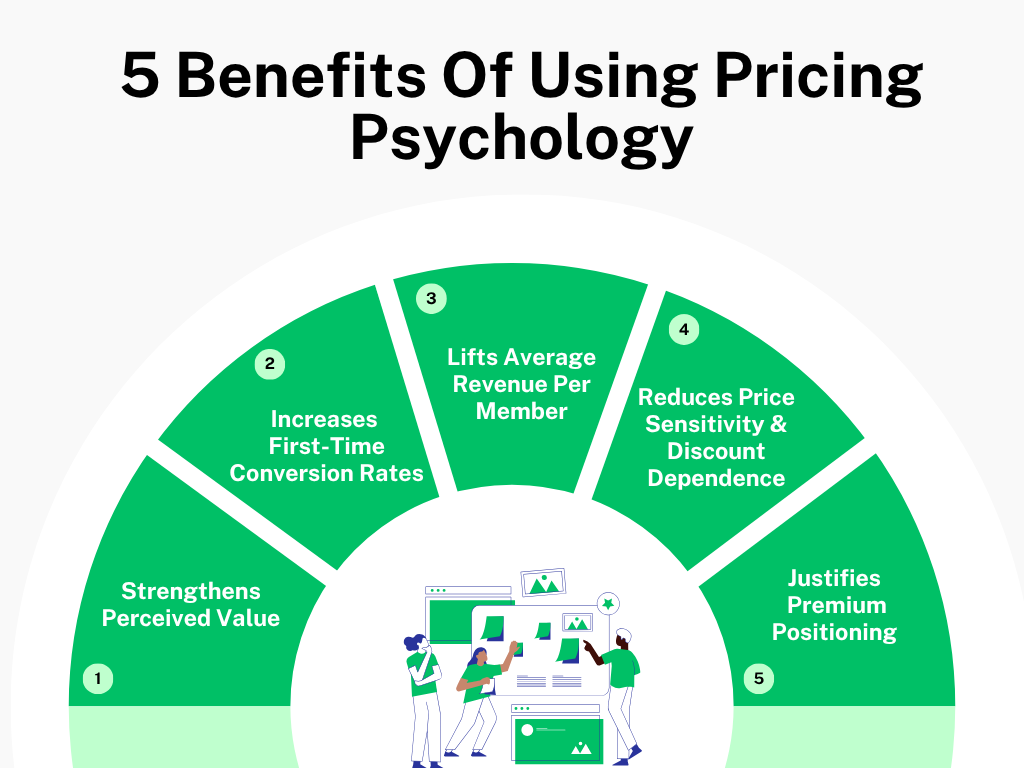
1. Strengthens perceived value of ongoing access
People don’t naturally think in “per month.” They think in moments.
Like: “Will I actually use this next week?”
Or: “Is this going to be part of my routine, or just sit there?”
And since nearly 70% of consumers consider price as the primary factor before making a purchase, that mental check happens fast.
Good pricing psychology pushes them to imagine the membership as something that fits into their lives repeatedly. When that happens, the price becomes something they are continuously tapping into. Almost like a luxury brand subscription you don’t question – not because you forgot about it, but because it never gave you a reason to doubt it.
2. Increases first-time conversion rates
Most people don’t say no. They just… pause indefinitely. They open the page, scroll, maybe even hover over the button – and then leave. Not because they are uninterested, but because something didn’t resolve in their head.
Psychological pricing works in that exact moment of hesitation. It answers the unspoken questions:
- “Is this the right option?”
- “Am I overpaying?”
- “What if I pick the wrong?”
When those doubts are quietly handled through how the price is presented, people feel like they are just continuing something that already makes sense.
3. Lifts average revenue per member
People don’t wake up thinking they want the cheapest option. They simply don’t want to regret it. And that is a completely different mindset.
If your pricing gives them a chance to “place themselves” somewhere, they will choose based on identity because they don’t want to be the “basic one.” The higher-tier option becomes the safer bet.
It is the one where they go because it covers everything, and they won’t have to upgrade later. So they spend more – and that is a much more natural (and sustainable) way to grow average order value and maximize revenue.
4. Reduces price sensitivity & discount dependence
If someone is waiting for a discount, what they are really saying is that they are not fully comfortable paying this yet. That discomfort usually isn’t about money – it is about timing or confidence.
People are already used to making decisions online at a steady pace. Around 75% of consumers make online purchases at least once a month. That means hesitation isn’t about unfamiliarity. It comes from how the offer is framed at that moment.
When pricing cognition is doing its job, people feel like delaying would actually cost them more – missed access, lost time, falling behind, whatever matters in that context. So rather than asking if they can get this cheaper, they start thinking about why they would wait. And that is when discounts go from being necessary… to being optional.
5. Justifies premium positioning without resistance
A high price doesn’t scare people nearly as much as a confusing one. They are surprisingly okay with paying more when it matches the story in their head.
If something feels premium, then a higher price actually removes suspicion. Because oddly enough, underpriced offers can look riskier. Like: “Why is this so cheap? What’s missing?”
So when pricing psychology aligns with perceived quality, it influences consumer behavior, and people settle into it, like they have made a smarter choice – not a more expensive one.
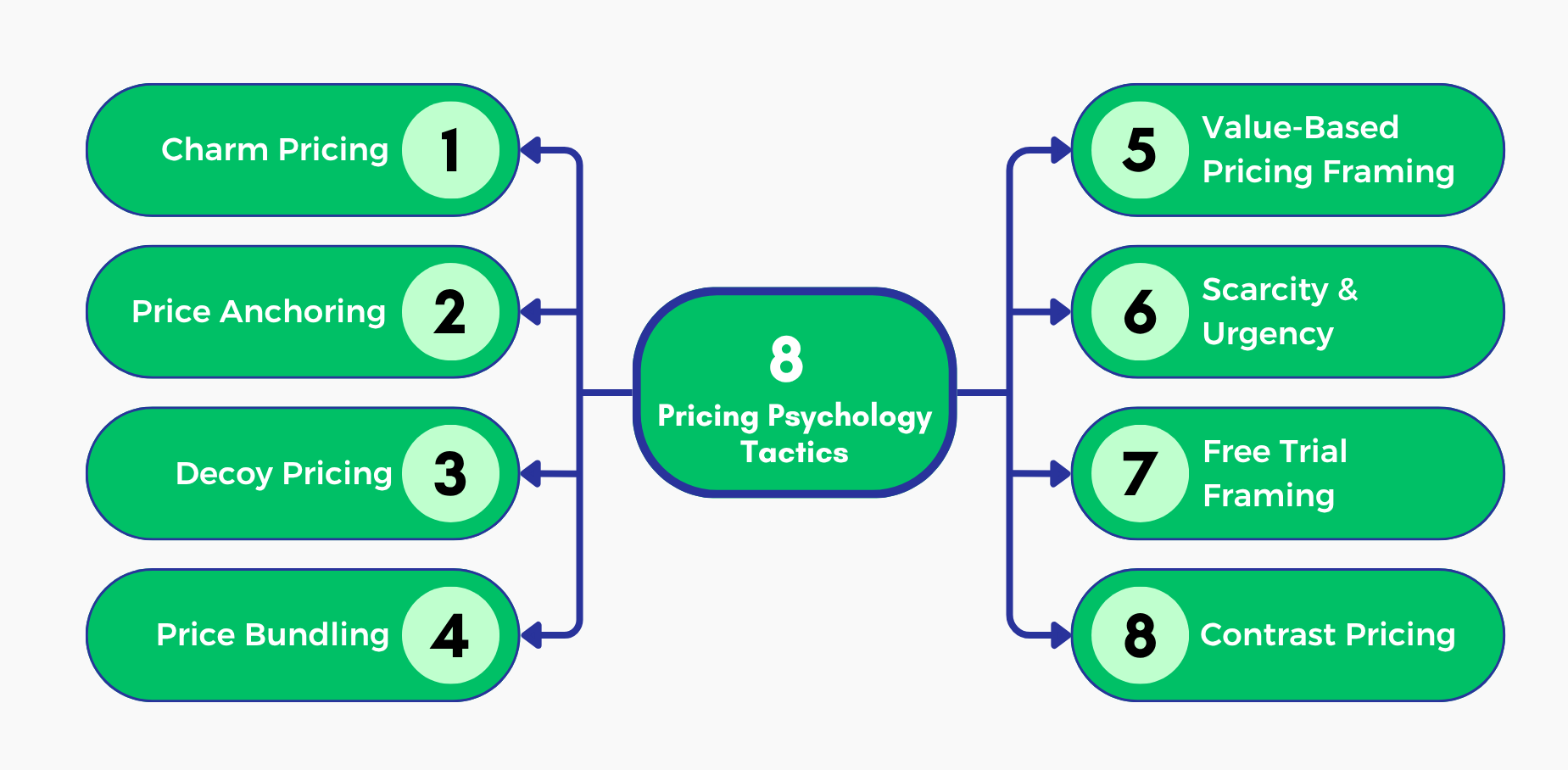
8 pricing psychology tactics that increase membership conversions
Here are 8 effective psychological pricing tactics that push more membership signups through, faster.
1. Charm pricing
Charm pricing, or just below pricing, is when you price something at $9.99 instead of $10. It leverages “left digit bias” since our brains read left to right. So $9.99 gets mentally filed under “9,” not “10.” That small change actually moves behavior, too – studies show it can increase sales by 24%.
It becomes a different category altogether. For memberships, this matters because recurring payments shape consumer perception. A small difference monthly looks way bigger over time.
Best practices
- Use charm pricing specifically on your entry-tier plan to reduce hesitation at the first decision point
- Pair charm pricing with monthly billing, so the “smaller number” effect hits more frequently
- Use the odd pricing with simple language like “Start anytime” or “Cancel whenever” right next to the discounted price
- Test micro-drops (e.g., round price of $12 → $11.90 instead of $11.99) to see what is “less salesy” for your audience
Best for
- Boutique fitness studios (pilates, boxing, spin memberships)
- Creator-led communities (exclusive clubs, fan memberships)
- Hobby memberships (art studios, music rehearsal memberships)
- Local wellness spaces (meditation centers, yoga collectives)
Real-world example
Planet Fitness built its entire membership growth strategy around charm pricing. Their core offer is the “Classic” membership, which is priced at $15 per month. Where charm pricing really shows up is in how they position upgrades.
The “Black Card” membership is priced at $24.99/month instead of $25. Simply charging prices ending in 99 makes the jump less aggressive, especially when placed next to the already “light” $15 anchor. The messaging also stays extremely simple, with phrases like “just $24.99 a month” to avoid anything that makes it a heavier financial decision.
2. Price anchoring
Price anchoring is basically setting a reference point so that everything else looks cheaper by comparison. You show a higher price first, and suddenly the option you actually want people to pick feels like a great deal. For memberships, this works incredibly well because people rarely know what something “should” cost. So they rely on whatever number you show them first.
Best practices
- Start with your highest-tier plan on the pricing page, so it becomes the mental benchmark
- Visually highlight the mid-tier plan right after the anchor (“Most Popular” works for a reason)
- Keep the anchor meaningfully higher – not slightly higher – so the contrast is obvious
- Use feature comparison tables to justify why the top pricing tier costs more
Best for
- Online learning platforms
- SaaS memberships with tiered access
- Professional communities (networking, masterminds)
- Coaching or consulting subscriptions
Real-world example
Uproas does this in a very direct way. When you see their pricing, you are immediately shown higher-tier Google Ads agency accounts at $995/mo with bigger spending limits. That number does more than it looks like.
Now, when you look at the lower-tier option, they don’t look expensive anymore at $299/mo and $699/mo – even though they are still premium subscriptions. They become a lighter and safer version of something premium you just saw. And that matters in this business model. Because without that anchor, the same lower-tier plan could easily feel like a stretch.
But once your brain locks onto the higher number first, everything below it becomes more reasonable. The higher tiers exist less to sell themselves and more to make the original price feel accessible.
3. Decoy pricing
Decoy pricing involves setting prices by adding a third option that is deliberately designed to make another option look like a no-brainer. This pricing strategy works because people don’t want to optimize endlessly.
Price-conscious customers prefer a clear “best choice.” The decoy creates that clarity. And that small setup can change behavior quite a bit – decoy pricing can increase average order value by 15–25% by pushing people toward the higher-value option.
Best practices
- Create three tiered pricing plans – low, mid, high
- Design the middle tier to be clearly better than the decoy
- Make the decoy close in price to your target plan, but worse in value
- Highlight the “winner” visually. “Most Popular” or “Best Value” labels are decision shortcuts. People look for them
Best for
- Subscription software
- Media memberships
- Skill-learning platforms
- Digital creator memberships
Real-world example
The New York Times subscription pricing uses this structure. You will typically see something like:
- Basic Digital Access
- All Access (games, cooking, etc.)
- Print + Digital
The “Print + Digital” option is priced much higher and appeals to a niche audience. But its real job is to manipulate consumer preferences and make the “All Access” plan look like an incredible value – because for just a bit lower price, you get almost everything. That middle option becomes the obvious pick.
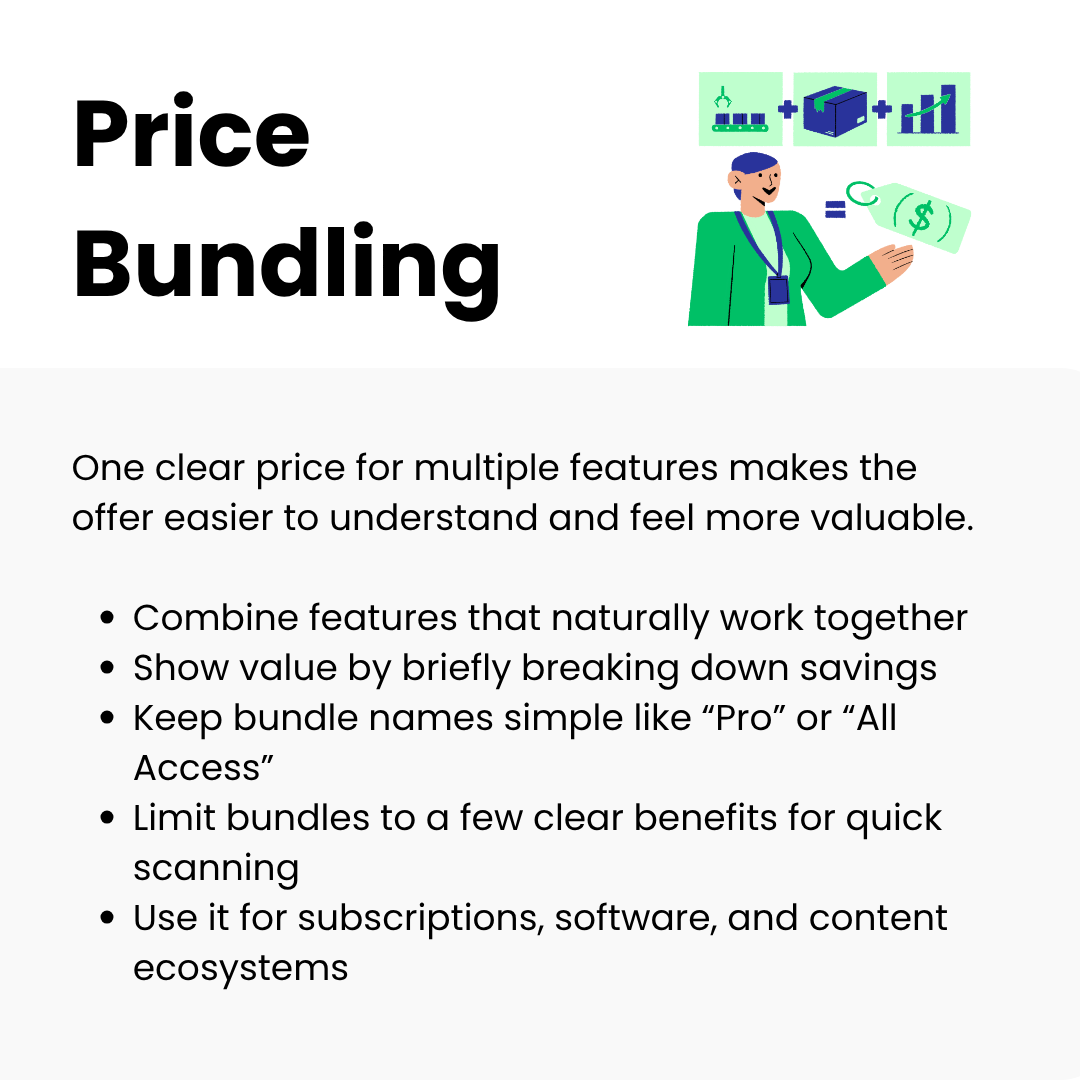
4. Price bundling
Bundling is when you group multiple features or benefits into one price, instead of charging separately. The total should look like a better deal, even if the user wouldn’t have bought each piece separately. It works because people hate doing mental math. One clean number feels easier – and usually cheaper – than multiple smaller ones.
Best practices
- Bundle complementary features that naturally go together. If your bundle is random, people mentally unbundle it – and now you are back to square one
- Show the bundle price breakdown once, then take it away. Let people see that it would have cost more separately, but don’t make them keep calculating it
- Keep bundle naming simple (“Pro”, “All Access”, etc.). Complicated names slow purchasing decisions
- Avoid overwhelming users with too many bundled items. A bundle with 4–6 clear benefits is usable
Best for
- Streaming memberships
- Fitness + wellness subscriptions
- Software suites
- Creator ecosystems (courses + community + tools)
Real-world example
SocialPlug uses bundled pricing across its YouTube growth services, where users can purchase engagement in tiered packages (e.g., 1,000 vs. 5,000 vs. 10,000 subscribers). Each higher tier reduces the effective cost per unit and makes the larger bundles look more valuable.
Instead of evaluating individual units, users are pushed toward choosing a package that “feels like a better deal” overall. Even when a smaller package would technically meet their needs, the pricing makes it psychologically uncomfortable to pick it. The bundle makes the product price feel like you are getting far more than you are paying for – even if you only use half of it.
5. Value-based pricing framing
Same precise price point. Completely different reaction – just based on how you describe it. That is what is happening here. People don’t mind paying – they mind overpaying for something unclear. If you present a number as a cost, users hesitate. If you present it as an outcome, it changes customer behavior since they evaluate it differently.
Best practices
- Translate your sale price into the smallest meaningful unit, but don’t get gimmicky. “$0.27 per day” works less than “less than $1 a day”
- Tie it to something familiar. Coffee comparisons work because they are instantly relatable – but only use them if your audience actually buys coffee
- Connect price to outcome. Not features. No one pays for “10 modules.” They pay for “get your first client” or “lose 5kg” or “ship your portfolio”
- Put it right next to the price so the brain processes both at the same time
Best for
- Education platforms
- Fitness memberships
- Productivity tools
- Career development communities
Real-world example
Engain’s pricing is technically based on quantity – different packages for different numbers of Reddit downvotes. But that is not how people actually evaluate it. When someone sees that page, they are not doing the math on “cost per downvote.” They are thinking in outcomes:
- “Is this enough to push a post down?”
- “Will this reduce visibility in a thread?”
The package sizes link to those outcomes. The higher-priced options represent a higher likelihood of getting the result the user actually cares about. So the decision shifts from “Which one is cheaper?” to “Which one actually gets the job done?” Completely different mental math.
And once that happens, the price becomes much easier to justify – because it is tied to effectiveness, not just volume.
6. Scarcity & urgency
Scarcity and urgency push people to act now instead of “thinking about it forever.” Memberships are especially vulnerable to procrastination. So this tactic removes that delay by making raised prices the cost of waiting. Not fake pressure – real and believable limits.
Best practices
- Use time-bound offers. Real scarcity beats fake urgency every time. If your offer is “ending tonight” every night, people catch on fast
- Give the deadline a reason to exist. They work best when they are tied to something real – cohorts, start dates, limited onboarding capacity
- Combine urgency with bonuses rather than discounts. Early members get something others won’t
- Keep it visible but not aggressive. A quiet countdown or “closing soon” works better than flashing red banners everywhere
Best for
- Cohort-based courses
- Exclusive communities
- Event-linked memberships
- Early-access programs
Real-world example
Foundr uses urgency heavily during course and membership launches. They run limited-time enrollment windows with countdown timers and phrases like “Doors closing soon.” Once the window closes, you genuinely can’t join until the next cycle – which makes the urgency real. That pressure significantly boosts conversions during launch periods.
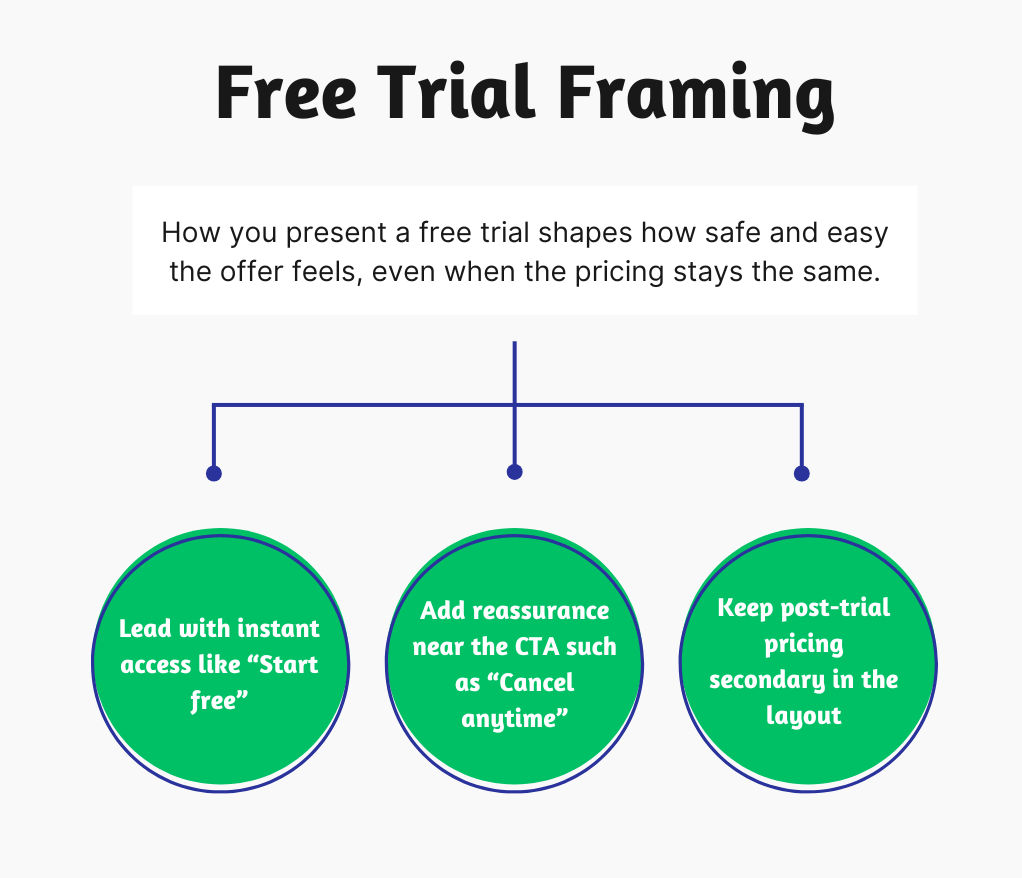
7. Free trial framing
Free trials aren’t new – but how you frame them changes everything. “Try for free” feels different from “$0 today, $29/month after.” Same offer, different perception. And it converts because it removes the fear of regret. But the way you frame the transition matters more than the trial itself becuase consumers tend to think about what happens after.
Best practices
- Lead with access – not conditions. “Start free” works better than “7-day free trial” because it is immediate
- Push risk-reducing language right next to the CTA. “Cancel anytime” is a reassurance at the exact moment it is needed
- Delay the “what happens after” details slightly in the visual hierarchy. Not hidden – just not the headline
- Make cancellation easy. If users suspect issues later, they hesitate now
Best for
- Apps and SaaS tools
- Streaming platforms
- Online communities
- Fitness and wellness apps
Real-world example
Skillshare promotes its free trial as “Start your free trial today,” focusing entirely on immediate access. The billing detail (e.g., ~$168/year after trial in the US) is still there – but visually secondary. The user’s first decision becomes: Do I want to try this? Not: Do I want to pay for this? That shift alone increases signups.
8. Contrast pricing (monthly vs annual)
This is where you show two billing options side by side – and make one clearly better. Usually, the annual plan is positioned as the “smart” choice. Side-by-side pricing puts a simple thought in the user’s head that there is no reason to pay more for the same thing. That is the moment you are aiming for.
Best practices
- Put the monthly and annual prices side by side – never hide one behind a toggle. People need to see the contrast instantly
- Mention the savings in real numbers. “Save $48/year” is easier to relate to than “20% off”
- Break the annual plan back into a monthly equivalent, but keep the annual total visible. That dual framing (“$10/month billed annually”) makes it both small and smart
- Give the annual plan more weight visually. Slightly bigger card, subtle highlight, anything that directs attention
Best for
- SaaS tools
- Content platforms
- Wellness apps
- Professional memberships
Real-world example
LA Fitness shows a monthly plan (around $39.99/month) next to options that require an upfront annual fee or initiation cost. When you break down those prepaid or commitment-based plans, the effective monthly cost drops noticeably.
Seeing both side by side creates that subtle tension – keep paying the higher monthly rate, or commit and “stop overpaying.” Most people don’t love committing, but they really don’t love feeling like they are wasting money every month.
Conclusion
Good pricing psychology rearranges the frame so the path you want taken becomes the user’s own idea. And you don’t need all 8 tactics we discussed. You need the right two or three, working together, intentionally. Put them together right, and it feels… natural. And that is the sweet spot you have been looking for.
We built Rezerv for this exact moment, where pricing psychology needs the right environment to actually work. With our fitness software, your customers can book in seconds through a clean and fully branded site or app.
Rezerv also lets you create multiple pricing options, so you can apply the same pricing psychology tactics you just read about, directly inside your booking flow. On top of that, we handle the things that usually break the experience. Automated reminders reduce no-shows. A drag-and-drop calendar keeps your schedule clean. Flexible payment reduces hesitation.
Book a demo with us and see how it all comes together.
Read next: How to price yoga classes for profit and retention in 2026?
